Perfect. We found the very same “Blue Sea” (the tune of the lyrics) in a four-beat Cretan syrtos!
Of course! Could it be that the teacher who made it was of Dodecanese origin? 
Mr Niko, this is an interesting subject. I think that what you call a learned tradition is probably Western. What criteria should we use to define something as learned? The musical language and rhythmic structure themselves? Or perhaps the circumstances in which it is presented to the audience to which it belongs? In other words, how does a participatory tradition from the West, such as a little waltz, end up being called learned here?
Mmm, yes… Nikos calls it learned, I call it urban, and you, Alexander, call it Western; perhaps you got it closer than any of us. It isn’t very easy to define it precisely, but nevertheless each of us knows what the other means, and we probably mean the same thing.
I think, however, that it didn’t come here as a participatory tradition, but as something ready-made and static. The fact that it became participatory again here is another matter.
But doesn’t this also warrant some discussion? Given that there was a Levantine minority in Istanbul and Smyrna (and elsewhere), which grew dramatically before the twentieth century, can their participatory traditions not be considered indigenous? Or, as Penanen puts it, part of the Ottoman sound?
Hmm, yes, that’s true as well.
It’s difficult, damn it! Everything has so many factors. No, it’s not up for discussion — forget it, we’ll fry our brains. And it’s hot too!
Pontic polka:

3 Likes
To begin with, let’s make this clear: there is no such thing as a “learned tradition”. There is tradition, in which musical creation necessarily follows certain specific, time-honoured rules and approaches, and there is also “learned creation”, where the creator is free to do whatever they see fit, including, of course, imitating Western models if they wish.
Now, why do we call a little waltz “learned musical creation”? Precisely because, as I point out in my #15, it originated with a teacher — that is, a scholar — and not with the people, who create and preserve the tradition.
In my view, participatory creations by Levantines and others would be considered part of the local sound only if they happened to be adopted by the locals, which takes quite some time to happen. And it may also bring about changes to the original creation.
Here Nikos Chatzopoulos plays the violin on his knee (at the beginning of the video), or the “Moroccan violin”:

Examples with Moroccan musicians:


2 Likes
The thing is, this song wasn’t sung with instruments. In Antimachia, on Kos, it was sung in people’s homes using only the voice. That means it had no introduction. So the introduction was added by the Athenian musicians Karampesini used, since she was the one who first recorded it.
1 Like
In such cases, someone may sit down and compose the introduction, or they may borrow an existing one from another song. For example, the melodic phrase usually used as the introduction to Thalassaki is indeed identical to the melody of “Sea and Salt Water”, but at the same time it also appears in a great many kalamatianá songs, including inland ones.
Now, I have heard an introduction similar to that of Galani’s Sea in the following recording, although I do not know which parts derive from authentic informants and which were added (I read here: “Based on a recording by Simon Karas held in the collection of the Association for the Dissemination of National Music.”)

Erm, from Domna’s later recordings by this point… With Oikonomidis on violin, it’s hardly surprising that this particular melody was included.
Yes, the D. Samiou Association has also put out videos showing how Domna and her musicians gradually shaped the songs, which began as nothing more than a raw a cappella recording and ended up as fully developed recording projects.
On the other hand, the process may go back even further. What did Karas record? How did he record it — on paper or as audio? Because if he started with a written version and later played it himself with his own musicians, and Domna was familiar with that performance, then additions and improvements may have been made there too.
And come to think of it, where did the group singing Smaro (#13) learn it? Especially its introduction? (Tsiamoulis was among the musicians accompanying them.)
Well, just today I heard this tune in the classic seven-beat rhythm, but with lyrics about the destruction of Anogeia by the Nazis, performed by a folk musician in his sixties with a vast repertoire. It also included a few couplets that are probably traditional; unfortunately, there was no way to record them. He said that the melody predated the destruction of Arkadi (of course, all accounts are being verified).
2 Likes
2 messages were split into a new topic: Was there tolerance of the Ottoman Empire towards the Greeks?
Good evening. In any case, if we want to discuss Cappadocian influences in Western Pontus and in the areas between it and Cappadocia, we must first take into account the local musical traditions that appeared in Western Pontus. Unfortunately, the recordings made by Greek researchers in the region are limited to the musical traditions of the mining districts (Kiumush Maden, Ak Dağ Maden), which clearly refer to the Eastern Pontic musical idiom mixed with some local musical tradition. We also have some recordings concerning the Paphra region, which appears to form a musical continuum with the rest of coastal Pontus. (Whether Paphra’s music has always been that way, or whether it was influenced by some historical migration of Eastern Pontians to the area, is another matter and also depends on historical questions that have not been resolved.)
If we define “Pontianness” according to how close or distant something sounds to us from the Trebizond-Chaldian style of playing, then yes, it appears that the musical traditions of Western Pontus contain an external substratum. However, if one studies the Turkish musical tradition, one will quickly realise that, in Turkish musicology, the kemençeci Pontic musical idiom begins somewhere in the region of Cerasus (Ordu) and extends eastwards. To the west of Cerasus—that is, in the area we define as Western Pontus—Turkish musicologists consider the music to belong to the Central Anatolian tradition (more or less what we know as Cappadocian music). There is therefore a strong possibility that the local musical tradition is related to the Cappadocian one as a result of geographical continuity, rather than as a result of the tradition having been brought from elsewhere.
The problem is simply that, in the way we Greeks analyse the various local traditions, there is the following issue. Between Western Pontus (Tokat–Amasya) and the point at which we properly enter what we call Cappadocia (Nevşehir, Kayseri, Niğde), there is a geographical area (Yozgat, Çorum, Kırşehir, Western Sivas) where the Rum element was either completely absent, or was small in number and its musical tradition was lost, or consisted of settlers from other areas, as is the case with the people of Ak Dağ Maden. This ethnic (from our perspective) geographical discontinuity has led us to make an artificial distinction between Pontus and Cappadocia, without realising that, in terms of geomorphology, it is more natural to travel from Tokat to Kayseri than to Trebizond. By the same logic, the distinctive Trebizond-Chaldian musical idiom and its related Cerasus–Gareser idioms have no greater reason to be related to the local musical tradition of Western Pontus than the musical idioms of Central Anatolia or Cappadocia do.
I am sharing a video featuring some traditional Turkish musical pieces from the Vezirköprü area of Amasya:
VEZİRKÖPRÜ TÜRKÜLERİ Cebinde Çakısı Var / Oduncular Gelmez Oldu - YouTube
5 Likes
Circassian upright violin:

1 Like
An upright viola, then, not a violin.
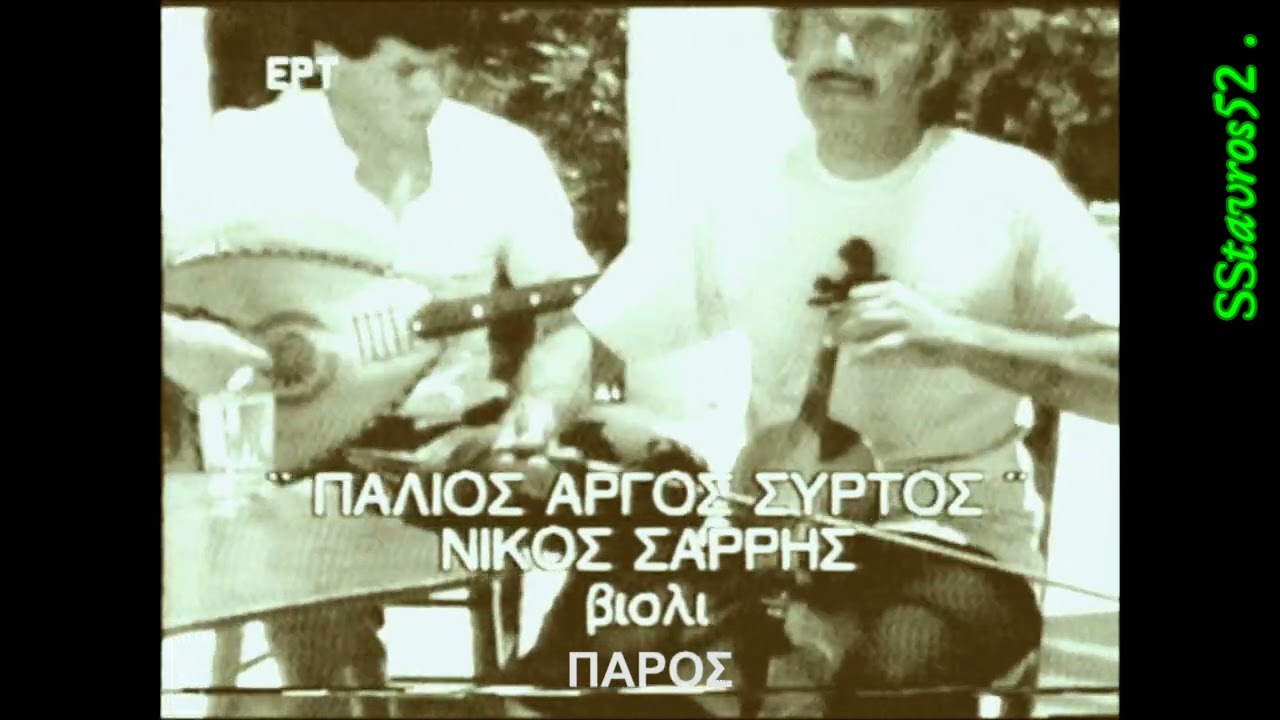
another case of playing the violin on one’s knee
2 Likes
I never replied to this, did I?
What I meant was that it becomes far too easy to play. Perhaps not to play a good violin — I suppose that will always remain difficult, and will probably be done better with the universally established position on the shoulder, otherwise why would they have chosen it?
However, someone who has never picked up a violin in their life can quite easily play a melody on their knee and have it come out recognisable. I have often seen lyra players do it, and I’ve done it myself. Whereas on the shoulder, you have to learn the violin first!