Μια δημοτική μελωδία που πέρασε στο ρεπερτόριο του ρεμπέτικου

Κοίτα να δεις!! Πολύ ενδιαφέρουσα παρατήρηση.

Δηλαδή, επειδή τα μπουζούκια ήταν καινούργια, αυτόματα τα βιολιά αναγορεύονταν παλιά. Ενώ αν είχε επιχειρήσει κανείς παρόμοιες ταξινομήσεις πριν τη διάδοση των πρώτων μπουζουκιών, πιθανότατα θα έλεγε «οι Κύπριοι παίζουν πιθκιαύλιν - καλά, είναι και κάτι μοντέρνοι με βιολιά αλλά δε μας ενδιαφέρει αυτό, εδώ μιλάμε για παράδοση»!!

Και ποια είναι που προϋπήρχαν;

Υπάρχει μια έκδοση ήδη από το 1910 του Χ. Αποστολίδη « Άσματα και Χοροί Κυπριακοί. 21 Τεμάχια Δι’ άσμα και Κλειδοκύμβαλον»

Προφανώς επαφές Κύπρου και Καραμανιάς κλπ υπήρχαν πριν το 1922 οπότε και κάποια μικρασιάτικα μπορεί να προϋπήρχαν.

Εδώ κριτική περιγραφή της δουλειάς του Αποστολίδη (σελ. 168 του περιοδικού):

2 Likes

Και παλιότερη καταγραφή

Και δείγμα παρτιτούρας στις σελ. 179-180

Πέτυχα το παρακάτω βίντεο:

Κάτι τύποι από τη Σίφνο που εμφανίστηκαν τελευταία στο ΥΤ και ανεβάζουν εξαιρετικές εκτελέσεις τοπικών σκοπών με βιολί-λαούτο-τραγούδι. Εδώ ο σκοπός που λένε είναι αυτός που συζητείται στο παρόν νήμα, στο οποίο και έτρεξα, μόλις τον αναγνώρισα, να δω αν είχε αναφερθεί.

Και εννοείται πως είχε αναφερθεί:

1 Like

Είναι και η Μυκονιάτικη παραλλαγή με τις (τ)σαμπούνες που αναφέρεις στην αρχή και είχες ανεβάσει προ ημερών.

Εντάξει, δεν ταυτίζονται, αλλά υπάρχουν κοινά στοιχεία. Έχει ενδιαφέρον η αντιπαραβολή, με τον σκοπό παιγμένο με διαφορετικά όργανα και τραγουδισμένο διαφορετικά.

(Κατά σύμπτωση οι δυο τωνε θα παίξουνε αυτή την Κυριακή στην Αθήνα: Ἀγερμὸς | Athens Καθεαυτού σιφνέικα λέει.)

1 Like

The same tune, in a version from Eratyra, Kozani:

Here it is a wedding song and, as far as I understand, it is sung with fixed lyrics. I don’t know what kind of place Eratyra is, but I found on Wiki that “after the population exchange, three families from Eastern Thrace settled there”, so it is clearly a Macedonian village.

The recording comes from a large collection (~300 songs from Eratyra alone) made in 2010 by the Aristotle University of Thessaloniki. Information here: ΚΑΤΑΓΡΑΦΗ ΚΑΙ ΨΗΦΙΟΠΟΙΗΣΗ ΤΡΑΓΟΥΔΙΩΝ ΕΡΑΤΥΡΑΣ - ΕΡΑΤΥΡΑ ΚΟΖΑΝΗΣ

Something I hadn’t noticed when I wrote the first posts, 12 years ago:

In the link labelled “Here”, at around 2:05, the Andriotiko ballos can be heard. This variation, too, contains a manés (not inserted, but following the completion of the couplet of the main melody), and it is the same as in the Kasos version: the Smyrnaic Minore. (Regarding this, see here, here and elsewhere.)

1 Like

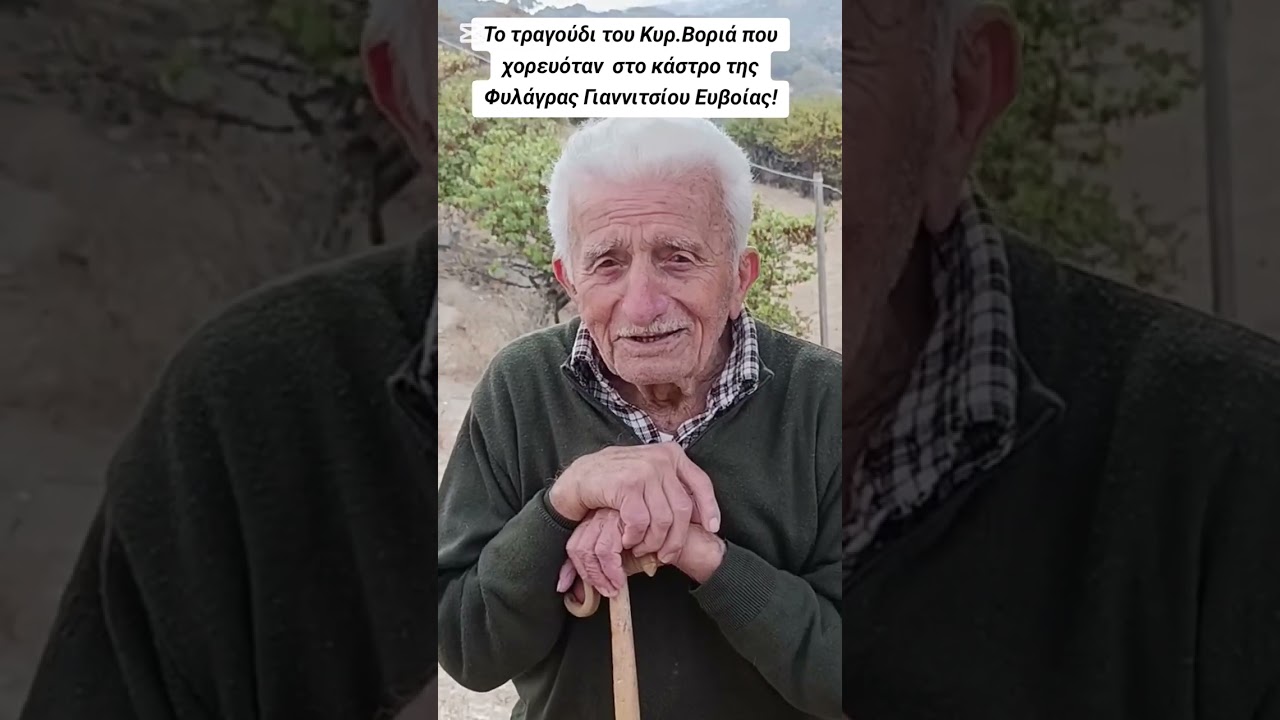
A very interesting video about a custom that used to be practised in the villages of Kavontoros, in which people would ceremonially sing and dance to the song of Kyr Voria, in an attempt to appease the north wind, which was a scourge for some of these villages.

We hear the song in two variations. Both are Kavontorian, but one comes from these villages, while the other comes from different villages which, because of their geographical location, did not have a problem with the north wind (though they did with the south wind!) and therefore did not take part in the custom.

The first variation is in the tune discussed in this thread. It begins shortly after 0′30″.

Let’s also include in this thread the instrumental recording by the cimbalom player Moskowitz from 1916.

3 Likes

Well done, @koutroufi!! What is this, and how the hell did you find it?

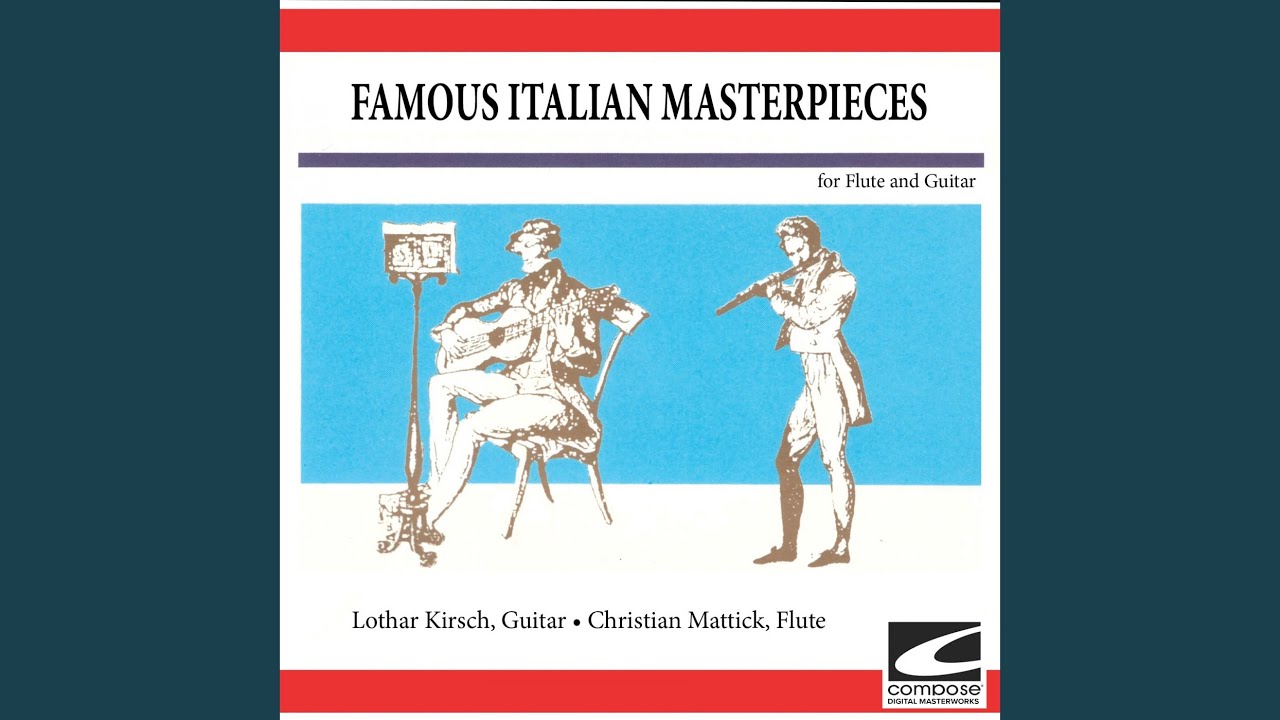
I’m rereading Dragoumis’s article. The first and earliest record he found is a theme that appears in the work of the Italian composer Onorato Costa (1781–1850), Souvenir d’Orient, Op. 12, published in 1832 (!!!), for guitar and flute. The work consists of seven movements, the fifth of which is the Largo, based on the Greek national dance “Syrtos” (I’m quoting this last piece of information directly from Dragoumis).

And this is it:

Next comes a handwritten score, Greek National Songs for Harpsichord, written in Saint Petersburg in 1859 by Karolina Nitschinski. It has not been published; Nitschinski appears to be completely unknown worldwide; the score was in Dragoumis’s possession, and he donated it to the MLA, where it is now kept.

I very much doubt we’ll ever see or hear it.

In 1898–1899, Hubert Pernot recorded this tune on Chios. He published it as sheet music in Mélodies populaires grecques de l’Ile de Chio recueillies au phonographe, 1903. I found, however, that the phonograph cylinders from that expedition of his, which had been considered lost, were found in 2020. At a related conference, they presented…

some initial findings from the research, as well as the digital platform for Pernot’s recordings, which will form the core of the creation of a “Hubert Pernot Virtual Museum”

(link). I googled around to see if I could find the platform, but I found nothing, although it seems to exist.

Dragoumis also mentions a version from Asia Minor recorded by Pantelis Kavakopoulos and published in 1956. I found here a biography and list of works of P. Kavakopoulos, written while he was still alive (he died in 2022), but I cannot imagine which of the publications mentioned there Dragoumis is referring to. (Basically, it would be good to see the original publication of Dragoumis’s article, because the version I’m reading on Music Heaven has no bibliography.)

He then mentions a recording from Mykonos, published by Ellen Frye in 1973. There’s no need to search for Ellen Frye—we know the Mykonian version; it’s right above, in #27 above. It’s definitely that one, since Dragoumis later comments that in Frye’s recording too, the couplets mention Ano Mera.

Next comes a mention of various other published variants (in musical notation, as I understand it, rather than in audio form), where I lose track of the metre at some point, but among them there is one from Eratyra in Kozani. We found a recording from Eratyra here too; it’s in #28! A wedding song, Dragoumis says. It’s a wedding song here too.

We also read (the underlining is mine):

The variants of the Politissa that are combined with multi-line texts come from Ithaca, Chios and the Morea.
[…]
The Ithacan variant17 deals with the familiar story of the boat that sinks because it ignores the warnings of the North Wind.

(By “multi-line”, he doesn’t mean a large number of lines, but that they are not made up of independent couplets.)

The same goes for the Kavo Doro variant we heard in #30.

Finally, Dragoumis also quotes the lyrics of a version recorded by Thalia Spanou under the title “O Gemitzis”. There are lots of recordings by Thalia Spanou on YouTube; I didn’t find this particular one, but it may well be there.

I’m writing all this partly because I was very happy to find Onorato Costa on a recording, and partly in the hope that someone more capable than me might find another of the recordings mentioned.

1 Like

Because everything around us changes and everything stays the same, the preface was archived at https://web.archive.org/web/20090701134727/https://tecla.com/extras/0001/0039/0039intro.htm

1 Like

Musical Texts of Folk Songs from Thrace, Volume A, pp. 126–127

“While You Travel, Sailor”, from the album Authentic Island Songs (1976)
A sound sample here:
http://www.mla.gr/song_prev_el.php?song_id=1790

2 Likes

Well done, Anthime!

They’ve done us a favour. All the samples include the first 39 seconds of each track, whatever those seconds happen to be. Here, for example, the first 23 seconds are an instrumental taksim!

There are samples like these on Samiou’s website too, but they are much more carefully chosen: a complete phrase from each song, so that we can get a feel for the melody. Whether it’s many seconds or just a few. (Unless it’s far too many, which is understandable.)

Even so, where the fade-out has begun but hasn’t completely faded away, we can hear that it really is the tune we’re interested in.

what does “sailor” mean? how many more letters… come on, and a few more full stops…

Sailor.
Gemitzis means sailor.
Sailor means “gemitzis”.

(I think that’s enough.)

And the MEE puts it nicely here too, Mr Spyro:

1 Like

gemi: vessel, ship, in Turkish. gemici: sailor, but in some cases, when it also entered the Greek language, shipmaster, the gemitzis.

Thank you, Niko. I didn’t know the etymology; however, it explains why I’ve occasionally (more rarely) seen it as “gkemitzis” too.