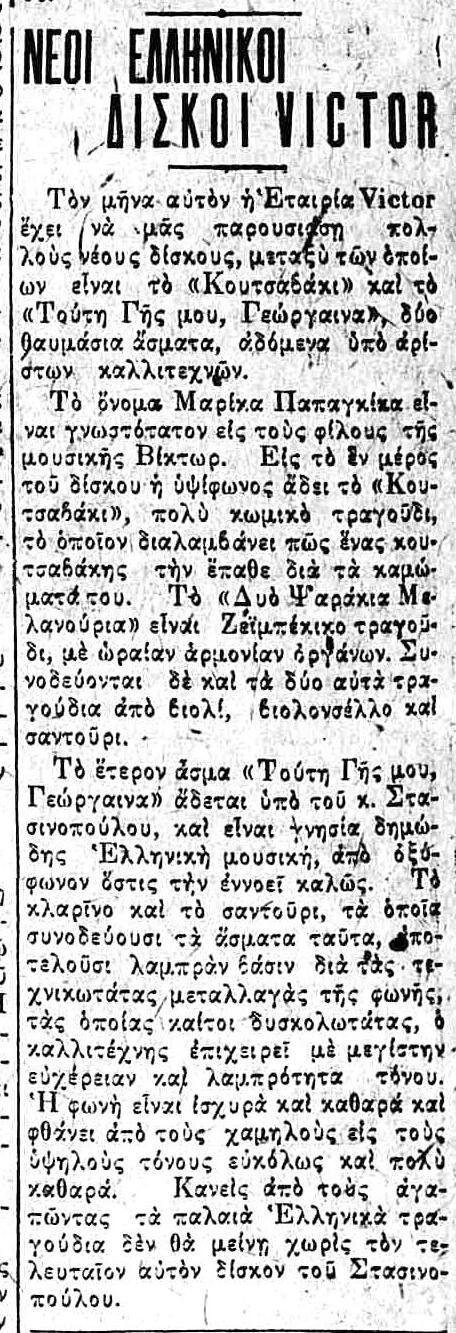
What are the national symbols? (FLAG OF KALAMON 26/6/1936)
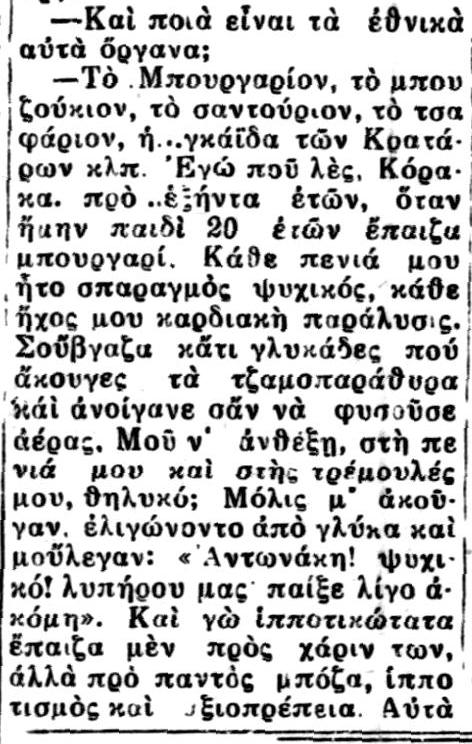
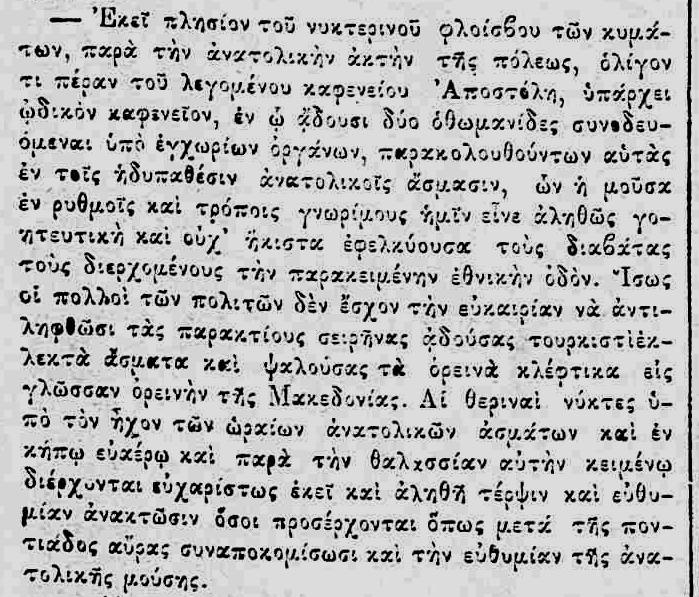
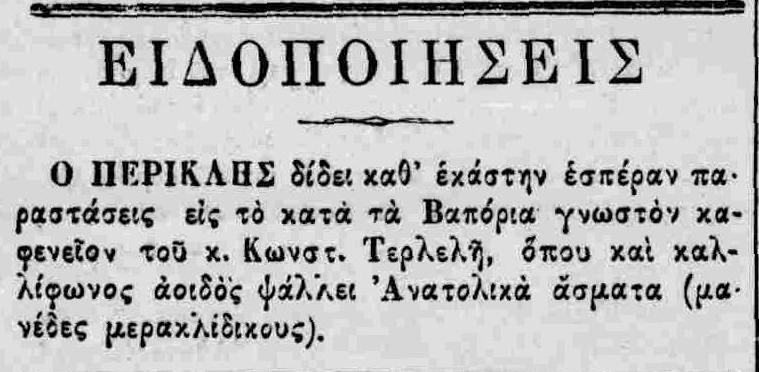
GREAT STUFF Anthimos is serving us!
A barrage! We can’t keep up with reading it all! We’ve got Homework for the whole day!
Merci!
1 Like
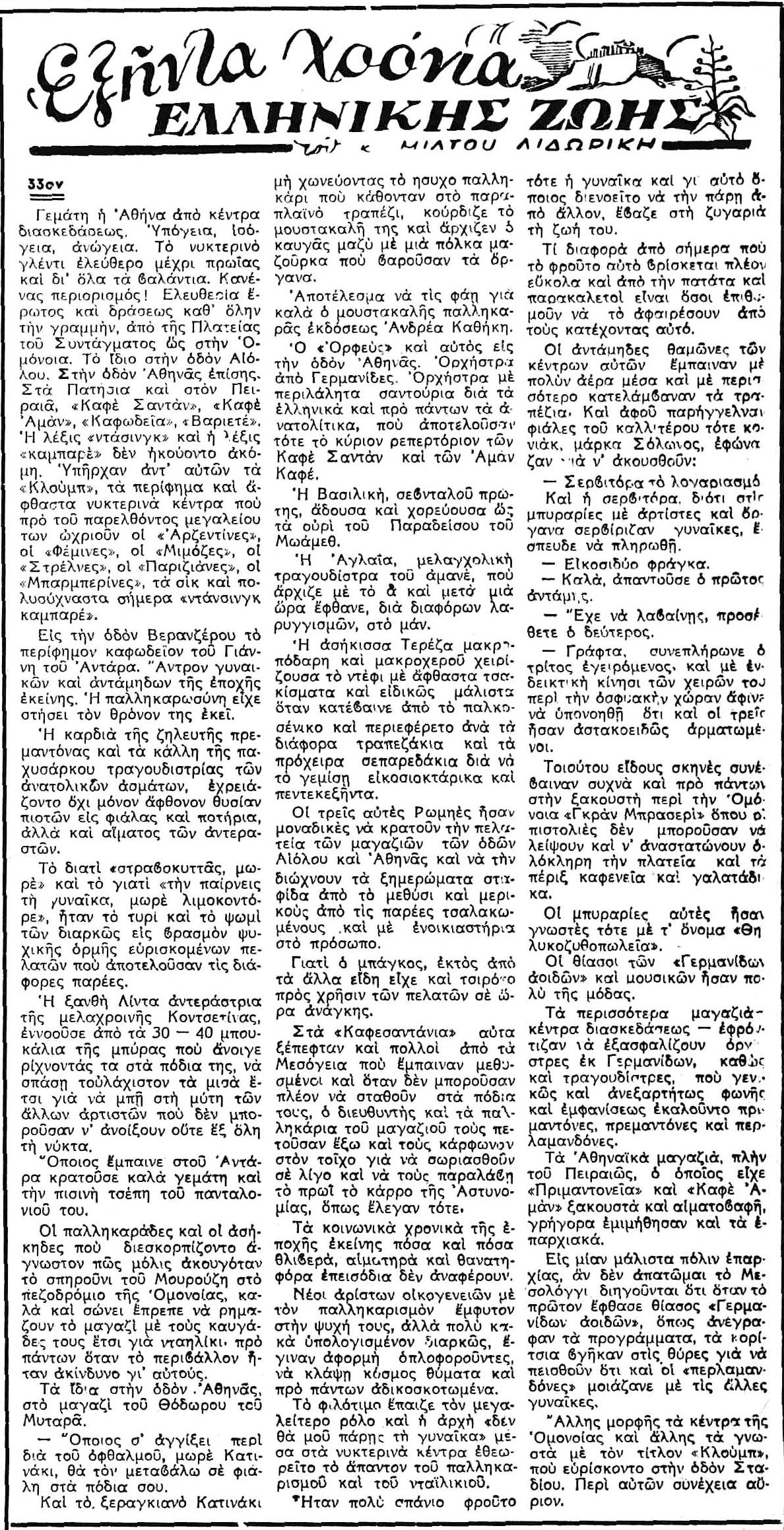
Here we need a little black yemeni, a little Armenaki, my lady…
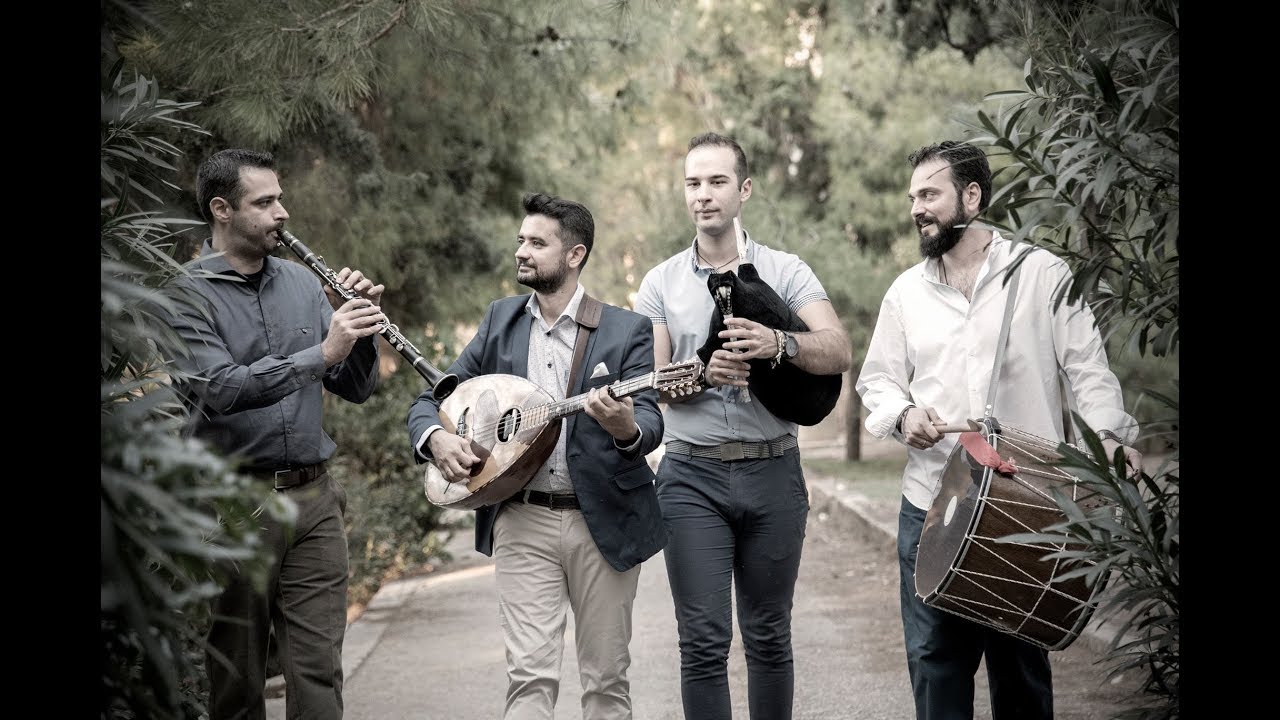
The Bourgarion, the bouzoukion, the santourion, the tsafarion, the bagpipe of the Kratara…
Tsafari means the flute.
As for Kratara or Krataroi, from which the bagpipe supposedly comes, I suspect this is a typo for Kravara. Kravara / Gravara is a region of Aetolia-Acarnania that had a very bad reputation („a Gravara vulture“ meant someone who was a complete idiot). Judging from “Mou n’ anthéxi” below (= “pou n’ anthéxi”), the possibility of a typographical error is not unlikely.
Bagpipes aren’t played as far south as this nowadays, but I wouldn’t rule it out in earlier times. Besides, the description „of the Kravara“ need not be taken literally—it could simply be a derisive allusion.
At this point, it is worth referring to Karkavitsas’s The Beggar, with its Gravarian protagonist
It is well known that Gravara “produced” beggars.
Kostas Tziritis, or Tziritokostas, following the Roumeliot system. In Karkavitsas, they had turned it into a science: they would maim their own children, thereby leaving them with no option but to beg.
Yes, exactly what I meant: they would twist the newborn’s leg so that, when it grew up, it could beg with ease.
1 Like
But they also played the gaida.
Let’s mention that too.
1 Like
The Gravaropoula? Are you sure?
Come on, don’t you read newspapers? See #1201, about the bagpipe of the Krataras, and #1209 regarding a possible typographical error: Krataras instead of Kravaras.
1 Like
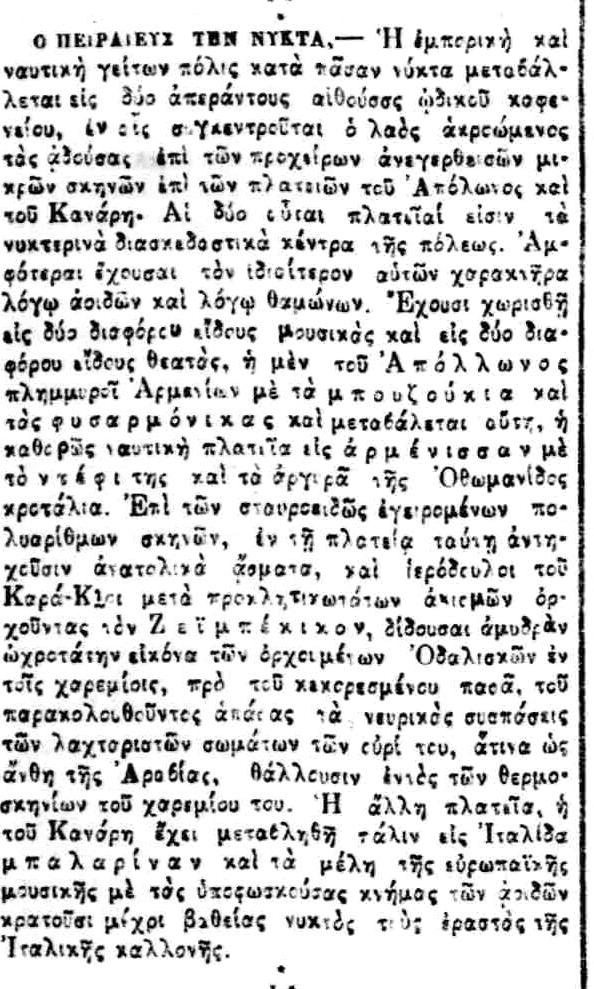
Piraeus, 1887.
Kanari Square must be the one in what is now Pasalimani, and it still has that name today (the one with the clock. You know, where Papamichael arranged to meet Vougiouklaki in ‘Alice in the Navy’).
But which square could Apollon Square be? I know of an area called Apollon in Kaminia, next to Piraeus Street, level with the Elaïs factory. I haven’t been there since the 1980s, when I used to go there for private lessons. I don’t remember a square there at the time. In any case, Google Maps shows me an Apollon Square there.
Kanaris Square, Pasalimani, the one you mean… Apollon Square in Kaminia, near Piraeus Avenue… It is also a neighbourhood of Kaminia.
1 Like
At the time of the article, Karaiskaki Square was called Apollon Square.
2 Likes