Where do you see us going round in circles, my dear Pericles? We’re discussing things, nothing more. And of course we all know—and make no effort to prevent it—that we repeat ourselves extensively, because otherwise we would have to end this discussion if we accepted only new positions or counter-positions. But we’re not going round in circles; we all know exactly where we stand.
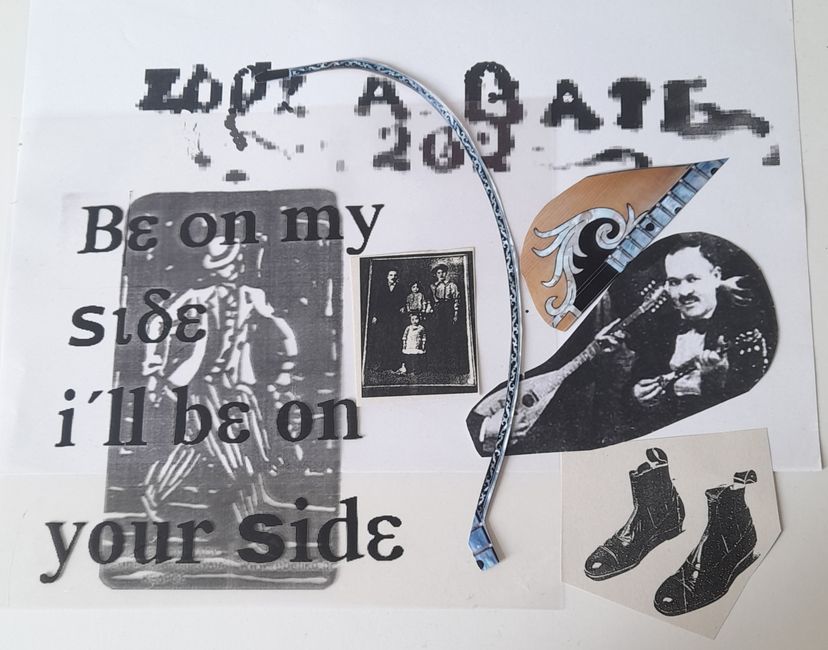
When I started playing rebetiko intensively and bought a baglamas, Batis was my idol.
Because of his appearance, because of his nicknames, such as “King of Piraeus” or “The Tough Guy”, because of the numerous professions and partly entertaining activities he pursued, because he came from an urban family (?), even had a dance school, a one-person coffeehouse, etc.
He seemed to be a “showman”. Yes, he put himself in the spotlight and put on a show. His songs were easy for me to play. That’s why he was so important to me. Markos was very difficult. Batis was easy.
2 Likes
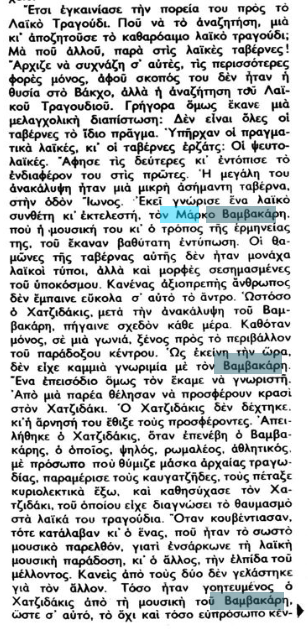
In 1965 (ALPHA magazine), K. Bastias shared recollections of Hadjidakis, including the latter’s meeting with Markos:
2 Likes
thank you, a good story
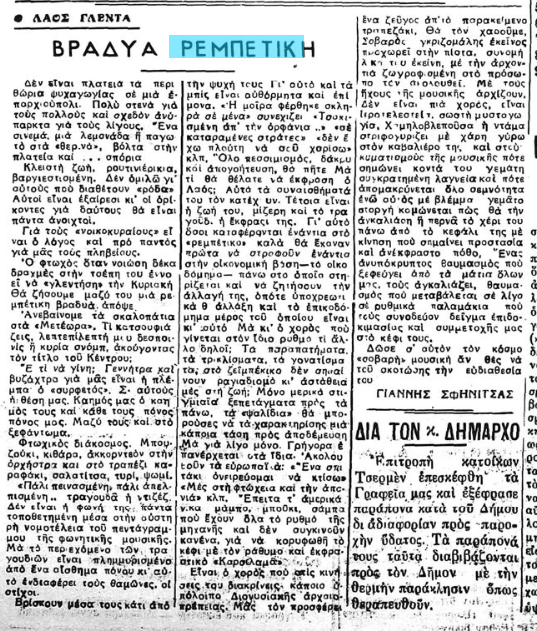
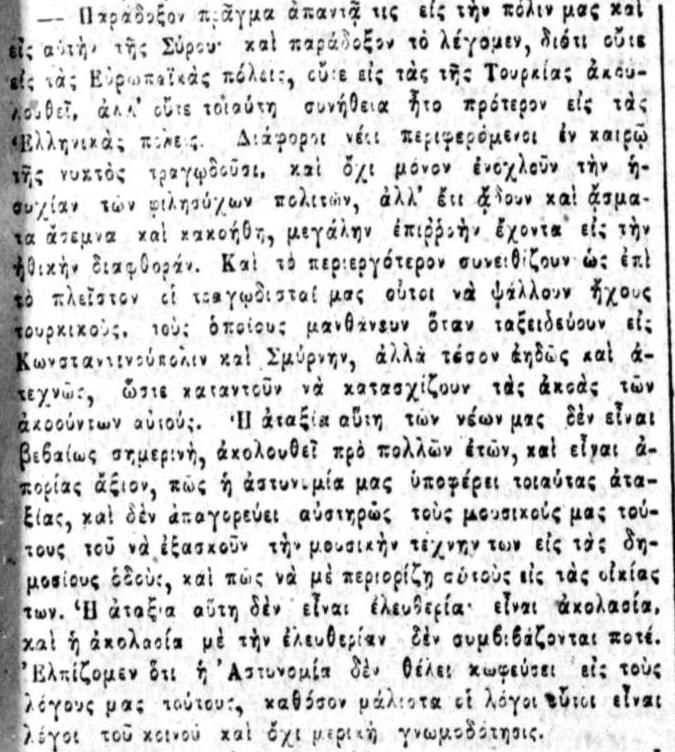
Very early reference to young people singing songs “obscene and malicious” in the streets to “Turkish tunes” (ATHENS 13 2 1857)
2 Likes
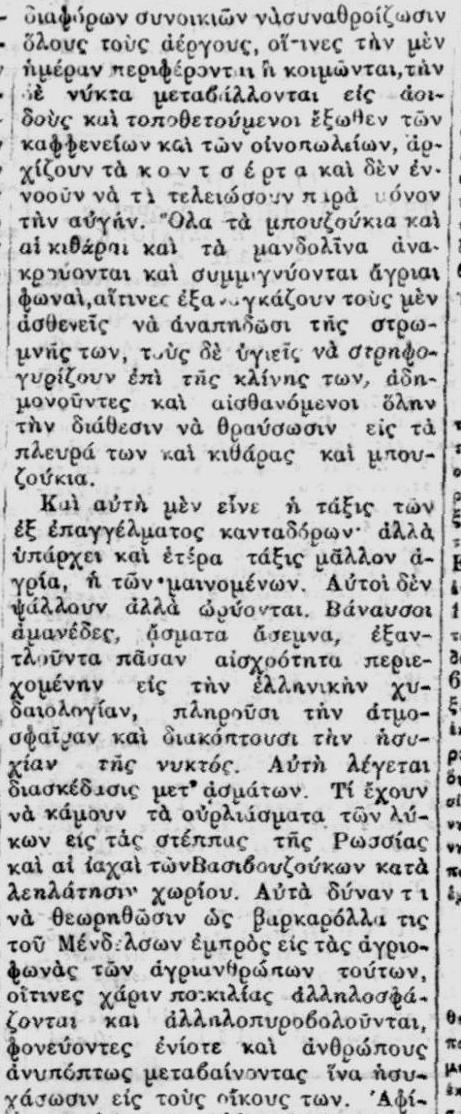
A din of bouzoukis, guitars, etc. outside the “dimly lit coffeehouses” of the neighbourhoods (AKROPOLIS, 28 April 1890)
3 Likes
1890 Bouzouki in Athen ! Thank you Anthimos
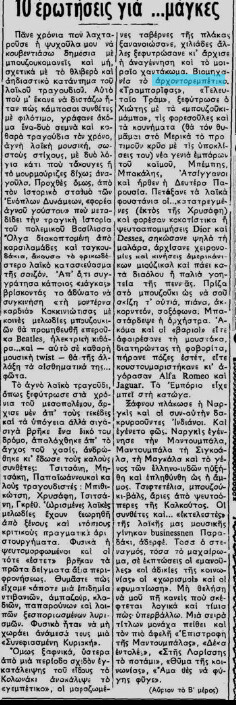
An interesting critique of contemporary urban folk music. I’m impressed that the author knows about/mentions Bembis as well (CHIAKOS LAOS 30 9 1964)
1 Like
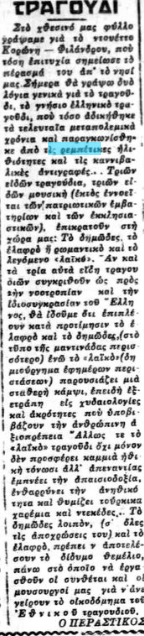
And once again from Chios, criticism of folk music that “inspires pessimism, encourages immorality and recalls Turkish harems and hashish dens” (PROODOS 9 7 1955)
1 Like
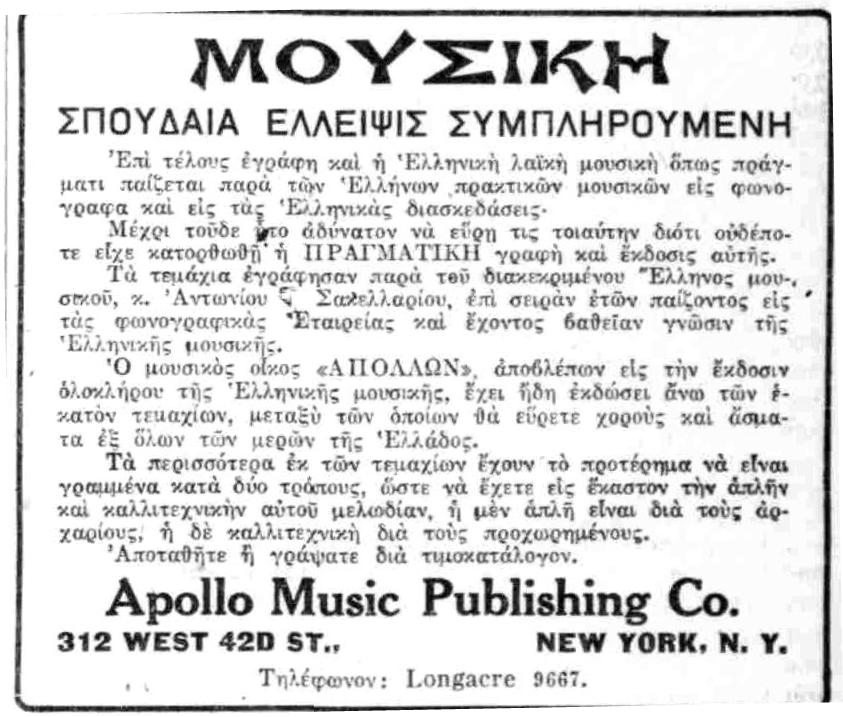
An interesting project by the renowned clarinetist Antonis Sakellariou (National Herald, 14 March 1923)
3 Likes
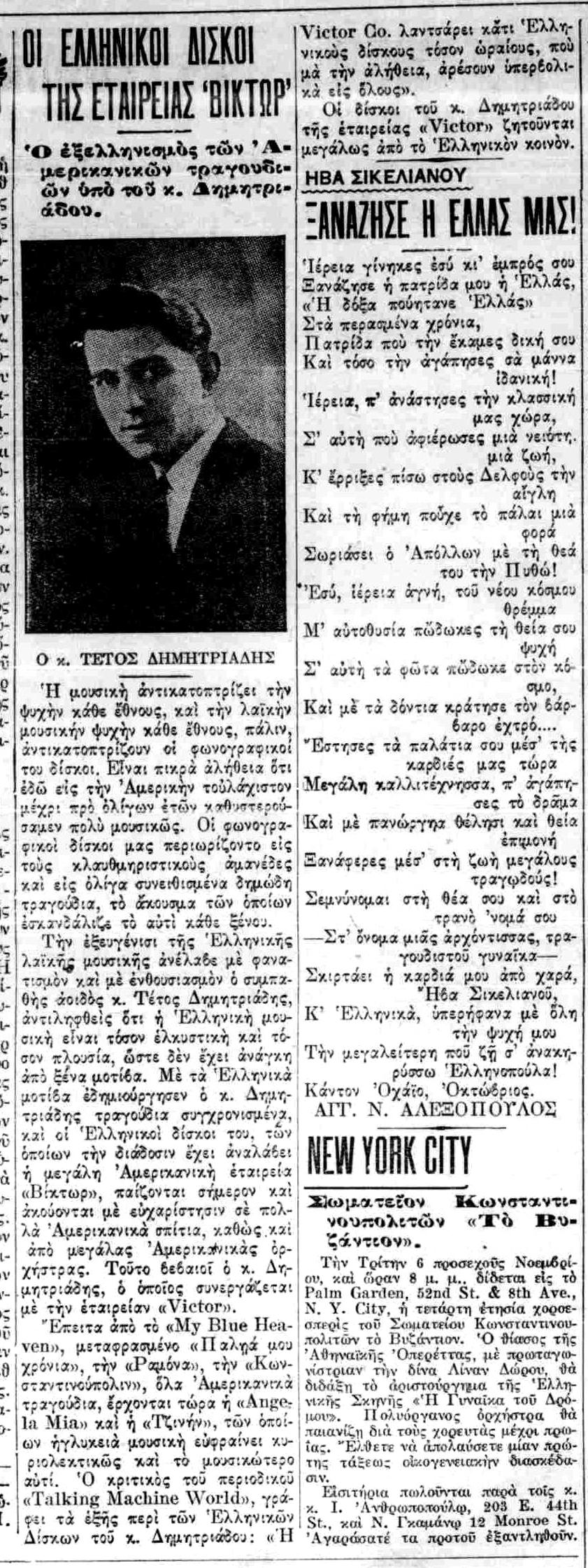
And a poem for Eva Sikelianou
Well, all right, the American songs have been Hellenised! We can now sleep proudly—we’ve conquered America too!
1 Like
The lawyer Damianos Vore describes how every newly convicted prisoner entered prison in the year 1900 (AKROPOLIS, 27/2/1900): with his bouzouki over his shoulder!

3 Likes
“The other spectacle, almost equal in grandeur, is the one with which the Oriental café chantant regales us on summer nights. To the impassioned sound of violins and santurs, the fifty-year-old prima donna, with her missing teeth, pours out an amané, languishing with passion, while her young assistant performs her dance in the wooden booth; meanwhile, the slipper-wearing women of Plaka and Vatrachonisi swarm beneath the columns with their little ones, and the toughs, burning the incense of their admiration before the prima donna, shout the now-famous cry:
—Goodbye, seal!”
(ΣΚΡΙΠ 6/12/1895)
1 Like
if it isn’t simply a typing mistake, it’s the (word of Italian origin) “primadonna”, with a somewhat “Katharevousa-ified” pronunciation of the d.
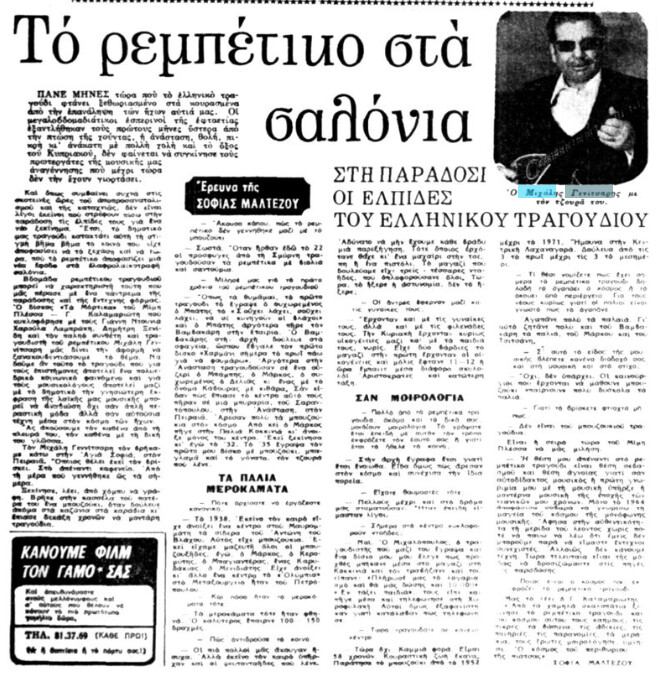
With reference to Plessas’s “Mortika”, which we were discussing in another post, here’s an interesting interview with Genitsaris (AKROPOLIS, 17/4/1975)
2 Likes
Rebetiko should be declared unsuitable listening for minors and adults… (VOICE OF CHALKIDIKI 20/3/1955)