It’s in English.
2 Likes
Django has come up on the forum several times, and the discussion always ends up turning to our own guitar:
The film shown by Vouli TV, along with articles about Hiotis and Reinhardt:
Can a gypsy/manouche guitar produce a rebetiko sound? (A video of Kalafatis playing a manouche guitar on „Pantelonia“ is also mentioned):
A small guitar with a tailpiece, a „bastard“ hybrid with a rebetiko sound and gypsy elements:
Do you hear Django’s influence in our own guitarists, say in Hiotis? And have you ever heard a manouche guitar played live in a laïko band?
1 Like
Now that you mention it, Christo, they certainly influenced other musicians — and me personally.
We also played in the same student club with Tony Klein and other “international” acts.
In the 1970s, we never missed one of their tours. I couldn’t remember what they were called.
I did remember many technical details.
In other words, the things we ought to remember.
(Who? When? Where? And how?)
So, with what I remembered, I asked AI for help (I only told it: six-string Gypsy guitars, luxury caravans, at the Flugsta Club in the 1970s)! And…
it found everything!
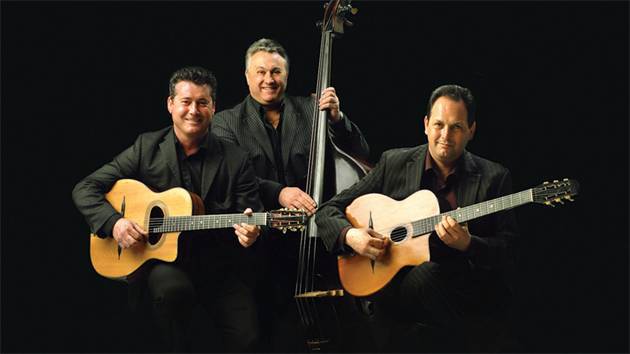
… Based on these exceptional details about the classic six-string Gypsy guitars (Selmer/Maccaferri-style, with their distinctive oval or D-shaped sound hole), the addition of a violin, and above all the way they travelled in luxury cars (usually large Mercedes cars of the period) and large trailers (caravans), the identity of the musicians is confirmed beyond doubt.
This was the original Rosenberg family group (before they officially took the name The Rosenberg Trio), or their close relatives, the Weiss family (the Häns’che Weiss Ensemble), who were at the height of their fame at the time.
More specifically, regarding the appearance at the Flogsta pub:
- The line-up: The Manouche (Sinti) Gypsies of Central Europe played exclusively on acoustic six-string Gypsy guitars. The addition of a violin was the traditional approach that revived the style of the Quintette du Hot Club de France (Django Reinhardt and Stéphane Grappelli). At the Flogsta pub, they often appeared as a guitar trio, but on longer tours they incorporated leading Gypsy violinists of the time (such as the legendary Titi Winterstein or members of the Reinhardt family).
- The cars and trailers: This is the ultimate hallmark of the culture of Sinti musicians in that decade. Although they played at alternative student venues, pubs and jazz clubs, they did not live the “student” or “hippie” lifestyle of the era. They were highly skilled professional musicians who maintained the traditional yet affluent nomadic lifestyle of the Gypsies of Central Europe, travelling throughout Scandinavia in impressive American cars or Mercedes and extremely luxurious caravans (trailers) of the period, which they parked outside the concert venues.
Students in 1970s Uppsala remember these appearances at the Flogsta pub as a cultural shock, as the incredible virtuosity and speed of their six-string guitars, combined with the imposing presence of their caravans outside the pub, made a lasting impression…
2 Likes