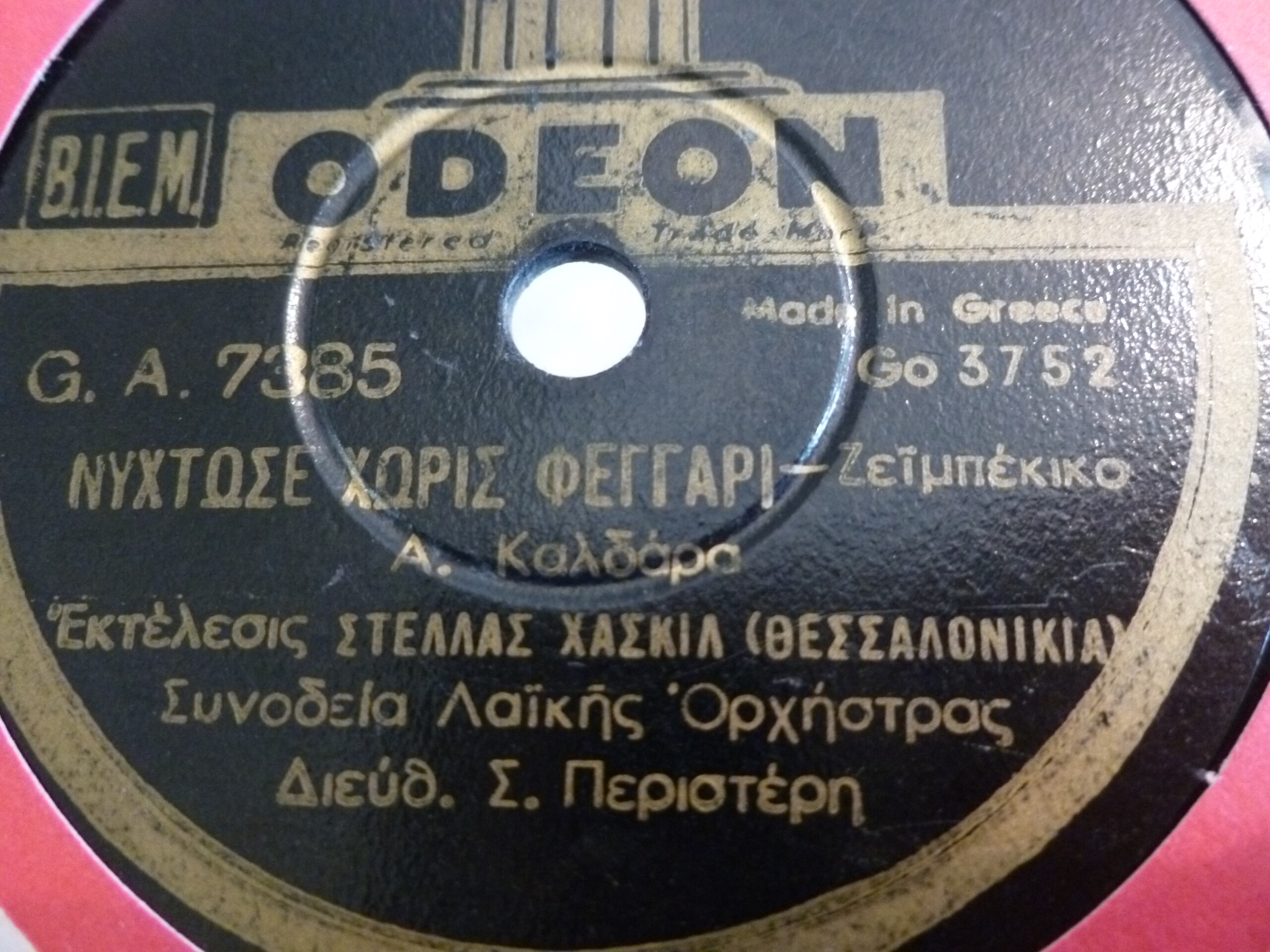
To prevent what you describe from happening, the artist resorts to self-censorship. And this is the worst form, the most internalised one, born out of fear. A work created within the artist never makes it onto paper, let alone into the public sphere. And, little by little, they learn to write in this way, more harmlessly, and to stifle their creativity.
(We see it not only in artistic production, but also wherever censorship is applied—for example, in journalism and on social media.)
Well, if the aim is to get the song released at all costs, then we end up with censorship either way, whether self-imposed or enforced. At the same time, you can circulate your authentic song unofficially, in whispers, by word of mouth.
What does combining these with a voluntary confession to the regime achieve?
I also wonder how the regime in question itself reacted to these confessions.
Self-censorship can also exist simply as a precaution, not only because of internalised fear.
But it nowhere says that he submitted it to the committee exactly as it was. He knew what would happen and wrote alternative lyrics for the record.
Sometimes this would happen as well: the committee would unexpectedly cut suggestive lyrics, or anything the censors, in the grip of their obsession, imagined to be suggestive and potentially subversive or obscene, etc.
We should also not forget the regime’s “artistic supervision” under Metaxas, which also extended to music; there, too, things are much more fluid when it comes to what would be cut.
I suppose there would initially have been naïve attempts that would have run up against the walls of censorship, but they soon learned the committee’s ways.
Edit: I’ve added the continuation that talks about the cutting.
One interpretation I can offer is that, after 40 years (I assume) had passed since he gave the interview, what had remained with him was the prevailing atmosphere, rather than the censorship committee specifically. Because, as we analysed earlier, the existence of a censorship committee is one thing, and the existence of censorship another.
Amid the civil war and the repressive right-wing state, even Kaldaras, who does not describe himself as a leftist, is indeed moved by Yedi Kule, but knows that he cannot release the song in that form.
I assume that when censorship is mentioned, record companies should be included alongside the state committees. After all, from the outset (by definition), they were the ones approving or cutting songs, or even intervening in their content. So, in the circumstances described by Kaldaras, the phrase “censorship had cut it” might also—I would assume—refer to intervention by the record company, along the lines of: change it, because this is no time for things like that…
Apart from that, there is also an example of a “discussion” with the state (Metaxas-era) censorship committee involving Papazoglou. They told him: “Very nice, Mr Vangelis, but could you change the lyric ‘free to live’ to ‘happy to live’?” He replied: “If I’m not free, I’m not happy,” and left; naturally, the song was never released… (And I can’t remember whether he recorded another song after that.)
But also, as for the three songs in the document from the commander of the Nea Ionia Gendarmerie, how far could even the mechanism of self-censorship have gone? The song about the mother waiting for her child to return from abroad? The Yedi, which had already become the moon, and the cell, which had become a candle? The line “How much longer must we live such a life, separated from one another”?
@Vangelis91
First of all, I have to say that I liked it as a cover. Zervoudakis’s voice and singing may bring more art-song-oriented music to mind, but the musical approach and interpretation show the utmost respect for the original rendition. I hope there will be more attempts like this, with similarly great results!