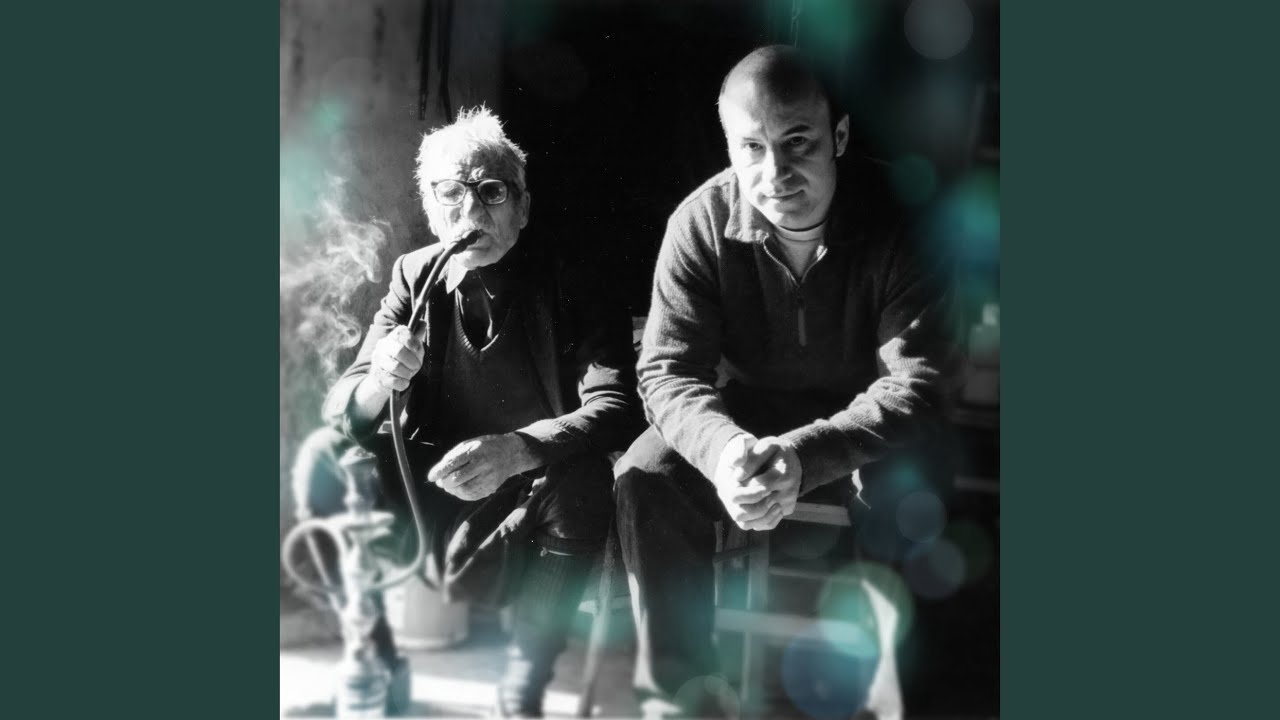
Welcome, Yiannis, and thank you for sharing your own rendition! It’s no small feat to take on “The Junkie’s Pain”, one of Anestos Delias’s most emotionally charged songs.
Tell us a little about your arrangement: which instruments you play, what tuning and key you used, and which rendition you had in mind. Delias’s original, or a later version?
2 Likes
Good morning, Christos, and thank you for getting in touch.
I had heard Delias’s rendition. I was also familiar with the “reworked” version with St. Pagioymtzis.
I was working on Theodorakis’s “Lyrika” when, amid the country’s crisis and the bailout memoranda, I came across Pagioymtzis’s reissue and thought that it diminished what you call the “emotional charge”. I also drew a parallel in my mind with the situation in the country, which is itself “addicted” to loans and misfortunes, unable to “break free”. Delias’s prophetic rendition, prophetic in relation to his own fate, has always moved me. I said to myself: “Don’t get involved with it now. You don’t have time.” But I couldn’t resist, and within a few days I had prepared and completed this new rendition, based on my thoughts about the man from Smyrna and the situation in the country. That was the image I had at that moment. The song was released in 2024. (Quite a few years later, it will be included in a cycle whose theme is the EXODUS of the Greek refugees from Asia Minor.)
For me, every song that touches me is, in itself, a theatrical performance. That is why the rendition was divided into four parts. 1. Exposition (song) 2. Intermezzo in 5/4, with the addition of the sabah theme on guitar 3. Conclusion (song) 4. Instrumental response and closing conclusion.
The guitar is tuned to drop D
Laoutobouzouko (custom-built D-A-D)
Bouzoukis – tzouras and baglamas (all six-stringed)
In the intermezzo, the bouzouki is custom-built, with a 1930s sound (small body)
Santouri
Double bass (flageolet, pizz.)
Piano
Percussion
I hope I’ve been of help,
Best wishes, and I hope your creative work continues to go well.
GS
4 Likes
2 Likes
Yannis, welcome to the group  And well done both on the work and on the way you explained it to us!
I would never have thought of breaking “The Junkie’s Pain” into acts, like a play. But when you read it and then listen to the rendition again, it makes sense.
I was also moved by the parallel with the years of the bailout memoranda. An addicted man who cannot escape and a country trapped in debt…
It also seemed that you had been influenced by Theodorakis’s “Lyrika” in this rendition; I can hear touches that point in that direction, but I only made the connection when you wrote the post.
The instrumental palette also caught my attention, especially the bouzouki with its ’30s sound in the intermezzo, alongside the santouri and piano. As if you were standing in two eras at once!
We’re looking forward with interest to the cycle about the Exodus from Asia Minor. When it’s ready, we’ll be delighted if you share it here.
And if you ever feel like it, tell us a little about the laoutobouzouko (λαουτομπούζουκο) you built yourself. I’m sure our instrument-making friends would love to see it!
1 Like
I’m always impressed by people who have such broad knowledge and skills when it comes to music. Multi-instrumentalists, instrument makers, arrangers, sound engineers, and so on. I’ve been struggling to learn just one instrument for so many years, and I still haven’t mastered it…
So the broad perspective here is truly impressive. I take my hat off to you.
One (strictly personal) thought about the song in its original form: I don’t know whether Delias intended it this way, but when I listen to it, the alternation between major (zaskiar) in the introduction and minor (nihavent) in the lyrics conveys a great emotional distance to me. It’s as if the major represents the world that ignores Delias’s pain and loneliness, while the minor emphasises just how alone he is, surrounded by this happiness/ignorance.
So I would say that the theatricality is very pronounced in the first performance.
4 Likes
Eugenios Voulgaris offered a very nice interpretation: the introduction is intoxication, while the voice is the high…
5 Likes
What you said, my friend, about songs that are like an entire theatrical performance really struck a chord with me. That’s always how I’ve had it in my mind. As someone who knows nothing about harmony or makam, I think the other approach is this one: the psychoacoustic one, I’ll call it that, and I hope the term makes sense. Not that the established artists don’t understand that, of course. I liked what I heard. I was—and still am—a big fan of the old way, but I reckon any approach carried out with the respect people talk about is a gain. Of course, I agree with you on matters concerning the country, and this is where the “beauty” lies. A drug-den rebetiko is still so timeless… Something I’ve noticed about the great old rebetika (there are never many true gems…) is this timelessness, and their ability, despite being based on such a simple, bare-bones musical form, to convey so many meanings, even though at their core they deal with shallow and simple things. I mean that as a compliment! Brilliant.
1 Like
Hello everyone, and thank you for the thoughts you have shared.
First of all, let me correct a misunderstanding. I do not make instruments. However, I talk to instrument makers and ask them to make them in the way I suggest.
For example, I asked Thanasis Mitrentzis to make me an instrument in which the D (the first one) has a mourghana in the middle, with two Ds above and below it, D4–D3–D4. The same applies to the A. The lowest one has two mourghanas: one D3 and one D2 (the E2 of a classical guitar in drop tuning). The neck is short and the body is smaller than that of a lute. This idea came from Michalis Georgiou from Cyprus.
Another commission is as follows. I give the mandolin to the craftsman. He makes a mould of the body, modifies it slightly and builds a bouzouki with an “old sound”.
Or a tzouras with a bottle-gourd body
and so on.
I am looking for distinctive sounds.
I DO NOT MAKE INSTRUMENTS, BUT I WOULD VERY MUCH LIKE TO.
The first samples from “EXODUS” can be found at the following links. I hope they are revealing. I would also like to hear your thoughts on the arrangements on the album “Zivania and Tsamarella”.
May we all be well and continue creating

Tell us a little about the album (if you can and would like to, of course). I had a quick look, but it would be useful to have the perspective you bring before I listen to it. I really liked the description in your original post, and I listened to the cover you added afterwards with a different “ear”, which I really enjoyed!
Hello again. If you mean “Zivania and Tsamarélla”, I could briefly tell the following story.
In 1999, some friends of mine from Cyprus visited me here in Thessaloniki so that we could go on holiday to Halkidiki. The car stereo was broken…
-“What do we do now?”
\–We sing!
\–What shall we sing?
\–Let’s sing “Amaranto”
The sound of five male voices was amazing.
\–Guys, shall we go back and record it? (I asked the others; I used to—and still do—run a recording studio.)
The others’ reply:
- Why wouldn’t we?
So we went back, chose the songs, made a guide track, and I put two microphones in front of the group. Before we started, one of them shouted to me.
\–Wait, I’m coming…
He came back with a bottle of chilled zivania (Cypriot raki) and a piece of tsamarélla (salt-cured goat meat).
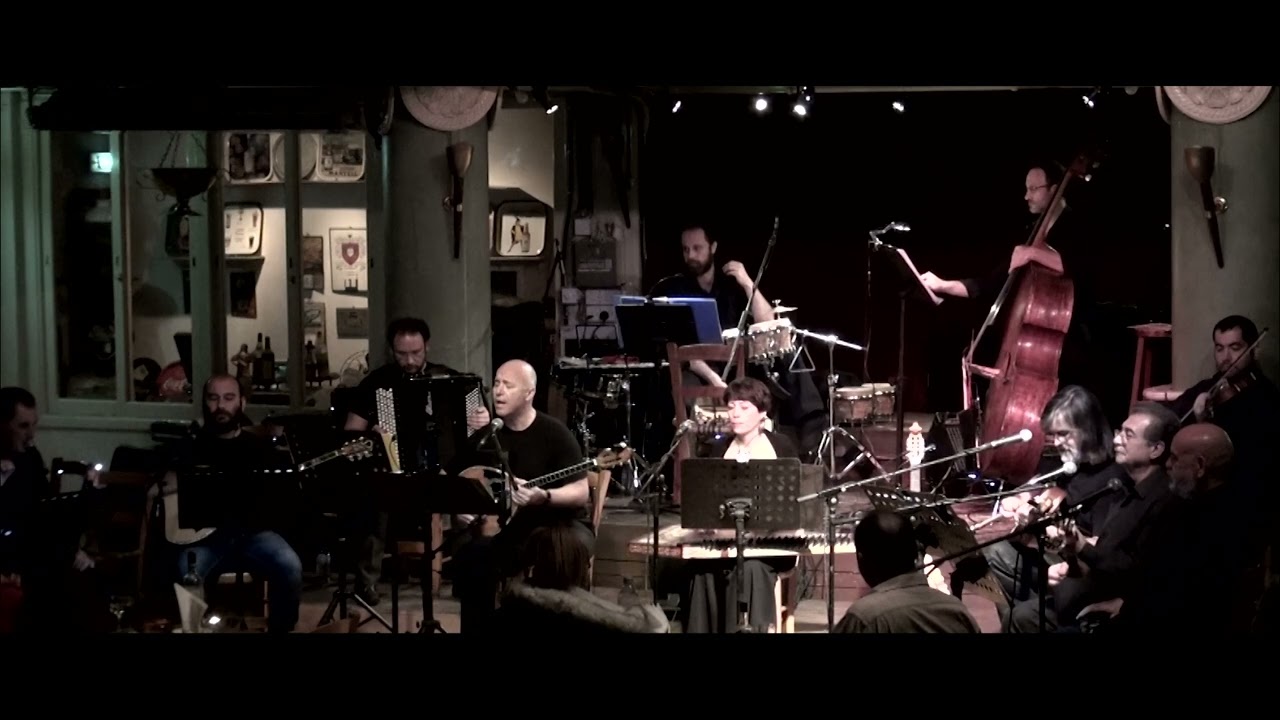
We recorded only five or six songs. We recorded the rest later in Cyprus. Finally, I “dressed” the voices with the arrangements. I also added a few musical notes. It took me 15 years to finish it because I was travelling around the world… The presentation took place in Nicosia…
That’s the story in brief. Thank you for your interest.
3 Likes
sorry for the typo:
Brevity*
Amarantos, and why don’t you tell us, along with „The Junkie’s Pain“. The playlist is exactly where we want it! The first teacher of covers and unusual arrangements in rebetiko, Manos Hadjidakis. He left the thread in a good place, and it’s wonderful to see it being continued.
I’d say all the covers are fantastic! I listen to them constantly and can’t get enough of them.
@Ιωάννης, I found you on Spotify too and followed you so I can listen to your music. I hope you’ll create many more wonderful pieces like these.
Thank you for sharing these beautiful works with us!!
1 Like
You know, back when I was a hardcore purist, when Tsitsanis was a skylas and all that, I wouldn’t even dream of listening to re-recordings. Now I actively seek them out.
1 Like
Good evening, everyone, and thank you for your opinions.
There are many views when it comes to reworkings. I respect them all. Mine is as follows:
Creators capture their feelings, thoughts and concerns. Their subject matter draws on the dominant elements of their inner world, as shaped in turn by the time and place in which they live.
In short, and specifically regarding the creators of rebetiko:
These people wanted to say and express something as it welled up inside them. There was a need for an aman and an amen (as St. Xarchakos writes).
Another factor is the means available to creators in each era to bring their work to life.
We are not rebetes, and we cannot be, because we live in a different time and in a world that has changed. But we can discern — each of us in our own way and according to our own spiritual aims — what “speaks” to our soul.
We are the heirs, whether we accept the inheritance or renounce it.
As an heir myself to the culture of this people’s previous generations, I feel that I would like to reveal to myself the timeless elements present in rebetiko, synchronising them with the signs of the times in which we live. I also use the means provided by my own era.
After all, when the rebetes were given more resources, they used them too — different musical instruments, better recording conditions, knowledge of Western-style music, and so on.
The goal is ONE! TO SAY OR TO SAY AGAIN WHAT WE WANT.
The criteria are twofold: HONESTY AND RESPECT FOR OURSELVES AND FOR THOSE WE ADDRESS.
Whether you rework a piece of rebetiko by imitating the era that gave birth to it, or adapt it according to the demands of your own era, it would be good to do so with respect and sincerity. These qualities are reflected in the result of every piece of work anyway.
Not everyone will recognise it. That is not your concern. Even if you touch just one person in this world, that is enough.
As for me, I work with these things in mind. These are the arrangements that reveal themselves to me, and I am glad that some people in this group have listened to them.
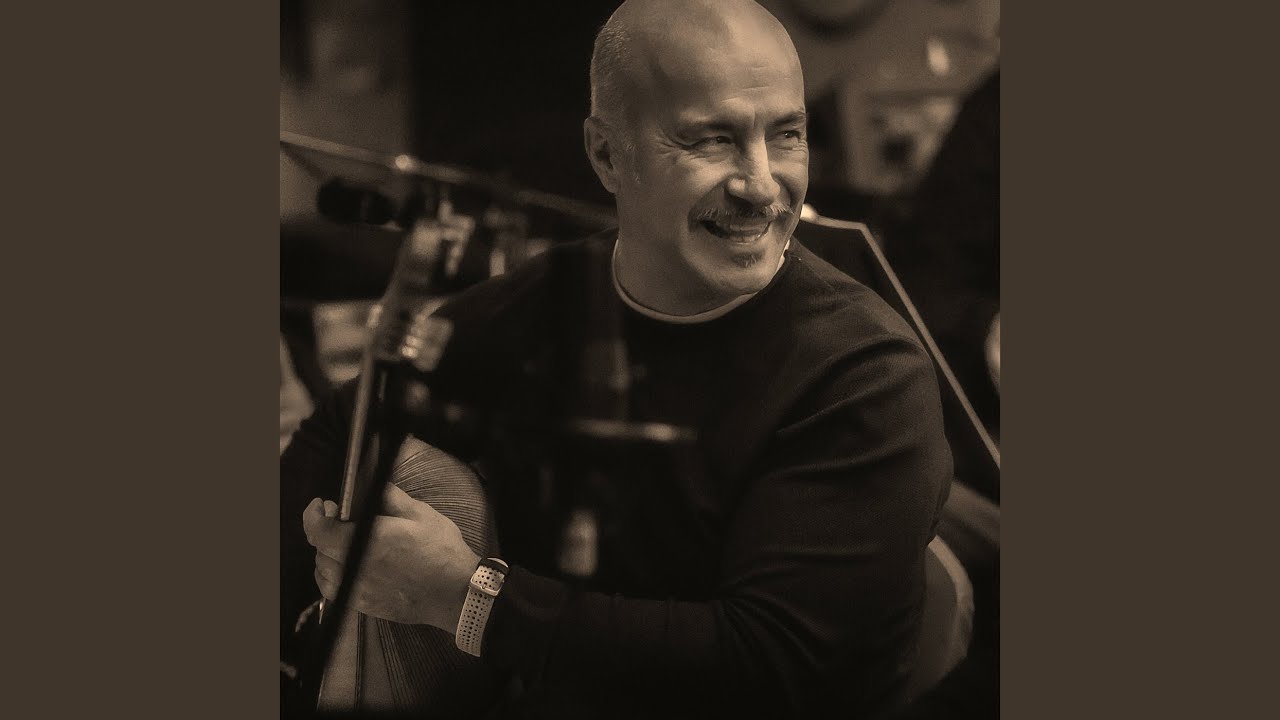
I am sharing a link to a piece I wrote for the theatre in 2001 and rearranged in 2024. It takes me on a journey through the world, with the sound of rebetiko in my ears as my little boat.
All the best
1 Like