It is from Grigoriou’s film (1953)
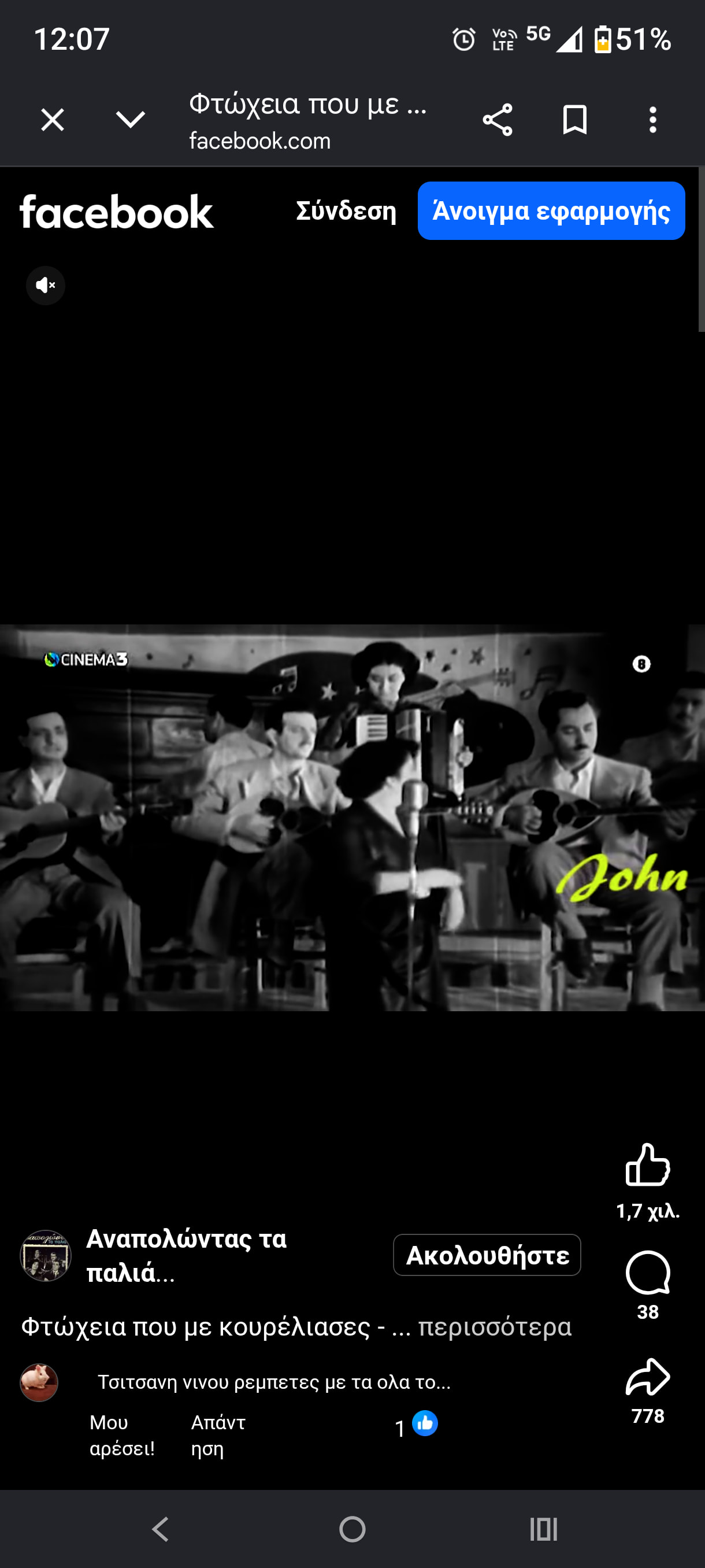
Judging from the photograph as well, Thanasis Giannopoulos is playing the guitar that can be heard.
Athanasiou accompanies Tsitsanis on bouzouki, while Margaronis plays the accordion.
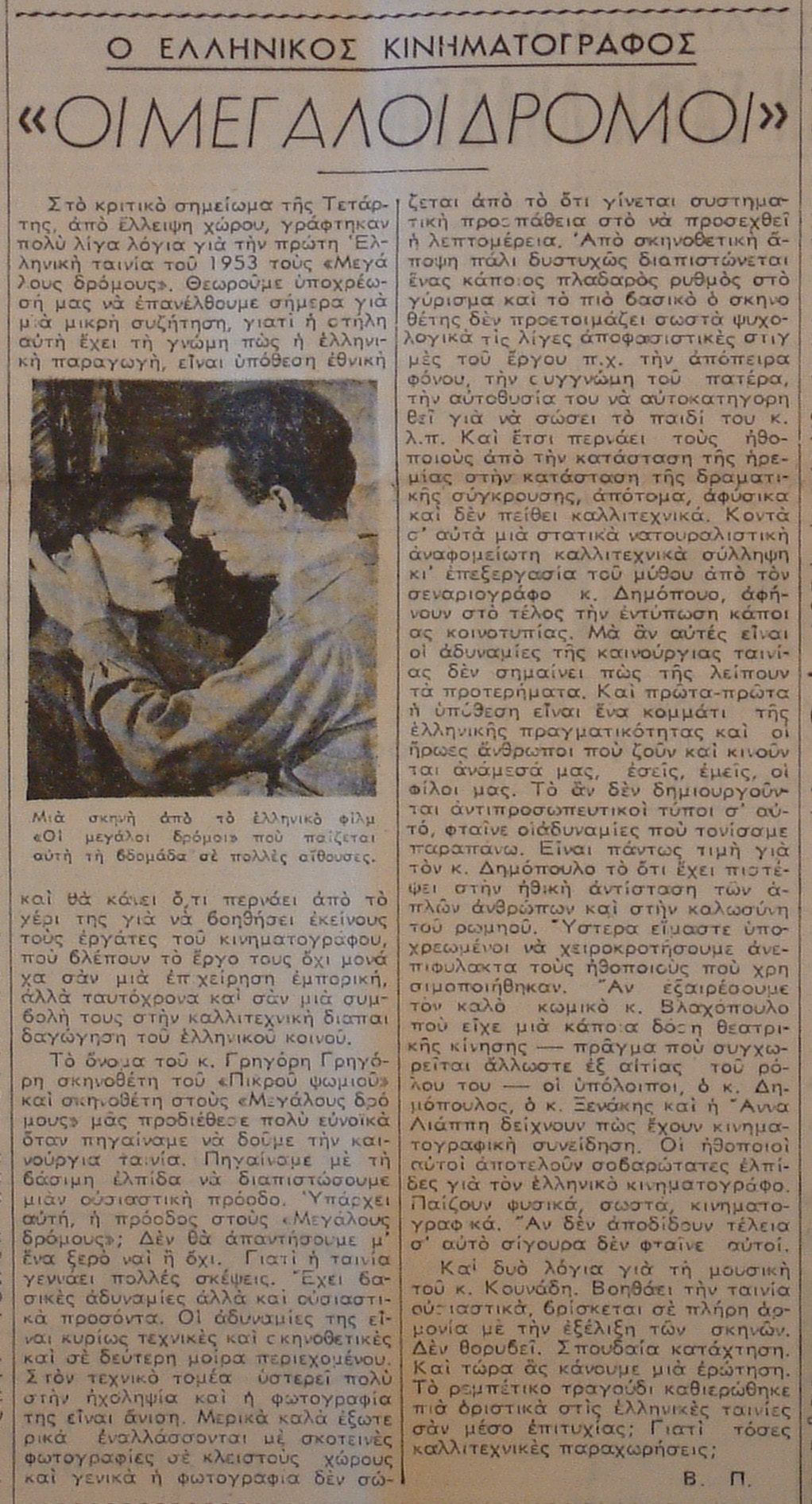
The film is “The Great Roads”, directed by Gr. Grigoriou.
1 Like
The conclusion of a review of this film in the newspaper AVGI is also interesting:
“And now let us ask a question. Has rebetiko music now become definitively established in Greek films as a means of achieving success? Why so many artistic compromises?”
2 Likes
Indeed, since—as is well known—I did not buy Avgi, whether or not Rizospastis was also being published, it would be interesting to know which music and songs (Greek or foreign) the newspaper’s readers liked in those days, and to what extent the newspaper covered them in its pages.
1 Like
The person on the far right might also be playing guitar in the photo, hidden in the shade (below the “8”).
I suppose it would have been a two-way street: in a film that also “features” music, each component would lend a little success to the other.
I don’t think it was something that applied only to rebetiko or laïko and Greek films of that era. In any kind of cinema or theatre where the work isn’t primarily musical but also includes scenes with music, doesn’t the same thing happen? They say that, in the old days, people would go to Karagiozis performances to listen to klephtic songs and amanés.
As the schoolbook on YouTube says, what we hear has nothing to do with what we see in the film.
In the film, we see Tsitsanis, Margaroni, Nino, Kreouzis, Anestos Athanasiou (Gypsy)
And we hear Bini and Papadopoulos.
Bakalis plays the bouzouki.
See 3086 in “What song are we listening to now?”
Vogioulaki performed musicals at the theatre with her troupe, such as Evita. And on television, operetta — The Merry Widow. Her films are of this kind: musical and dance performances with dialogue linking the scenes. Other film stars also emerged from the musical and dance tradition of operetta, revue, etc. Konstantaras, Vlachopoulou and so on. Once the bouzouki had become established, including “in the salons”, it was only natural for it to enter the cinema as well; music was already present in films and was adapted to the new trend.
Certainly, from an artistic point of view, the New Greek Cinema reacted against this formula. Perhaps the Avgi critic was connected with this generation of directors?
As for the Avgi critic, I don’t know whether he was connected with directors, actors or anyone else. The ‘perspective’, at any rate, through which he viewed everything was related to political positions, not to specific generations of directors…
I mean, hang on a minute: just because Avgi was an official party organ (of the KKE in 1953, I think), is that enough for us to conclude that a film critic—anonymous, or at any rate unknown to us here—who wrote this sentence in a text we haven’t seen could not possibly have held an artistic opinion of their own and was merely following a political line?
of the EDA
Well, just two clicks away 
And you should have seen what happened when, two years later, Cacoyannis’s „Stella“ was released…
1 Like
I reckon New Greek Cinema is a considerably later development than 1953…
Around 1965, this artistic movement emerged
An artistic viewpoint—and, more generally, any viewpoint that departs from the party line—has never existed in a left-wing party. So, probably …..
With the caveat that I haven’t read the complete body of film criticism, or criticism of any other art form, published in left-wing papers, I find it somewhat sweeping.
In this particular text, V.P. identifies specific positive and negative aspects of the film. For example, he finds the cinematography rather unfortunate, but says that „Mr Dimopoulos deserves credit for believing in the moral resistance of ordinary people and in the kindness of the Greek.“ Is it really inconceivable that he genuinely found the cinematography rather unfortunate, but instinctively appreciated the latter point (which I chose deliberately, whereas the other point about the cinematography is… politically neutral)?
You’re being a bit over the top, to say the least. Look, for example, at Anagnostakis’s critical essays.
Fortunately, there are exceptions too—rarely, but they do exist!!
1 Like
So as not to leave her feeling slighted, here is part of the film review from the emblematic left-wing magazine Art Review:
“The swagger, the bravado, rebetiko song and dance, and the bouzoukia may have risen to the surface for a moment from the snobbery of a corrupt aristocracy or because of the misery and disappointment created by ten agonising years for our country, but they were never—and are not today—Greek reality. Nor was there any reason to take them to Cannes. The fatalism, servility, pessimism and despair of these songs, characteristics of the world of the dives that gave birth to them, have ceased to accord with the healthy sentiments of our people. Mr Cacoyannis, still a stranger in our country, has a duty to study Greek reality more deeply. It may still include the bouzoukia to some extent, but it is not confined to them. His aesthetic identification with the bouzouki enthusiast and composer of ‘The Accursed Serpent’, Manos Hadjidakis, is, to say the least, disheartening. Like him, he will move no one but the aesthetes.”
(Antonis Moschovakis, “Stella—a Greek film by Michalis Cacoyannis”, Art Review, issue 12, December 1955: p. 516)
1 Like
Cacoyannis was born in Cyprus in 1922, went to London in 1939 and came to Athens in 1952. It is understandable that he would have been viewed with suspicion by the Greek left-wing publications of the time, given his work with the BBC—perhaps also for family reasons, if they knew that his father, Panagiotis, had been made a “Sir” during the era of Palmerocracy.
1 Like
Yes, it seems the critic likes neorealism, although attempts to introduce it into Greek cinema, such as „The Neighbourhood of Dreams“, had not yet been made.
1 Like
Why don’t I have “quote” in the text selection anymore? Has something changed?
(In the photo, perhaps the one on the far right is also playing the guitar, hidden in the shadows (below the “8”).
You’re right, peple. You can hear one guitar, but we can see two guitars.
His name must be something like Michalopoulos.
We also see him in a film with Chiotis–Lafka and him, if I remember correctly.
Here he refers to him as Spaggadoros.
(Is this him?)
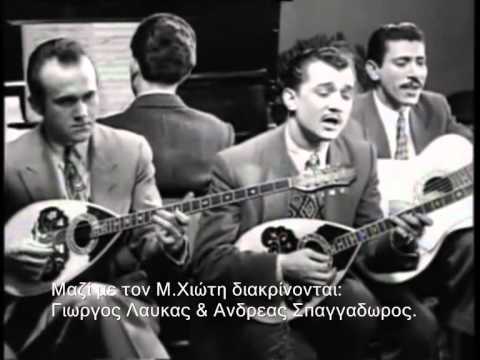
Film: Lost Angels (1948), Lyrics: Manolis Chiotis, Music: Manolis Chiotis, First performance: Andreas Spaggadoros & Manolis Chiotis,