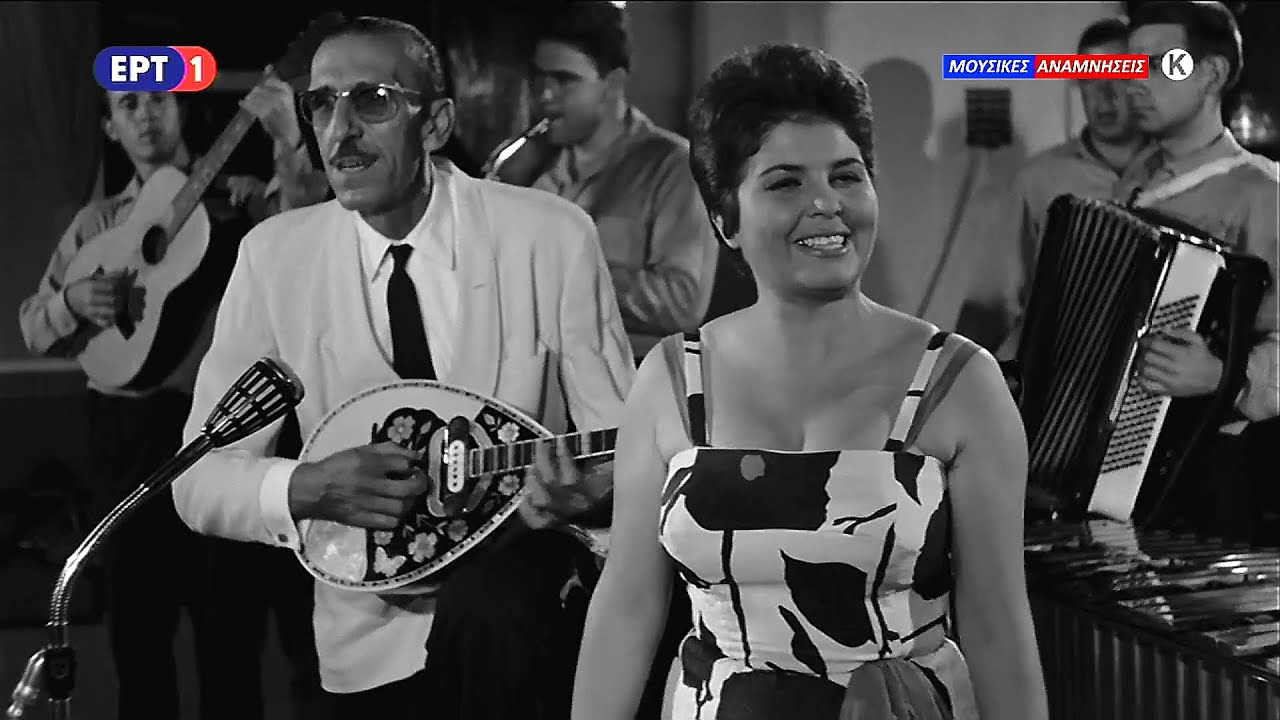
The ‘old’ horizontal way of holding the bouzouki

I can’t think of a better place to share these particular thoughts that have occurred to me both as a bouzouki player and as a lover of the instrument in general.

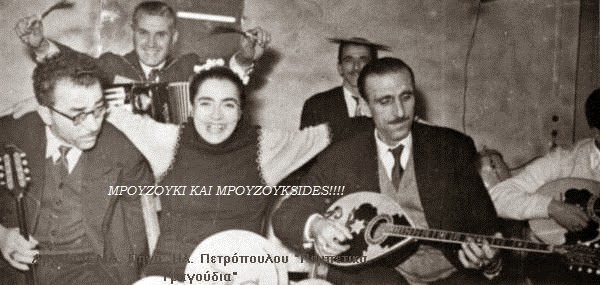
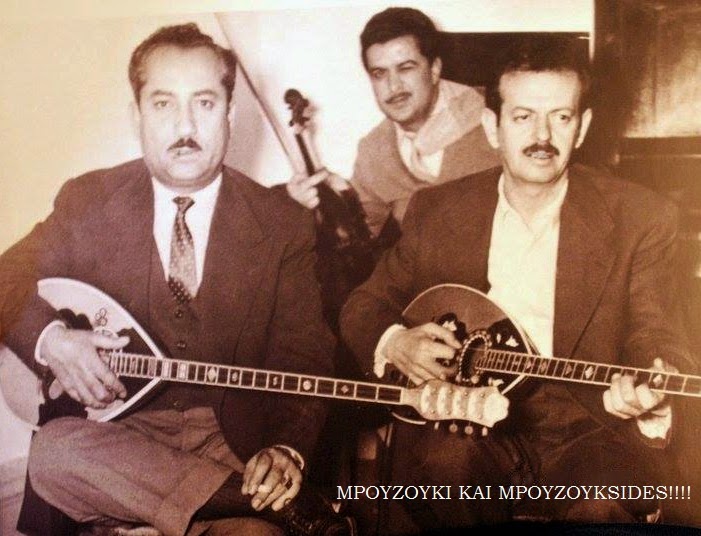
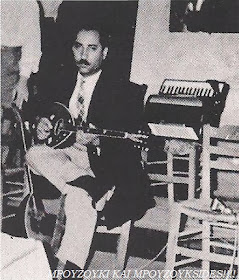
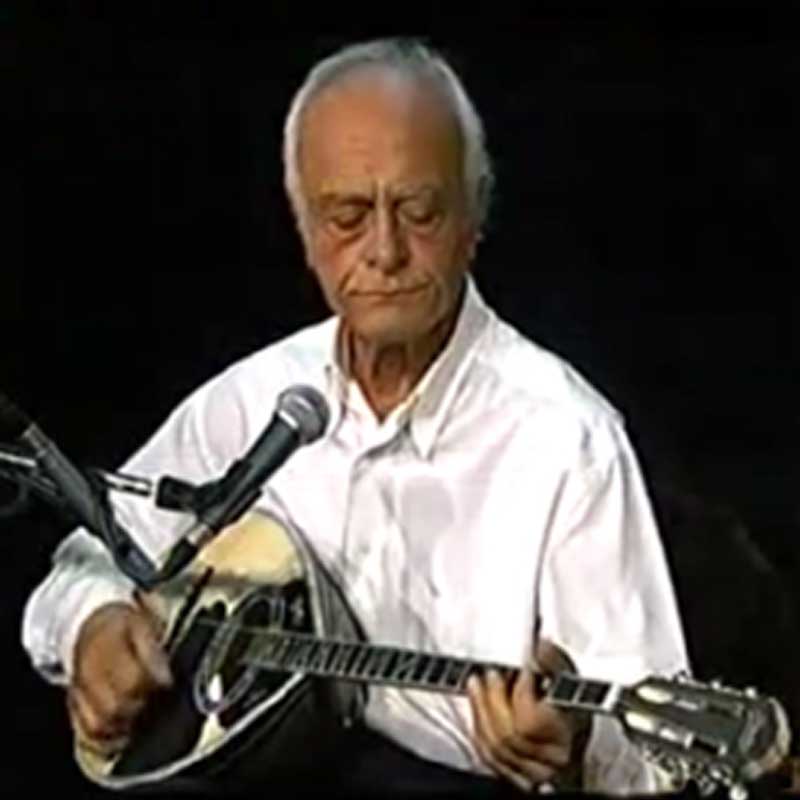
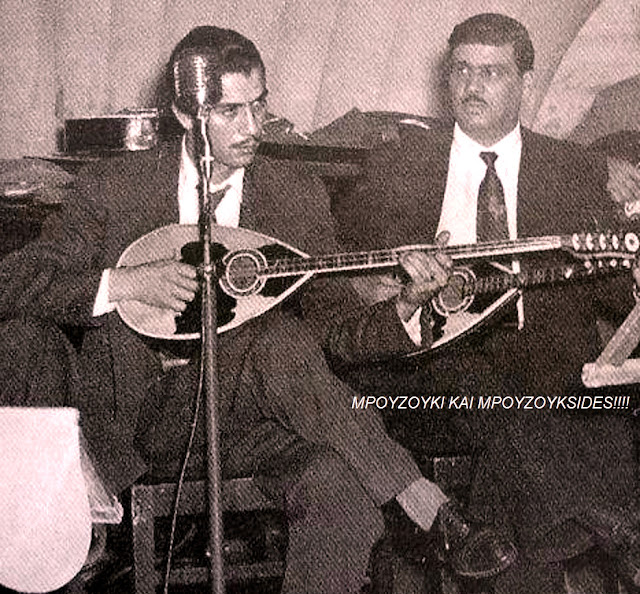
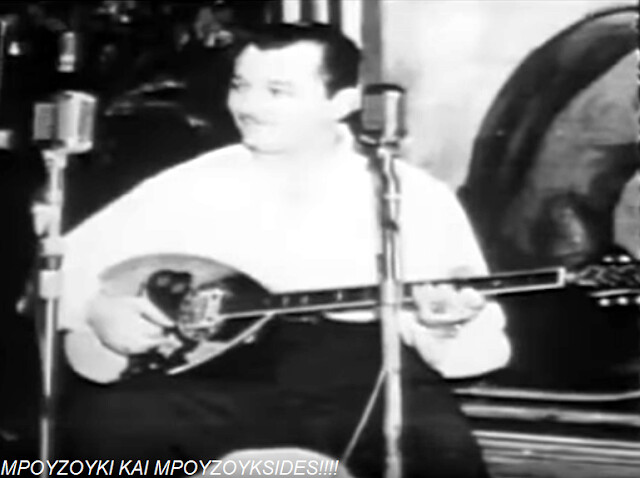
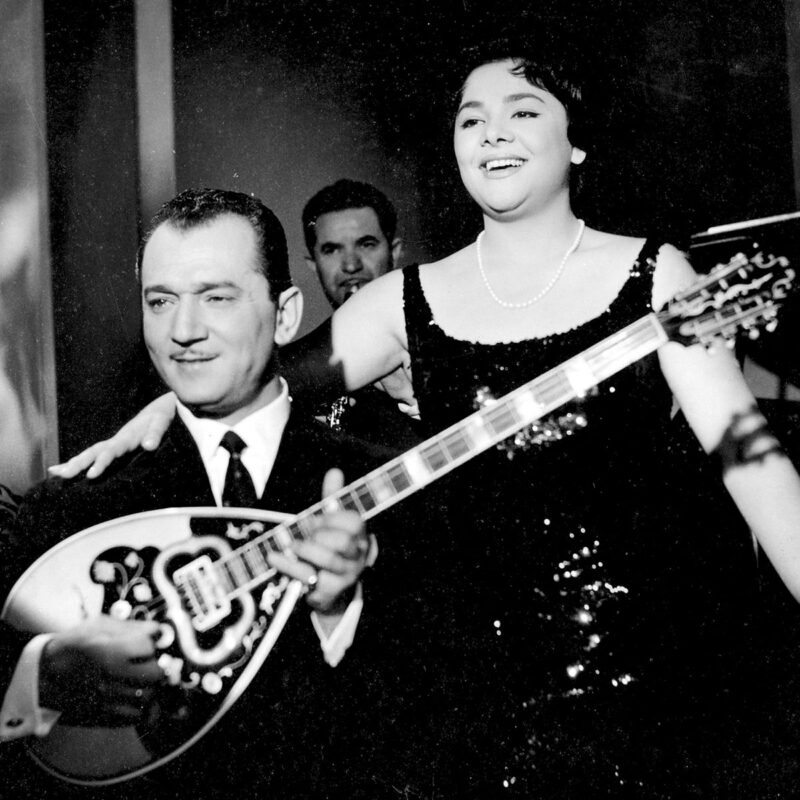
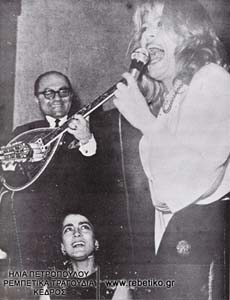
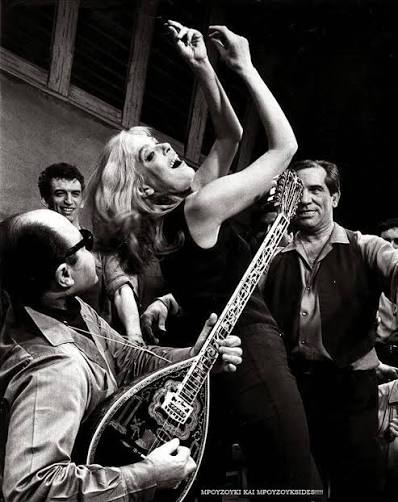
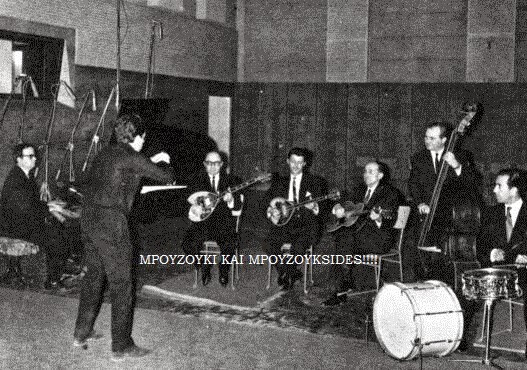
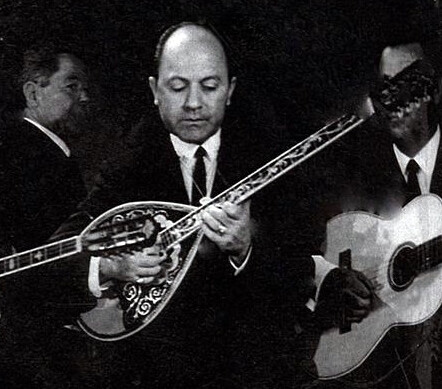
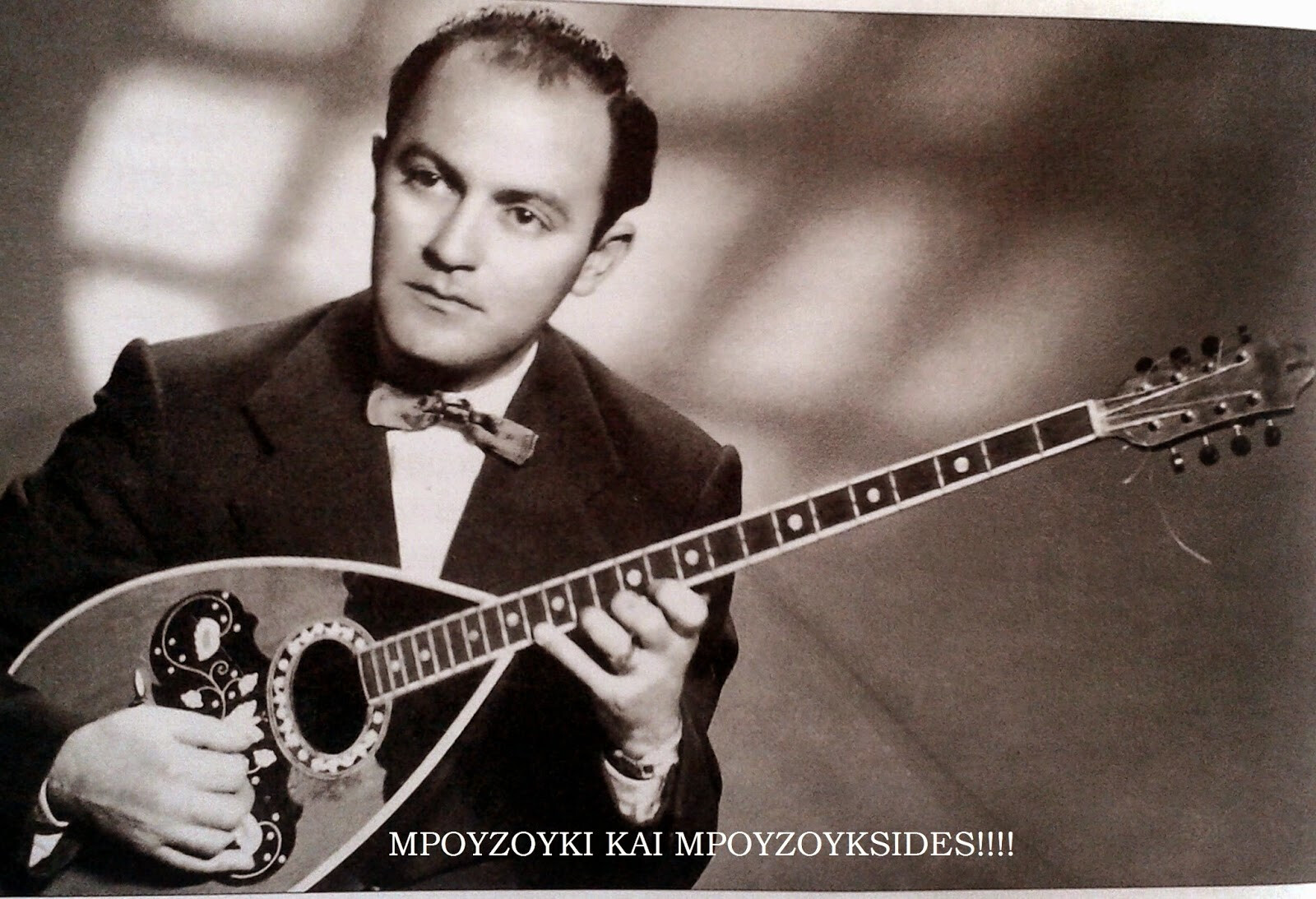
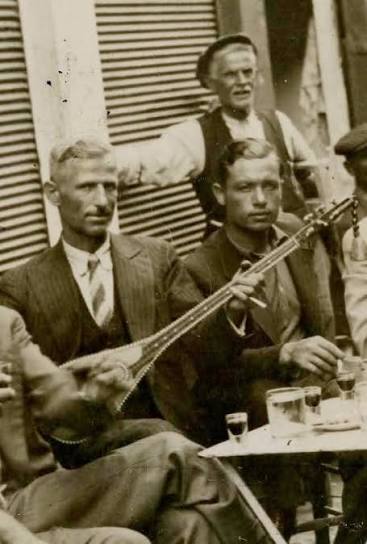
My thoughts, then, concern a phenomenon that we will all be familiar with, but which is very rarely discussed. Perhaps because, at first glance, it doesn’t seem to matter at all. Nevertheless, my interest has continued to be piqued by looking at old photographs (mainly on old stages): the way quite a few earlier players held their instruments. Unlike the predominant method we follow today, which involves resting the body of the bouzouki on the right thigh (for right-handed players) with the neck angled upwards, it can be observed that quite a few old players supported the instrument in a way that could be described as more “horizontal”, in terms of the instrument’s inclinations and angles. I’m including some photographs showing Tsitsanis, Papaioannou, Athanasiou, Makrydakis, and even Stouraitis using this particular way of holding the instrument:
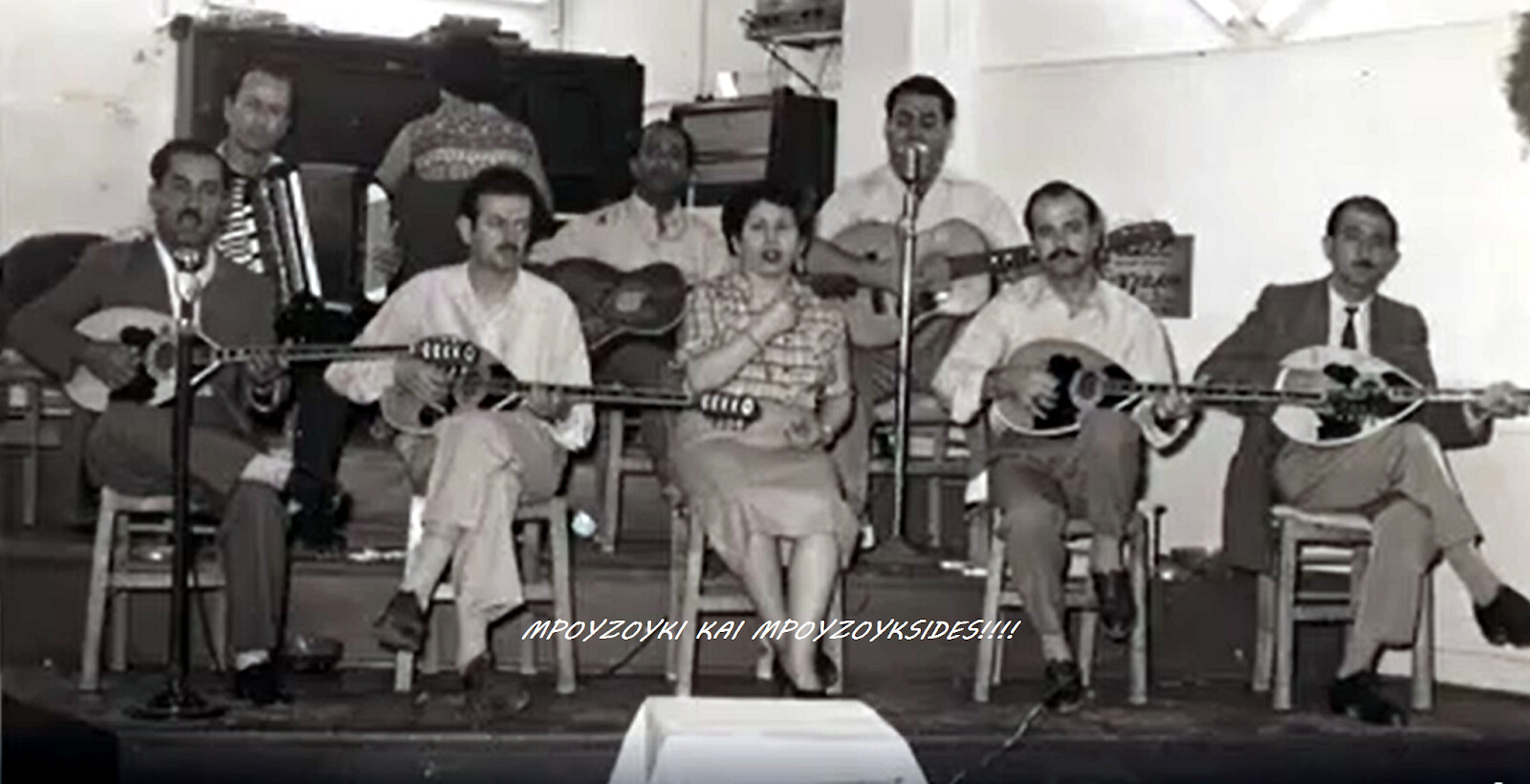
  1. It is quite obvious that this is not an accidental way of holding the instrument, since all four people in the photograph are holding their bouzoukis in a similar way. Perhaps it was a matter of space on the stage? That personal theory doesn’t convince me, though—why would the upward angle be a nuisance?
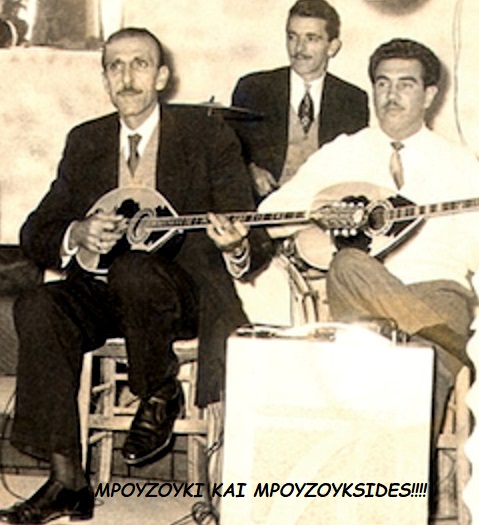
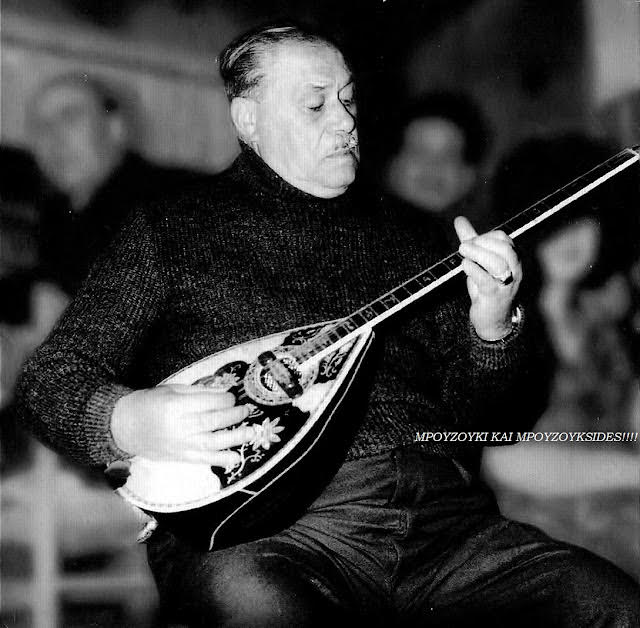
  1. Papaioannou appears never to have changed the way he held the bouzouki, unlike, for example, Tsitsanis, who in videos from the 1960s onwards appears to have adopted a completely different way of holding it—closer, I would venture to say, to the one commonly used today.

    1. Another characteristic photograph showing Papaioannou’s grip.

  2. Although Athanasiou is not playing, Tsitsanis maintains this particular posture.

  3. Anestos Athanasiou in action.

5. Stouraitis is often seen holding the bouzouki angled downwards, with a particular positioning of his right hand on or near the strings.

  1. Kakourgos and Stouraitis. Similar handling by both.

And if you’re wondering what exactly I’m trying to say with all this, I have the same question myself! Obviously, the way the instrument is held has not prevented any player from expressing what they want to express musically. There are many ways of holding a bouzouki, but I believe they differ very little from one another, unlike the “horizontal” method, which involves a completely different initial positioning of the instrument against the body.

When discussing the above subject with bouzouki-playing friends, some of them put forward the claim that this way of holding the bouzouki is more natural than, for example, the way of holding a four-string bouzouki or a guitar, as it is directly related to the position of the shoulders, elbows and hands in general. The right hand would need to reach further, and the arm would need to extend more, if the body of the instrument were larger. As for angling the instrument’s neck downwards, I can’t understand how that could make playing more comfortable, even though it seems that Thymios has no problem with it! :slight_smile:

I often come across a similar way of holding traditional stringed instruments (e.g. the laouto, and more rarely another tambourine-like instrument), with the neck angled downwards. If you have similar thoughts, or even if you use a similar grip and have reached any conclusions, I’d be happy to discuss them!
1 Like

Without knowing much, I would like to mention something that may be relevant:

The two photographs of Giovan Tsaous show him holding the instrument upwards.

2 Likes

Clearly, there are many examples of different ways of holding the instrument, even from that period. The most characteristic example is Markos Vamvakaris himself, who supported the instrument in a completely personal way, contrary to what I describe above. Nevertheless, because I have noticed this particular grip (the “downward” one) among many players of that period, I believe it is not a random phenomenon, but perhaps a trend of the time—or, at any rate, something that has not been discussed enough.

P.S. I think that in the first photograph you posted, it isn’t Tsaous, but another musician whose name escapes me!

1 Like

The fact that even Bembis followed a similar approach is, to say the least, noteworthy.

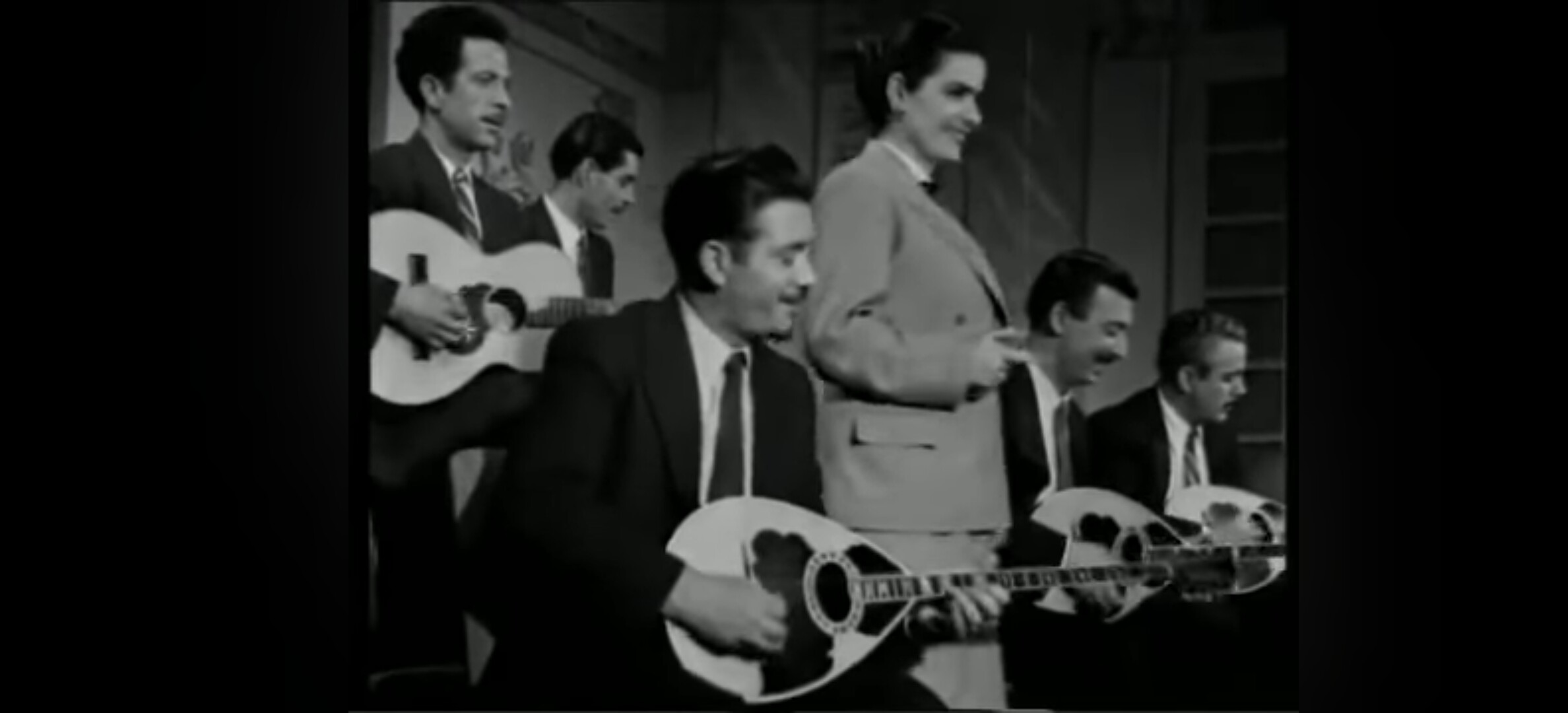
In any case, let’s not overlook the fact that in many of the photographs reproduced above, the musicians were “posed for the camera” without actually playing. The expression on Giovan Tsaous’s face in his well-known photograph is particularly telling (with Markos standing further to the right, and Batis, the “kalambortzis”, with his guitar slung over his shoulder the wrong way round; naturally, we cannot see them in this particular “excerpt”). And in the first photo, with a piano, two guitars, an accordion, four bouzoukis and Nínou, I see a staged arrangement: the microphone is upright, while the seated musicians are positioned so as “not to get in the way”, behind it, with the musicians “front and centre”. Only careful viewing of films from the period could give us some information, and in any event, it is not right to draw general conclusions from three, five or eight randomly selected photographs.

Sometimes a musician’s gaze and certain other details show whether they are really playing or not. Markos in photo #3 is focused on his fingers, while Yovan Tsaous in his last one, #2, is focused on the camera.

1 Like

At 2:37, it is clear that even the young Zampetas, as well as Mitsakis, play in this manner (even if the audio was playback, why would they hold their instruments like this?). I have included the corresponding screenshot below.

As for Thymios Stouraitis, it is very easy to draw conclusions about this way of holding the instrument from various videos. So, I am posting a few below:

In short, I believe it is by no means a coincidence that we see this particular hold during that specific period (the aforementioned film “The Tower of the Knights” was made in 1952). Perhaps it is simply my imagination, after all, since it is not the only style that was prevalent. Nevertheless, it continues to pique my interest, and I genuinely wonder whether anyone knows anything more about it.

It was definitely playback; all we have to do is watch Zampetas’s left hand—he’s playing one thing and we’re hearing another. And in general, it’s common knowledge that back then everyone worked with playback.

Certainly! But even during playback, was there any reason for them to hold the instruments like that? Perhaps, given the way it was done and the angle of the shot, it was a useful way of holding them so that the singer could be seen more clearly. We can only speculate until someone with a bit more knowledge enlightens us.

Of course! They posed for a photo shoot, not to play!

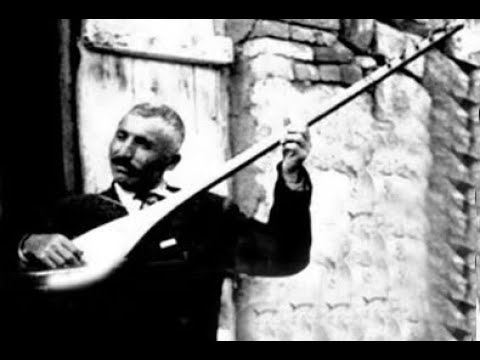
In the first one, it definitely isn’t Yovan Tsaous, and it definitely isn’t his tambourine. I don’t know who or what it is, or where it is.

Hang on, I’ve seen him somewhere before. Isn’t he Turkish?

This is Aşık Dursun Cevlani.

2 Likes

Let me ask one question: Could playing upright with a strap have played a role?

For example, we can observe the young, three-string Chiotis

with a genuinely flat instrument, but later

Lemonopoulos is also an example of an upright one with a cord.

I would speculate that Lemonopoulos’s tendency to hold the instrument at an upward angle may also stem from the fact that, before becoming a bouzouki player, he played the guitar. More generally, the prevalence of this way of holding the instrument makes sense if one takes into account that the recommended way of playing classical guitar (which is based on years of study and tradition) holds that the neck should form an angle of 45 degrees in relation to the horizontal axis.

Good morning everyone,

A very, very interesting topic.

Even when standing, the instrument sits nicely like this.

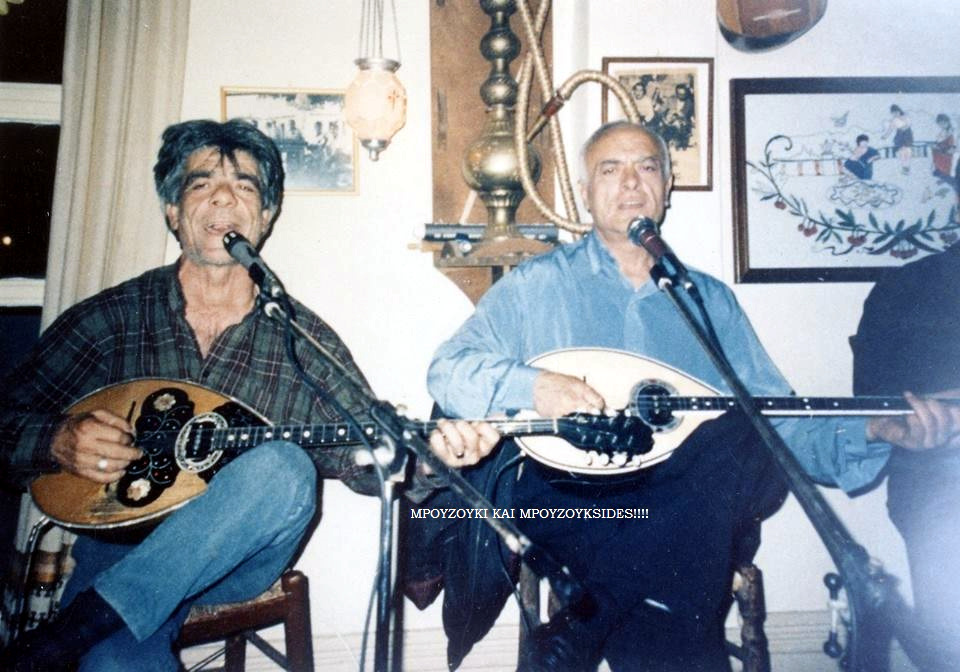
I also use this grip from time to time, and I’ve seen Vasilis Skoutas and Stelios Papadopoulos do it too.

This shifts the neck further to our left, so in a way it “moves” the left hand’s “range of movement” away from the axis of our body…

Perhaps this isn’t ideal for highly virtuosic playing, and over the years the instrument came to be held further to the right so that bouzouki players could pull off more flashy tricks.

1 Like

Another very important piece of evidence. I’ve never seen Papaioannou play any other way! Perhaps, of course, it was due to Uncle Yiannis’s height and his big, long hands, which apparently did not restrict the fluency of his taxims or his playing in general.

I’d say the same. The guitar, however, has a thick neck, and in twentieth-century classical technique the thumb remains somewhere in the middle of the neck, out of sight. This is a relatively recent development; nineteenth-century guitarists also used the thumb of their left hand, as is of course still done today in acoustic and jazz/electric guitar traditions.

On the bouzouki, particularly the three-string variety, it is more difficult to adopt the same hidden-thumb position, but the bouzouki players can probably explain it better.

1 Like