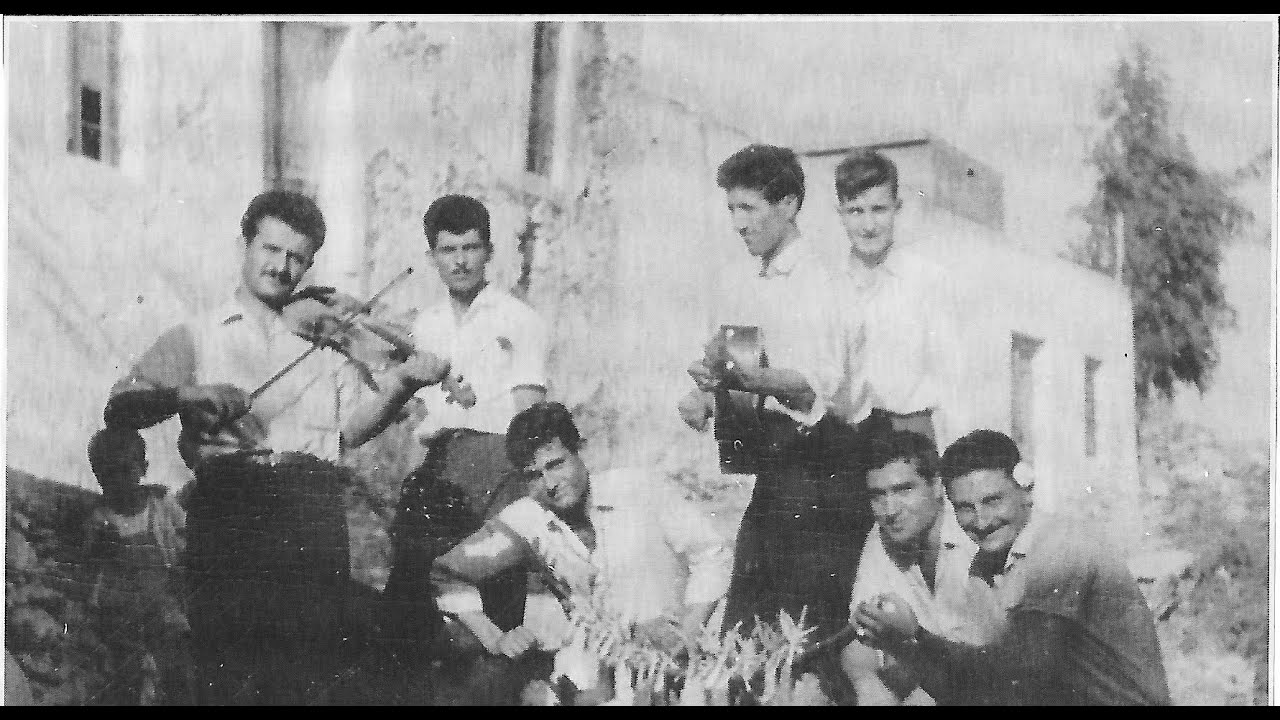
He also worked with European serenades and Cretan music.
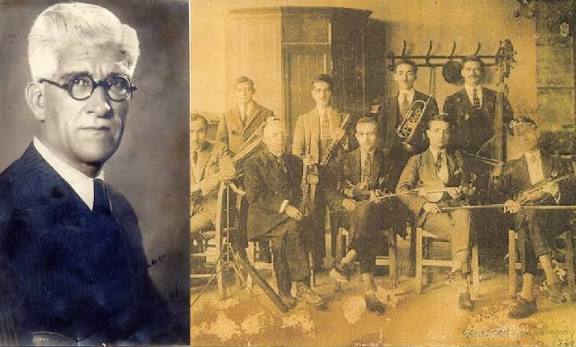
…in Megalo Kastro, during the 1910s, 1920s and 1930s, public serenades and private romantic serenades flourished.
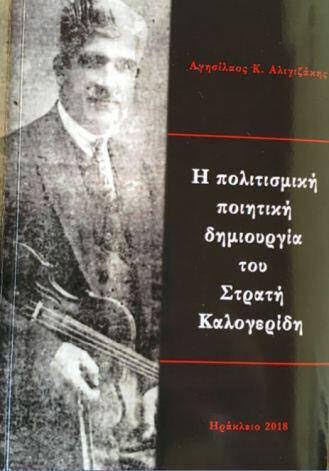
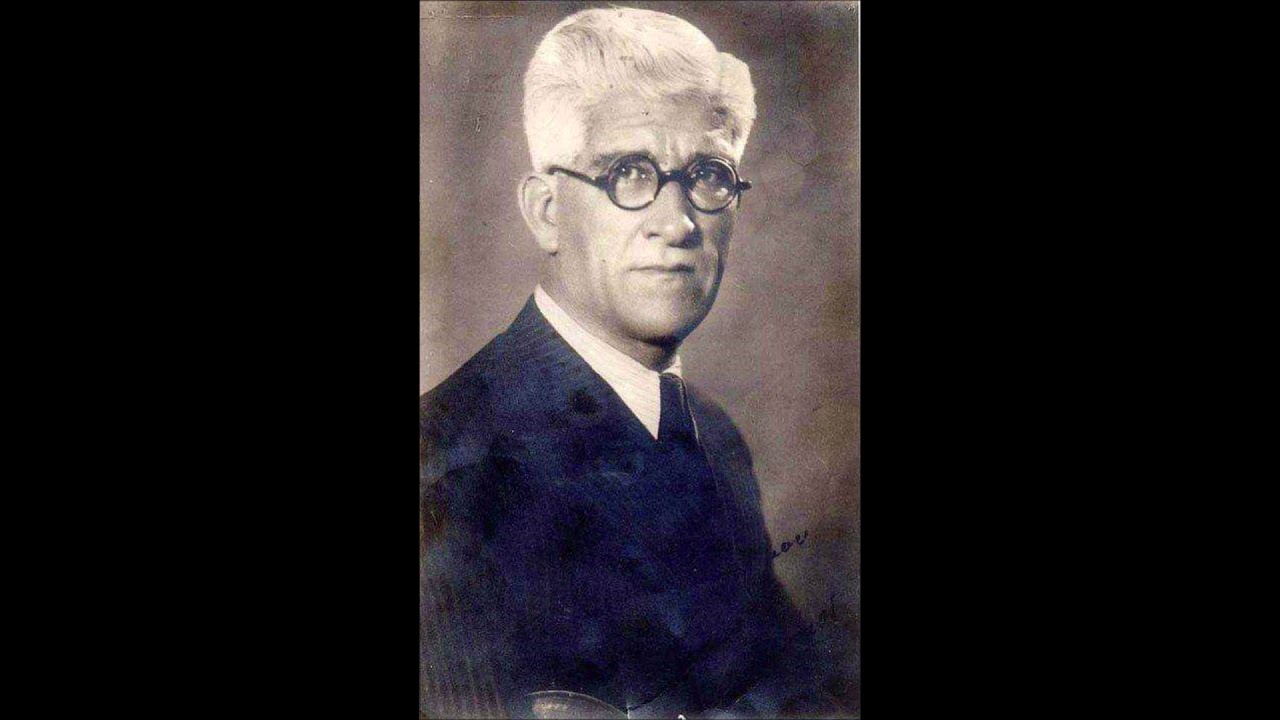
The protagonists were many young Kastrinoi from respectable society, and one of them was the European cosmopolitan, photographer and violinist Stratis Kalogeridis…
Kalogeridis is the father of the musical tradition of modern-day Eastern Crete.
Being a classically trained violinist, he collected and recorded instrumental melodies from Eastern Crete, refined them (specific melodic patterns [themes] in a specific order), gave them a simple harmonic treatment and presented them to a wider audience than their original one — that is, to urban society as well — not only in the form of sheet music but also as recordings. He made around a dozen 78 rpm records, on which he played himself, accompanied by piano and, on some, a second violin. Naturally, he played like a classical violinist who was not trying to imitate the village violin player, but simply presenting his own interpretation of the folk repertoire, roughly in the manner of a national school.
Since then, all the violin players of Eastern Crete have followed the aesthetic introduced by Kalogeridis, playing a “refined” violin that has absolutely nothing to do with the wildness the old lyra players of those same areas brought to the same tunes, or that Chania violinists brought — and still bring today — to their own tunes. In other words, all the violin players of Eastern Crete play Kalogeridis, fully aware of the fact. As for older Eastern Cretan violin recordings that retained the pre-Kalogeridis aesthetic, I cannot remember whether I have heard any, or whether any exist at all.
It must be a unique case of a scholarly musician entering the world of traditional music and having such a profound influence on it.
P.S. I read the book as soon as it came out (2018), but I no longer remember it. Alygizakis has written quite a few other works on related subjects.
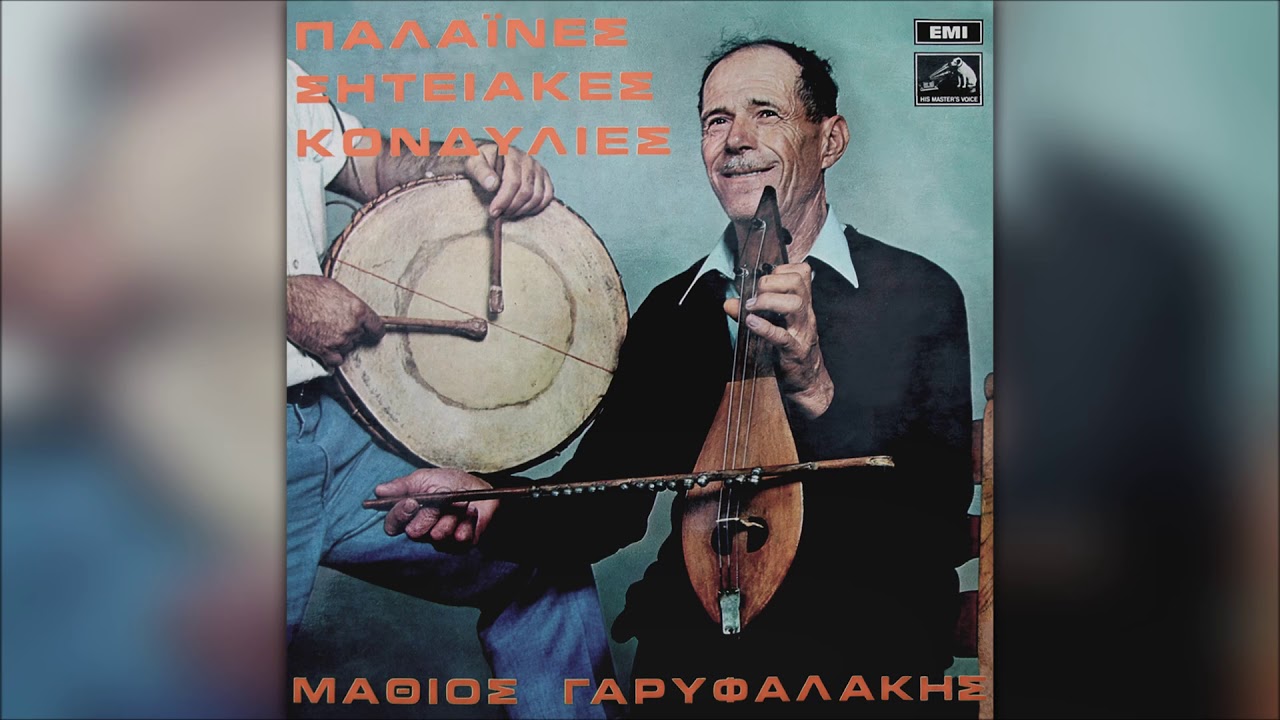
I’ll also add a little material of old Sitia/Merabello-style playing, from village groups, for those interested in delving deeper into kontylia as a musical genre. You’ll notice a whole “tangle” of melodic turns that you may have heard from Kalogeridis or Avyssinos, as well as a more rustic style of playing, with nothing technical or overly ornamented.
As for the third one in particular, I should note that it comes from a diamond of an album, which could nevertheless have been even better if it had retained only the original recordings with the lyrontavla. For reasons of “beauty”, however, other instruments were added later on.
With Kalogeridis, everything became easy. I take the recordings one by one, learn them, and there you have the sequences. Then, if I want, I add another kontylia or two in a similar style—ones Kalogeridis didn’t have—and that way I’m not a copyist; if need be, I also preserve the living, fluid form of traditional tunes.
Having heard nothing but these “tangles” all your life until you learn to play them in a “tangled” way yourself is infinitely more demanding. But whoever manages it, and also manages to find company who know how to listen in that way, I believe will offer them something that Kalogeridis and his school do not have to offer.
Of course, I am not disparaging Kalogeridis: I am not cleverer than all the Abyssinos, Baritant onakises, and others who followed his path and took it further. I am simply saddened that the “other” path is being abandoned.
Other pieces for various instruments were also published in sheet-music form by Athens-based music publishers. And in Crete itself there is the parallel example of the mandolin ensemble in Heraklion, which also played arrangements of traditional dances.
The sound reminds me very much of Scottish music and related traditions in Canada. Piano in a rhythmic accompanying role, with bass lines and chords and staccato playing, and solo violin. Each instrument and each player carries a history and a sound, and can overpower the traditional sound of the local music if the instrument is not adapted to the local sound.
This cannot be well known, because I, at least, have never heard of it before. Or even if I did come across it as information in one of Alygizakis’s books, it is not something that today’s musicians or collective memory remember, unlike Kalogeridis. So, even if it did happen, it cannot have had much influence.
As regards the repertoire, it states: “The Mandolin Ensemble had progressed sufficiently, and we performed the Spanish Nocturne competently, marches by Sailer and sections of the Pidichtos, to which Hatzidakis had devoted himself in particular, even writing and publishing a magnificent monograph”.
An important piece of evidence is Nikolaos Metaxas’s testimony concerning
Georgios Hatzidakis’s transcription on the stave and publication of the musical parts of the Cretan dance
“Pidichtos”, as well as the inclusion of this transcription in the mandolin ensemble’s repertoire.
What we are unable to
know is whether this particular transcription was an arrangement by Georgios
Hatzidakis or simply a faithful transcription of the melodies of the “Pidichtos” dance.
But there is no continuity from this first mandolin ensemble to the second, conducted by Chourmouzios in the 1930s–50s, or to the third, towards the end of the 20th century. And these amateur mandolin ensembles certainly did not have the audience Kalogeridis had, so they may have made a small contribution to the spread of the mandolin, but their repertoire and approach were not influential to the same degree.