This contains a reference to the line “two black-headed snakes”, which Genitsaris often sang in karadouzeni tuning (see the CD release “Traditional Stray Rebetiko Songs” (Παραδοσιακά αδέσποτα ρεμπέτικα), as well as the release “Douzenia: Old-School Tunes” (Ντουζένια, σκοποί παλαιάς κοπής)).
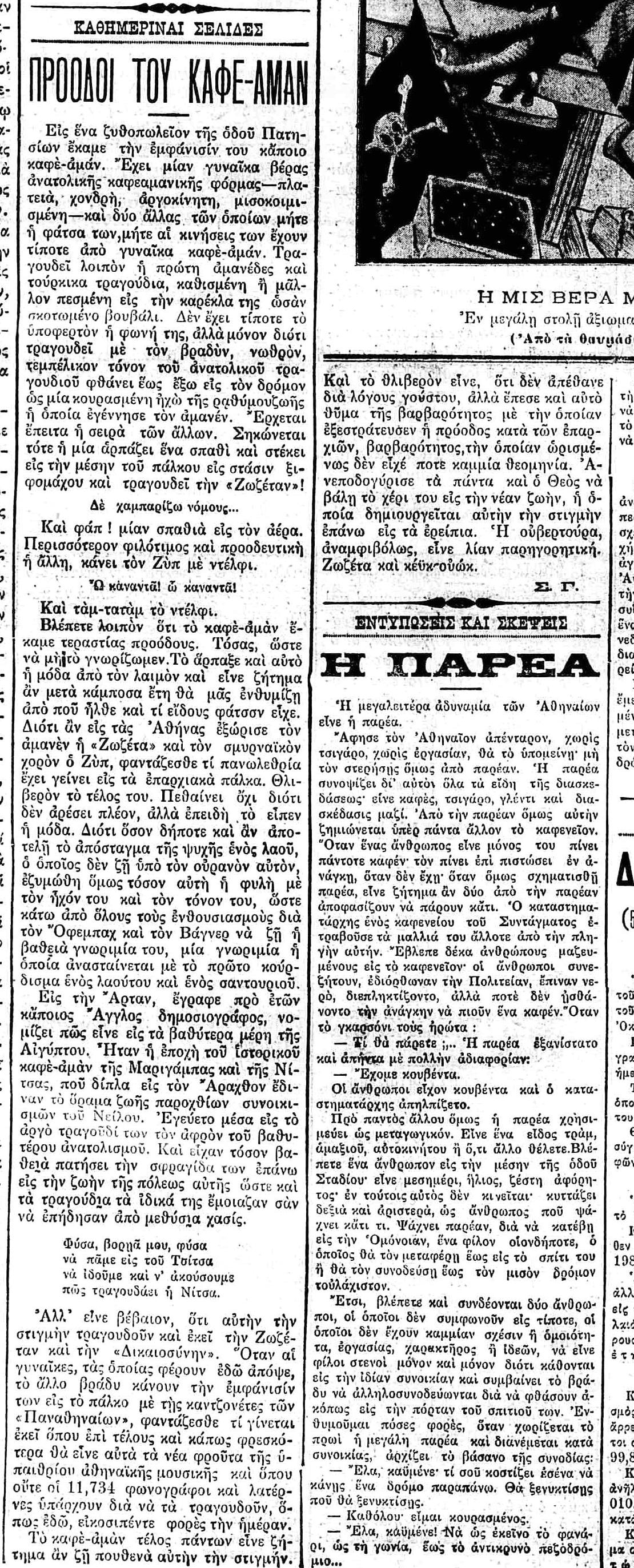
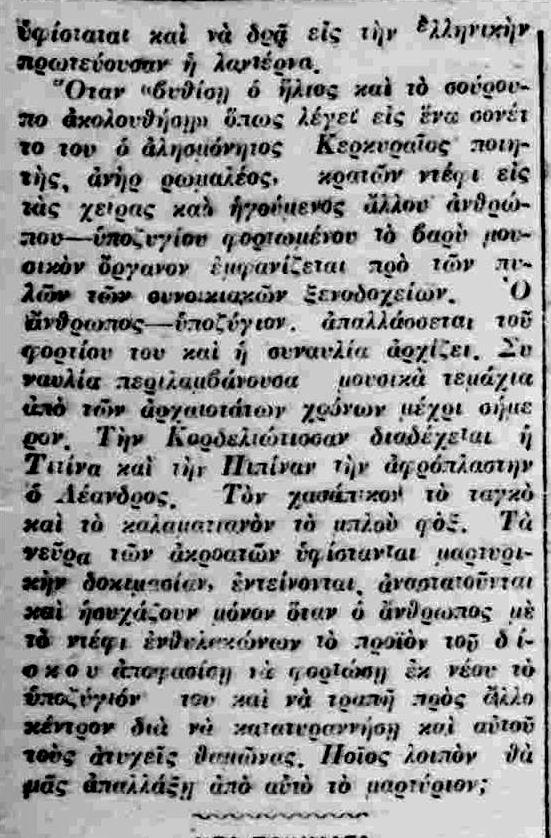
Report on Mourtzinos (Μούρτζινος) and his innovation of adding a triple string instead of a pair to the mandolin. Possibly influenced by the tambouras (ταμπουράς).
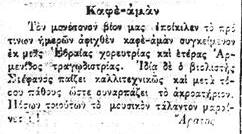
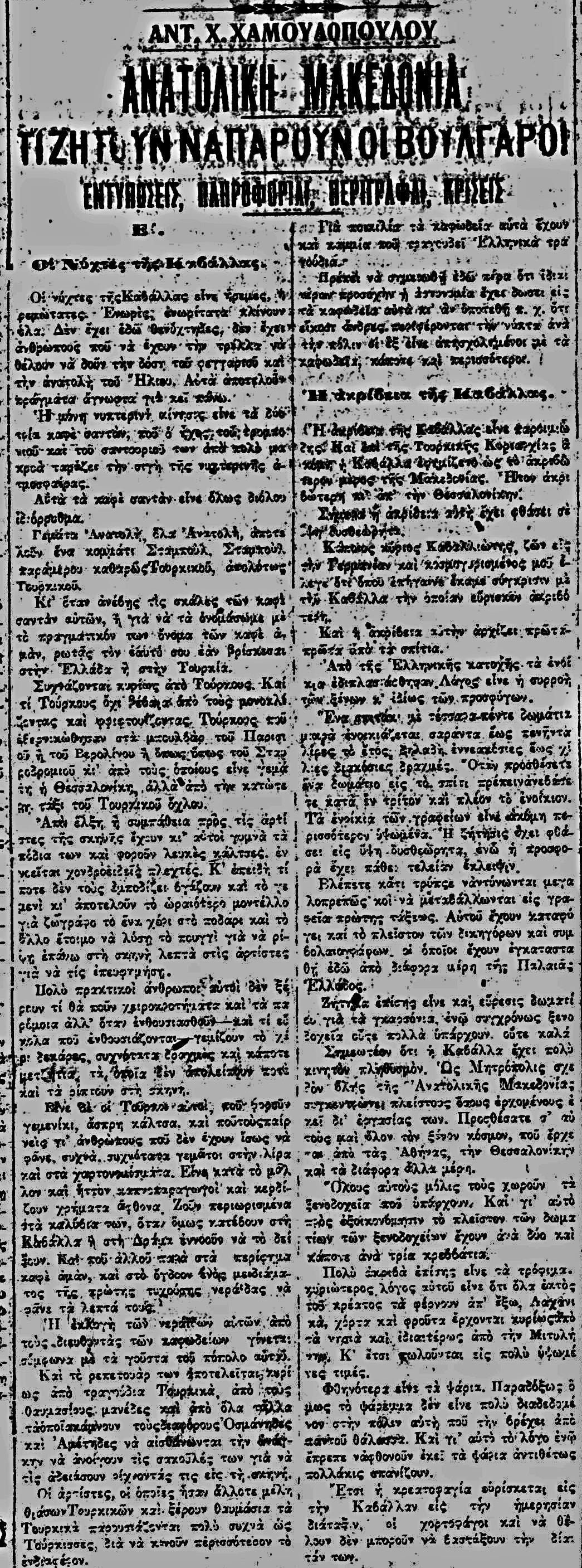
The music-loving coffeehouse proprietor Mr Matarangas, having travelled to Constantinople some time ago to find female singers to form a coffeehouse music troupe here, returned a few days ago, bringing five Armenian women with ox-like eyes, beautiful faces and sweet voices, accompanied by five men, excellent musicians, likewise Armenians.
Hasten, beauty-loving and music-loving public, to see and hear them—but with attention and good sense, lest we find you either lulled to sleep by the sweet melody or falling victim to glances as piercing as arrows.
The prominent intellectual, journalist and writer Petros Orologas goes into a tavern and hears the “serious bouzoukia with their thick strings” (ΦΩΣ 1/7/1915)
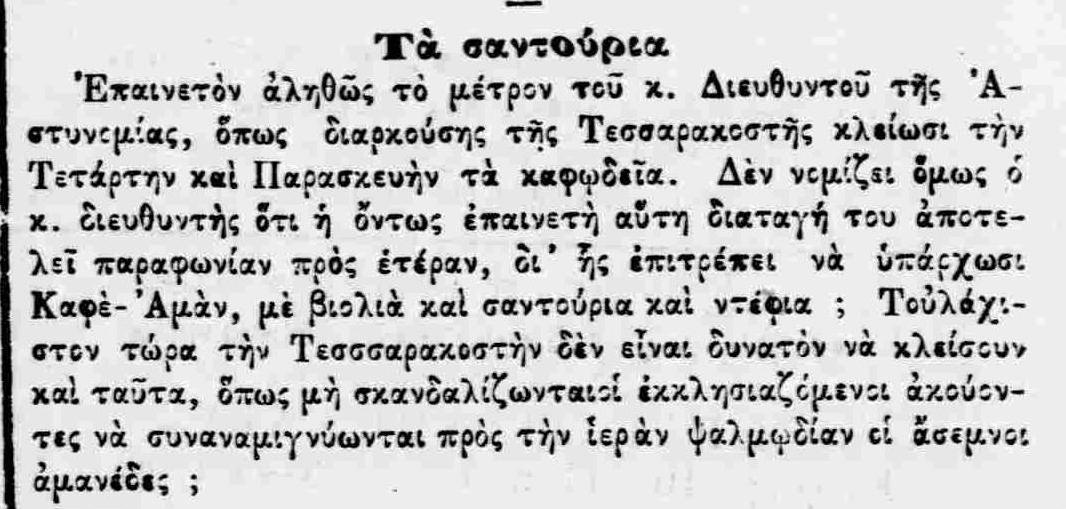
I’m not entirely sure… That he found them good and liked them, yes, that’s certain. However, the reference to their origin may simply be intended to specify where they came from, since of course they weren’t “our own” people.
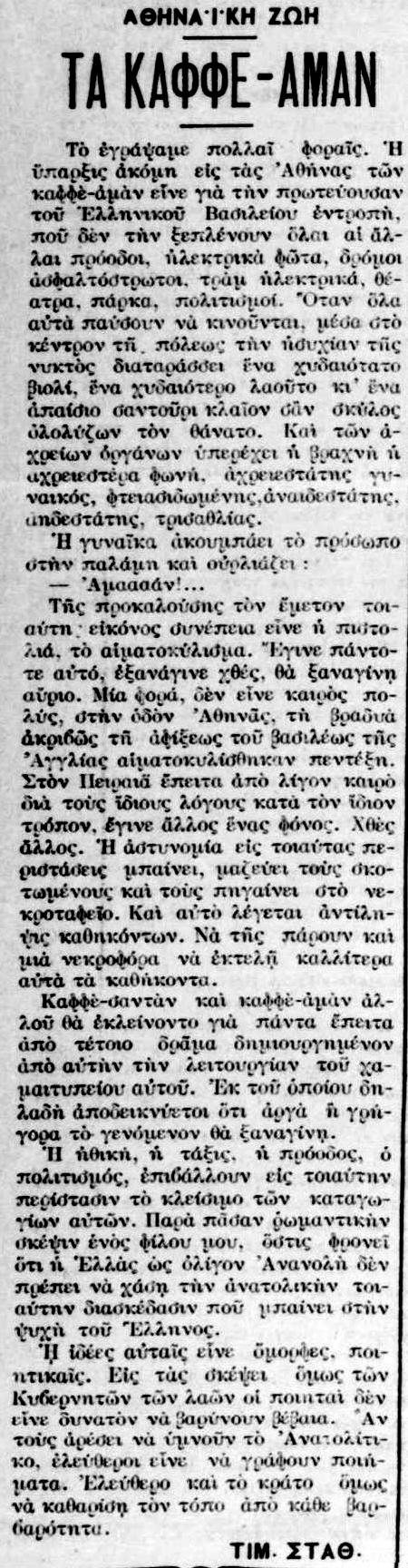
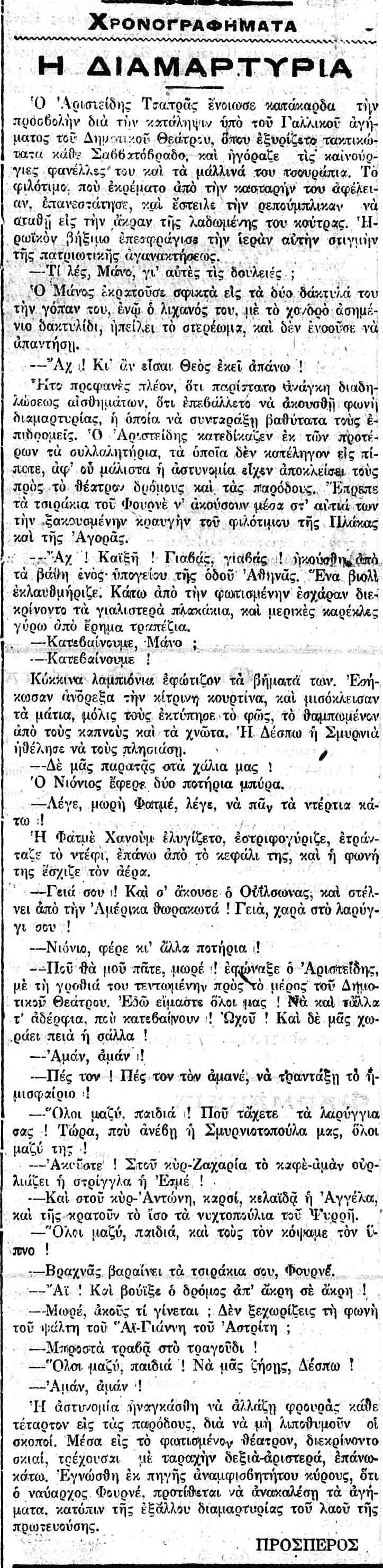
The various sweet-voiced nightingales, answering to the languorous names of Esmé and Fatma, who have been brought over from the farthest reaches of the East and set up their nest in the subterranean paradises of Athinas Street, are tending to bring about a radical change in the character of Athens’ café-concerts. Quite simply, they will turn them into café-amans, such as are found in the provincial towns.
Anyone passing through the vicinity of the Municipal Theatre and Omonia at night no longer hears Viennese waltzes and French chansonettes escaping through the iron grilles of the nymphs’ underground dens, but passionate aman and ach-vach. Concetina and Nitsa are yielding to the Smyrniot woman and Fatma. “The Merry Widow” and “The Dream Waltz” have made way for the amané