Πάει και ο κυρ-Σπύρος…
Έφυγε σήμερα ο Σπύρος Καλφόπουλος, από πνευμονικό οίδημα, 84 ετών.
Η εξόδιος ακολουθία θα γίνει αύριο Πέμπτη 30 Μαρτίου, στις 5 το απόγευμα, στον Άγιο Δημήτριο Πετρούπολης.
AI-generated summary
Ο Σπύρος Καλφόπουλος, ένας σημαντικός συνθέτης και καλλιτέχνης της ρεμπέτικης μουσικής, έφυγε από τη ζωή στις 29 Μαρτίου 2006 σε ηλικία 83 ετών. Η εξόδιος ακολουθία του πραγματοποιήθηκε στις 30 Μαρτίου στον Άγιο Δημήτριο Πετρούπολης. Ήταν γνωστός για την προσφορά του στη ρεμπέτικη μουσική, συνεργαζόμενος με μεγάλους καλλιτέχνες της εποχής του και κάνοντας περιοδείες σε διάφορες χώρες. Ο Καλφόπουλος ήταν αντάρτης του ΕΛΑΣ και είχε χαρακτηριστεί ως “μπουζούκαρος”, ένας τίτλος που επιβεβαιώνεται από συμμετοχές του σε σημαντικά τραγούδια. Στις τελευταίες του δεκαετίες, συμμετείχε σε εκδηλώσεις με άλλους εκπροσώπους της παλιάς γενιάς του ρεμπέτικου.
1 Like
Καλό ταξίδι στον κυρ Σπύρο,
πέραν όλων των άλλων, δεν θα ξεχάσω ποτέ ότι ήταν ο άνθρωπος που με έπεισε και αγόρασα το πρώτο μου μπουζούκι…
Καλο Παραδεισο κυρ-Σπυρο Καλφοπουλε, οπως λενε και οι γερονταδες στο Αγιο Ορος.
Δεν ειχα την τυχη να τον γνωρισω απο κοντα αν και ολο ελεγα οταν θα ανεβω Αθηνα να παω να τον βρω …
Μπουζουκαρος στην εποχη του αν και λιγοι το αναφερουν και συνθετης αψογος οσο και αθορυβος !!
Ειναι αυτος που γυρω στο '66-'67 συμφωνα με συνεντευξη του στον Πανο Γεραμανη εβαλε το γυιο του φιλου του Λουκα Νταραλα, Γιωργο στα λαϊκα μαγαζια και στις ηχογραφησεις.
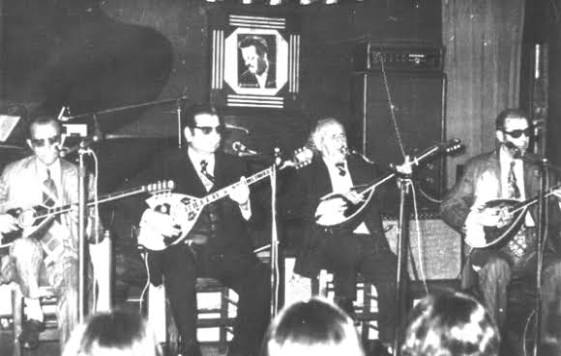
Θα μου μεινει αξεχαστο ενα παλιο φιλμακι της ΕΡΤ που παιζουν μαζι με το Δεδε και αλλους, καπου εξω
σε καποιο καλντεριμι, μοναδικα το “Καπηλειο”.
Κάτσαμε μια μέρα, πριν πέντε χρόνια, και τα είπαμε αναλυτικά. Μου μίλησε με ντόμπρα, σταράτα λόγια, αλλά και οξύτατες κρίσεις. Ήταν από αυτούς που είχαν μια καλή κουβέντα για όποιον το άξιζε, αλλά και κακή, επίσης για όποιον το άξιζε. Μου είπε: “Είσαι δημοσιογράφος, αλλά σε κόβω για δικό μας παιδί. Στα λέω γιατί δεν πιστεύω ότι θα βγεις να μας κάνεις ρόμπα στα κανάλια”.
Κανονίσαμε να κουβεντιάσουμε πιο αναλυτικά και “επίσημα” μερικά πράγματα που ήθελε να βγουν προς τα έξω. Μετά με πήρε τηλέφωνο ένας “Δικηγόρος-προστάτης” και μου είπε ότι η συνέντευξη θα γίνει παρουσία του. Θεώρησα πως με υποτιμά να με βάζουν στο ίδιο τσουβάλι με τηλεορασάκηδες “μεσημεριανού ρεπορτάζ” και συγγραφείς με ήθος Βασιλικού, και δεν ξαναπήγα.
Για τον κυρ Σπύρο βέβαια ούτε κουβέντα. Ηταν άψογος μαζί μου. Και θυμόταν πολλά και καλά. Πήγα και τον άκουσα αργότερα μερικές φορές και πάντα μου έκανε παράπονα γιατί δεν πάω να τα πούμε. Δεν του είπα τίτποτα για τον δικηγόρο του για να μην τον στενοχωρήσω.
Υπάρχει μια φάρα ανθρώπων που στο όνομα του “Δικαίου” εξυπηρετούν τις προσωπικές τους φιλοδοξίες (ενίοτε και τις τσέπες τους), εκμεταλλευόμενοι την ασυδοσία κάποιων άλλων. Στο καθημερινό τηλεορασομάνι που ζούμε, “δικηγόροι” και “δημοσιογράφοι” πάνε χέρι-χέρι.
Ο κυρ Σπύρος ήταν άρχοντας και δεν κώλωνε πουθενά. Στα νιάτα του ήταν αντάρτης του ΕΛΑΣ (έφτασε στο βαθμό του υπολοχαγού). Συνελήφθη και το '45-'46 πήγε διακοπές στον Αη Στράτη. Τι να του πουν οι σημερινοί ψόφιοι;
Και μια επιβεβαίωση του “μπουζούκαρος” που λέει παραπάνω ο Γιώργος: Ακούστε το “Ενας μάγκας στο Βοτανικό” με τον Καζαντζίδη. Παίζει ο Καλφόπουλος με τον Καλδάρα. Λέτε να έβαζαν καναν …δεύτερο να το παίξει;
Καλό ταξίδι κυρ Σπύρο και καλές πενιές με την παρέα σου.
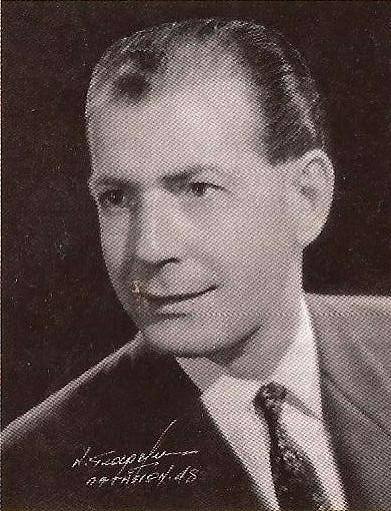
SPYROS KALFOPOULOS—biography (by Panagiotis Kounadis)
Spyros Kalfopoulos, Piraeus, 27 January 1923. Composer, lyricist, instrumentalist and singer. Spyros Kalfopoulos belonged to the last generation of the “Benjamin” figures of rebetiko. Together with Giorgos Mitsakis, Apostolos Kaldaras, Babis Bakalis, Giorgos Lavkas, Stavros Tzouanakos, Giannis Tatassopoulos, Apostolos Charmantas, Theodoros Derveniotis, Kostas Kaplanis, Gerasimos Kluvatos, Giorgos Zambetas, Panos Petsa and others, they continued the rebetiko tradition, appearing on the bandstand and in the recording studios during the harshest period in the recent history of our people: the Civil War. In an atmosphere of division and mutual destruction, they tried to ease the pain of the Greeks with their songs, which they were forced to write under the strictest censorship conditions, in application of the Press Law of the period of the German occupation.
Although Spyros Kalfopoulos’s family was considered Asia Minor Greek on both sides, it should be noted that his father’s branch originated in Amaliada, in the prefecture of Elis. His grandfather, four generations earlier, settled in Constantinople via an intermediate stay in Korçë and went into trade, building up considerable wealth, which was passed down from generation to generation to Spyros’s father, Eftychios. Eftychios Kalfopoulos (1896–1935) attended both the Greek and Turkish schools in the city, intending to pursue higher studies at the Law School. However, in 1916–17, he was called up by the Turkish state to complete his military service as an officer—an ensign—and was transferred to Aydın. There he met his future wife, Maria Nikolaidou. They married quickly, in 1917, and the wedding celebrations lasted four days and nights. After two unsuccessful pregnancies, she became pregnant with Spyros at the beginning of 1922.
Meanwhile, following the landing of the Greek army at Smyrna in May 1919, Eftychios deserted from the Turkish army and joined the Greek army with the same rank of ensign, where he naturally also took on the role of interpreter and translator of Turkish documents. He took part in all the battles of the Asia Minor Campaign and, after the front collapsed, he and his wife—with little Spyros still in the womb—landed in Piraeus in September 1922. After staying in the port for a few days, they moved into the home of a Piraeus barber in Agios Nikolaos, who hired Eftychios as his assistant, since he also knew the barber’s trade. They remained in Piraeus until 1924, after which they moved permanently to their own home in Nea Ionia, where Eftychios chose to work as a barber.
Spyros was born in January 1923, and in 1926 his sister Chrysoula was born. They were to be the only members of this large family to become involved in music and singing. Spyros and his sister attended primary and secondary school in Nea Ionia, and the family managed to get back on its feet despite the general difficulties of the inter-war years. However, their father’s sudden death in 1935 forced the young Spyros to work wherever he could in order to support the family. Between 1936 and 1939 he worked at the well-known Thermis factory, which manufactured radiators. The work was hard and he fell ill. In 1939 he found work at the Sterlina woollen mill, later the 3A cashmere company, owned by the Asia Minor Greeks Kalfoglou, Esoglou, Styloglou and Efraimoglou. The factory was near his home, which made things much easier for him.
Throughout all these years he had no contact with music apart from listening to songs on gramophones or watching old Asia Minor musicians playing violins, santouri, ouds and so on in the various shacks and ouzeris that existed in Nea Ionia in those days. His first contact with well-known figures from the rebetiko scene came in 1939, when his father’s friends invited their own friend Stelios Keromytis to a family celebration to play with other musicians. Young Spyros was thrilled by the sound of the bouzouki and, despite the financial difficulties involved in buying such an instrument, began to think about it seriously. So, together with a friend of the same age, he got a money box and they began putting their savings into it.
A distinguished neighbour of his, the musician Kosmas Kosmadopoulos from Baintiri in Asia Minor, also influenced his final decision to take up singing and learn the bouzouki. Kosmadopoulos played the bouzouki and was also a Byzantine cantor. Spyros still considers him his true teacher, although he spent very little time teaching him the instrument. Between 1937 and 1940, Kosmas Kosmadopoulos had already had songs of his own recorded by well-known rebetiko singers. When the two young friends had saved 135 drachmas, they bought a tzoura at a bargain price, with a 15-drachma debt, and began teaching themselves. Spyros’s friend did not manage to learn, however, so the tzoura eventually became Spyros’s.
When war was declared, Spyros was occupied with his instrument, while also getting to know two guitarists. One of them was the well-known musician and singer Christos Louretzis, a collaborator of Giannis Papaioannou. The other was called Giorgos Kehagias and played Hawaiian guitar. At the well-known “Grigoris’s Taverna” in Nea Ionia, the trio began playing during the occupation, for a plate of food—something of great importance in those harsh times. At the same time, Spyros joined resistance organisations and, in the early years, took part by writing slogans in the streets and on the walls of his neighbourhood. Using the familiar ruse of an orchestra performing serenades as a cover, they took part in many acts of resistance. The presence of the music-loving Italian commander in Nea Ionia saved them at a difficult moment, when they were arrested by an Italian patrol and taken before the commander, who recognised them from the tavern where he had heard them sing.
During the occupation he met Spyros Anagnostou, who played the violin and bouzouki, and for many years afterwards they worked together on the bandstand and in the recording studios. For quite some time they also played together in a cabaret-style restaurant behind Athens Town Hall, where they met other Asia Minor musicians and singers, such as the famous Smyrna-born Dimitris Christodoulou, the violinist Armao and others. The repertoire of Spyros Kalfopoulos’s musical group consisted of the familiar pre-war rebetika by Markos Vamvakaris, Vasilis Tsitsanis and Giannis Papaioannou, as well as by the well-known first-generation Asia Minor composers such as Tountas, Skarvelis, Ogdontakis, Semsis and others.
After the end of the war, through Christos Louretzis, who had recorded several songs with Giannis Papaioannou before the war, he met the prolific lyricist Charalambos Vasileiadis, who lived in the neighbouring municipality of Nea Philadelphia. Vasileiadis introduced him to ODEON-POLYPHONE, and it was not long before he met—and auditioned for—Minos Matsas and Spyros Peristeris. The favourable opinion of Spyros Kalfopoulos resulted in his recording his first three songs with PARLOPHONE: “Dyo matia, matia mou”, “Yildiz” (full moon on the Bosporus) and “Ximerose-ximerose”. His sister Soula (Chrysoula) took part in all of them. Soula’s presence in the recording booths and the resemblance between her voice and that of Markos Vamvakaris led to her recording a series of songs with the “great leader” of the rebetiko circle.
Spyros, however, thanks in part to the virtuosity he had acquired as a bouzouki player, began taking part in many recordings by his fellow musicians. While recording the important songs “To omorfopαιdo” and “I satrapissa—Arabας perna”, he met Vasilis Tsitsanis and played second bouzouki on these PARLOPHONE recordings. But the “grateful fatherland”, in recognition of Spyros Kalfopoulos’s resistance activities, honoured him by arresting him and sending him into exile on Ai-Stratis from May 1947 until the end of that year.
On his return from Ai-Stratis, he found work at Vlassis’s “Aidonia” club, on Gladstonos and Gamtveta Streets in Omonia. He worked there for a year, in the basement in winter and on the roof terrace in summer. The line-up included Spyros Anagnostou, Christos Lavidas, Spyros Peristeris and Manolis “the Turk”, who played the piano. Shortly before his exile, through Charalambos Vasileiadis, he had met the young and inexperienced Marika Ninou, who during his exile first worked with Stellakis Perpiniadis and then with Manolis Hiotis, who also gave her her first songs.
That same year, 1947, he met Stella Haskil. Although he had prepared songs with her to record for ODEON-PARLOPHONE, Stella Haskil moved to COLUMBIA–HIS MASTER’S VOICE. Although he was a permanent collaborator of Minos Matsas, Spyros Kalfopoulos allowed these songs to be made with the other company. Thus came the releases “Zilevei opios agapa”, the great success “Itan kismet”, “Xemyalise ton andra mou”, “Skeptοmai ton chorismo mas”, “Ti sou efteixe i kopela” and “Ti kako sou echo kanei”, some of them credited solely to Stella Haskil.
In 1949 he became a regular collaborator of ODEON-PARLOPHONE and worked for many years with the great Smyrna-born composer Spyros Peristeris. Beyond their professional collaboration, they developed a long friendship, of which he retained the fondest memories. That year he also played on four instrumental pieces with Agapios Tomboulis. With Spyros Peristeris, he worked on the bandstand at Bere kos’s establishment at 10 Psaron Street in 1949. They were joined by Babis Bakalis and his wife Nitsa Grezi, Prodromos Tsaousakis and Antonis Venieris, who played the accordion.
In 1950 he played with Stellakis Perpiniadis at his establishment, “Ta Kounelia”, in Haidari, which the great veteran rebetiko singer had just opened. He worked with Markos Vamvakaris only in the recording studios, playing on songs sung by his sister Soula. Markos’s brother, Argyris Vamvakaris, often played bouzouki alongside him. His meetings with Sotiria Bellou, with whom he remained friends until the end, and Ioanna Georgakopoulou, who, although she worked with the other company, sang several songs for him in 1952–53, were humorous and full of adventures.
He worked with Stratos Payioumtzis on the bandstand in 1951–52, at the “Paloma” club owned by Vasilis Petropoulos on Dekeleias Avenue in Nea Philadelphia, and retained the fondest memories of the humorous and kind-hearted Aivaliot rebetiko singer. His collaboration with his old friend Spyros Anagnostou became permanent both in recordings—where they played together on nearly all his songs—and on the bandstand, where they remained inseparable for fifteen years. Because Kalfopoulos was slim and Anagnostou was well-built, they became known as the rebetiko duo “the two Spyroses—the Fat One and the Thin One”.
With the veteran Kostas Karipis, he continued collaborating in the recording studios until 1951–52, when all trace of Karipis was lost. He played with Apostolos Kaldaras on many recordings of Kaldaras’s songs and on the bandstand as well. They appeared together at the “Ambri” club in Kanigos Square, alongside Stelios Chrysinis, Giannis Papadopoulos, the Alex Duo and an accordionist.
As a resident of Nea Ionia, he had known the then young and unknown Stelios Kazantzidis since childhood. When Kazantzidis began his singing career, Spyros Kalfopoulos helped ensure that he was not dropped by COLUMBIA, despite the many objections raised by the company’s executives at the start of his career. Stelios Kalfopoulos recalls in particular that, after the commercial failure of the first song sung by Stelios Kazantzidis, “Gia banio pao” by Apostolos Kaldaras, various attempts were made to give him another chance. Giannis Papaioannou then prepared and rehearsed the now-famous “Oi valitses” for Dimitris Roumeliotis to sing. At that point, Charalambos Vasileiadis, Spyros Kalfopoulos and Stelios Chrysinis intervened and persuaded the good-natured Dimitris Roumeliotis to give it to Stelios Kazantzidis. It was a miracle: the enormous commercial success opened the way for the great singer. This was followed by “To spiti emeine orphanο”, by Giannis Papaioannou, and Manolis Hiotis’s songs “I koinonia” and “Apopse fila me”, which led to Stelios Kazantzidis being retained permanently by COLUMBIA.
In the 1950s, Spyros Kalfopoulos remained in the public eye, playing on the bandstand, in recordings, in films and in live broadcasts on the Armed Forces radio station, where his group performed popular songs for Greek servicemen and others. In 1960 he was among the musicians Manos Hadjidakis took to the Cannes Film Festival, where Hadjidakis won the Oscar for his music for the film “Never on Sunday”. Along with Giannis Angelou, Tolis Harma, Giorgos Zambetas, Anna Chrysafi and others, they captivated representatives of the international film world with their riotous celebrations and all-night parties during the festival.
In the 1960s, despite the decline of rebetiko, Spyros Kalfopoulos released a series of new songs on 45 rpm records. He also undertook major tours of England, France, the United States, Egypt, the Union of South Africa and elsewhere. In the 1970s, with the revival of rebetiko, he returned to the stage alongside representatives of the old generation of rebetiko musicians who were still alive—Bayanderas, Genitsaris, Keromytis, Bellou, Chrysafi, Tsaousakis and others. They performed at events at “Kyttaro”, at the various venues established after 1974 and at countless events in many Greek cities.
In his final years he made carefully selected appearances and, full of vitality, continued writing songs. He died on 29 March 2006, aged 83.
SOURCE: PANAGIOTIS KOUNADIS
1 Like