Here’s a fairly new article that may interest you:
You’ll need to scroll down a little to reach the text!
Here are two pieces mentioned in the article:

Here’s a fairly new article that may interest you:
You’ll need to scroll down a little to reach the text!
Here are two pieces mentioned in the article:
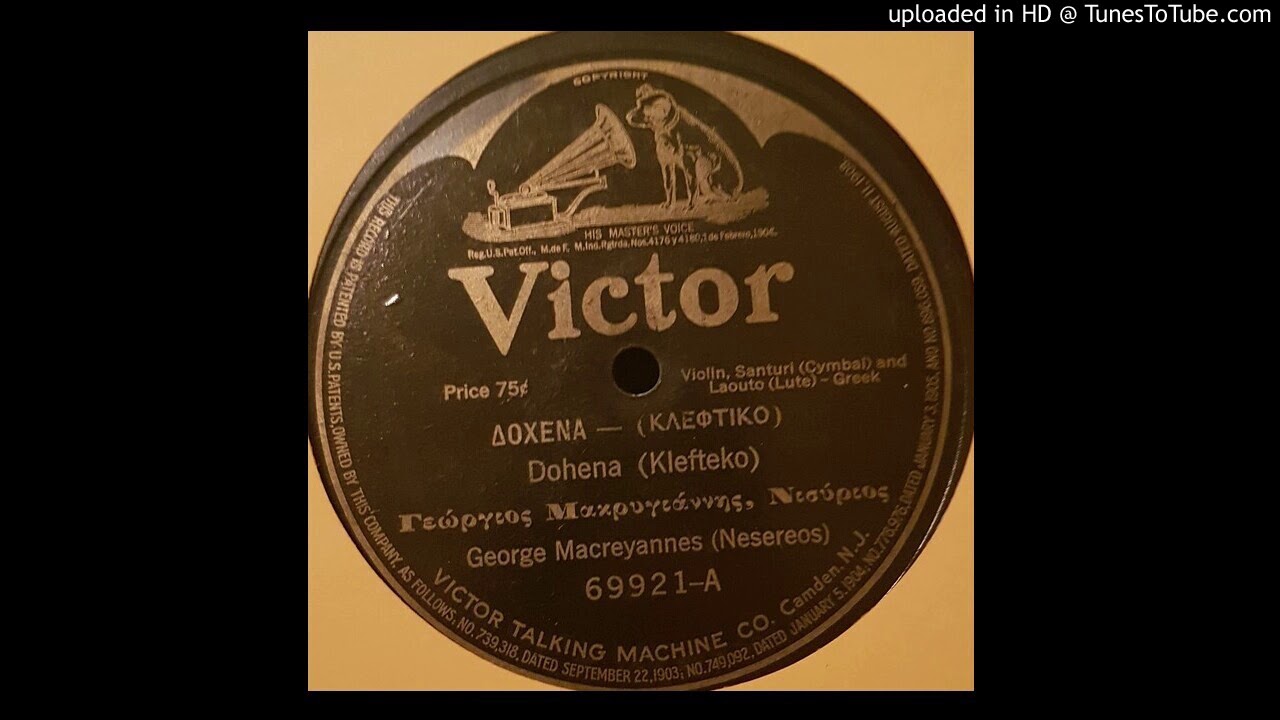
Giorgos Makrygiannis (Nisyrian)
Nisyros, 1874–1933
Giorgos Makrygiannis was a self-taught violinist who made the first recordings of Greek traditional music. He toured extensively in various regions both within Greece and abroad, where he played island dances and learned new styles that he incorporated into his music. He used two violins, each tuned differently.
Although he came from a musical family, he never pursued formal musical studies. He never taught the violin, not even to his two children, who became musicians, while he did have students of his technique from the island of Kalymnos! He was the one who established the violin, rather than the island lyra, as the dominant vehicle for expressing traditional music on Nisyros. He became known throughout the Aegean islands and also in Turkey, Romania and Hungary, while his fame led him to the USA, where he made recordings in 1917–1919.
Giorgos Makrygiannis died in his own bed at home, playing the violin for his friends until his final hours.
https://users.sch.gr/chfrantzis/index.php?option=com_content&view=article&id=162&Itemid=12
Nisyrios’s Doinа is still preserved in Kalymnos to this day. I have it on a record with the Ennimata, the Tsounias brothers, who throughout the second half of the 20th century were the island’s foremost musicians. Mikes Tsounias, the violinist, was a pupil of a pupil of Nisyrios. And somewhere I came across it being played by young people today in a more recent YouTube clip.
I mention this because, on hearing Nisyrios’s original recording, the last thing anyone would ever think of is an island in the southern Aegean—and yet!
Thank you, Eva (and of course: bravo, Giorgos Kokkoni — wonderful work!)
However, the article (more precisely, the paper) is getting on a bit: it was presented in 2016 at the International Conference held on 3–5 November 2016 in Iași, Romania, entitled: Greek Traditional Culture in the European Context: Relations with the Romanian and Slavic World. The Cultural Axis of Mount Athos–Athens–Sofia–Bucharest–Iași–Kyiv–Moscow. The conference was organised by Alexandru Ioan Cuza University of Iași (Faculty of Letters, Department of Foreign Languages and Literatures, Chair of Slavic Studies, Lectureship of Modern Greek Studies).
The complete PDF collection Eva has shared with us contains the proceedings of that International Conference.
Kokkoni’s paper was published in Greek in 2017 and is included in his book Folk Music Traditions, Fagotto Books
I saw that the conference was in 2016, but the Proceedings came out in 2022, so they’re fairly recent, then! I like Kokkōnis too, and I’m planning to order the book you mention soon.
Here’s a text about Baklachorani from Filologiki Icho, which is also mentioned in the article:
And some lovely period photographs….
Eva
This PDF is probably included on the CD.
Haiducească / The outlaw song.
It must mean something like a „klephtic song“ — we recognise the word Haidouk: thief, rebel, outlaw. The description says it is a traditional song from Bessarabia in Moldavia.
But it is also very well known as a Greek hasapiko, although I can’t remember what we call it!

(There are already threads somewhere on the forum about Greek–Romanian musical relations, but I can’t find them. Someone else can move this, or I’ll move it myself if you point me to where they are.)
A Greek hasapiko, and a very well-known one at that? Personally, this melody doesn’t remind me of anything. Could you provide some audio to help?
If I could remember the title, I’d find the audio recording too.
Instrumental, much slower than this one. Most likely a politiko (Constantinopolitan-style piece).

Ah, I see! The “Black Sea” tunes I mean. Romanian/Moldavian melodies in duple meter. They came to Constantinople, where they were incorporated into the Greek-language repertoire as “Chpsze hasapiko” or “Chpsze hasaposerviko”, depending on the tempo.
Mougadis played it for us.
I had posted this particular one before, 7 years ago. With a similar comment about it being in the Black Sea style from Nikos P.
Sealabs has various entries titled “politiko hasapiko”. The one at #3 says it is from 1931, with Amiralis. Another recording from 1949 in America matches this one.
@pepe You probably mean this thread:
Walter Feldman has also written an interesting article that discusses, among other things, the hassapiko in various musical traditions:
Here is an excerpt:
With this ethnographic and political background it is possible to approach the somewhat eclectic repertoire formerly played at the wedding feast in Moldavian villages, in recent generations most typically in Bessarabia and Northern Bucovina. This repertoire, known as the “Song of the Cup” (Cântec de pahar) contains several stylistic elements. Here we will focus on two of the most prevalent – the first derived from the klezmer dance form known as “Khosid” (= Rom. Husid) and the other connected with the traditional dance of the butchers’ guild of Istanbul, known in Turkish as kasap, Greek hassapiko (or hassapiko serba or serviko), Moldavian bulgăreasca, Yiddish bulgarish. This latter combination proved influential among Roma (Gypsy) and Jewish communities all through Eastern Europe, and among the Greeks, Turks and Roma of Istanbul. By the 1880s this same musical process had crossed the ocean to America, where Greek and Jewish professional musicians continued to learn from and influence one another up until the late 1950s. But almost coincidentally as it were, historical and social events – mainly from ca. 1920-1950, led to the rapid demise of this musical trend, sundering the musical and dance connections that had long connected Moldavians, Jews, Greeks, and to some extent the musician Roma of Istanbul.
I checked these two, but not the rest of the page. I’d expect there to be more old recordings. I don’t count 1949 as old. Do we know it only from Papatzis? Maybe it isn’t that well-known, and I only thought it was because I happened to know it myself? (But no, I don’t think so.)
In any case, with these shared Greek-Romanian pieces, which I think it’s taken for granted that we got from them rather than the other way round or something else, it’s remarkable how thoroughly they have been Hellenised. This hasapiko, whether performed by Papatzis or in modern versions (basically the melody itself, regardless of the performance), is in no way distinguishable from genuinely Greek ones.
@Eva_Broman Well done, Eva!
I didn’t know that Moldovans and Jews (in Yiddish) called the hasapiko “Bulgarian”!
I think Karotséris should belong here too. I can’t resist posting a recording I’ve just found, which doesn’t seem to be on YouTube, only on Sealabs. My comment about Hellenisation isn’t particularly out of place here, but listen to that incredible orchestration—in 1924:
It stands out in its metre: it is in duple metre, a metre that is exceedingly rare—virtually non-existent—in traditional Greek music.
I mean the (obviously later) hasapika with singing, the rebetika. Or without singing, too. When Markos, for example, wrote hasapika, the genre was already well established in Greek music, and he must have regarded it as one of the obvious choices. And he wrote them like any other song of his. The same goes for the others.
So, these purely Greek hasapika, I find, are no different from the Greek versions of the Romanian instrumental hasapika.
Here is the “Vlach hasapiko”, which Kokkonis mentions:

And here is Karotsieris with the same orchestra:

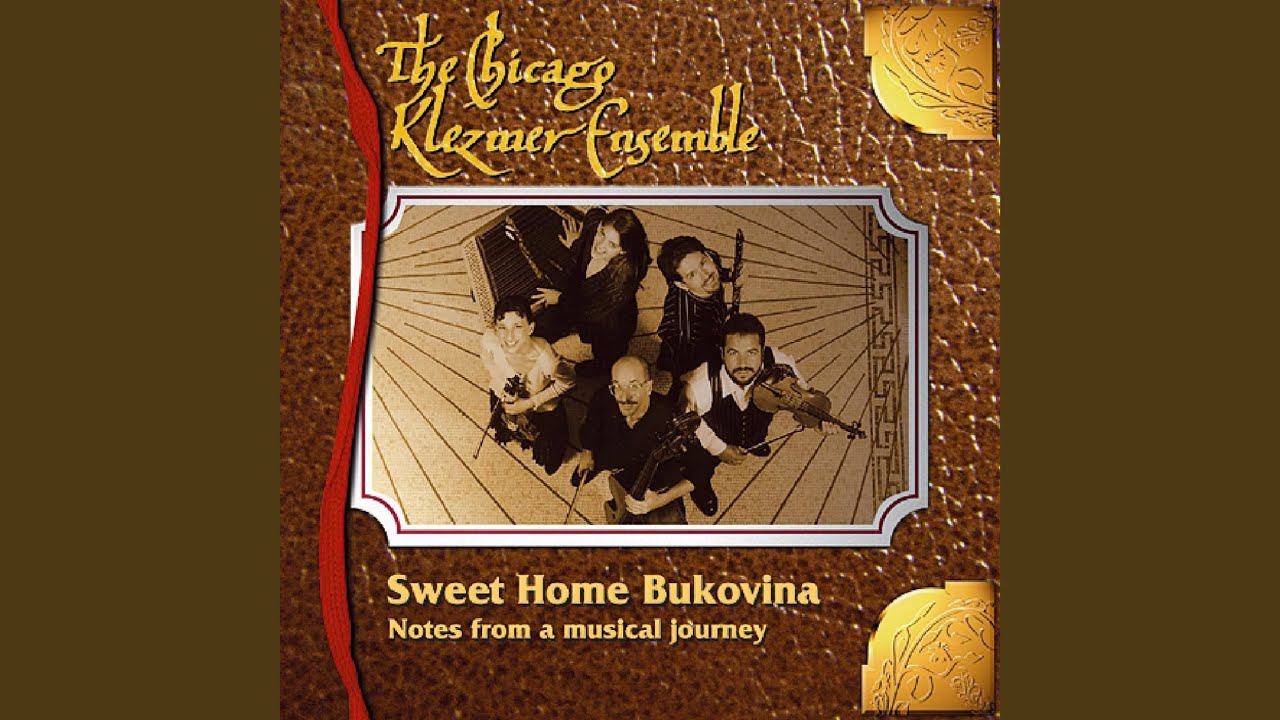
And from the klezmer tradition, a bulgarish:
The full discussion on sealabs: