Ταμπουράδες και πρώιμα μπουζούκια - Πηγές πληροφοριών

I can see two that pass right through the headstock. And since I had the same thought—whether we should regard the painting as photographically accurate or not—I tend to conclude that all the other details show that the artist knew about instruments and instrumentalists: correct shapes and proportions, correct posture, etc. So why shouldn’t the number of strings be correct too?

We can observe the detail of the straight headstock, with no angle in relation to the neck (essentially, no headstock). This did exist on Greek tambouras. To bring the strings to the correct height, they used a zero fret and, before that, another quasi-fret above the strings to hold them against the headstock.

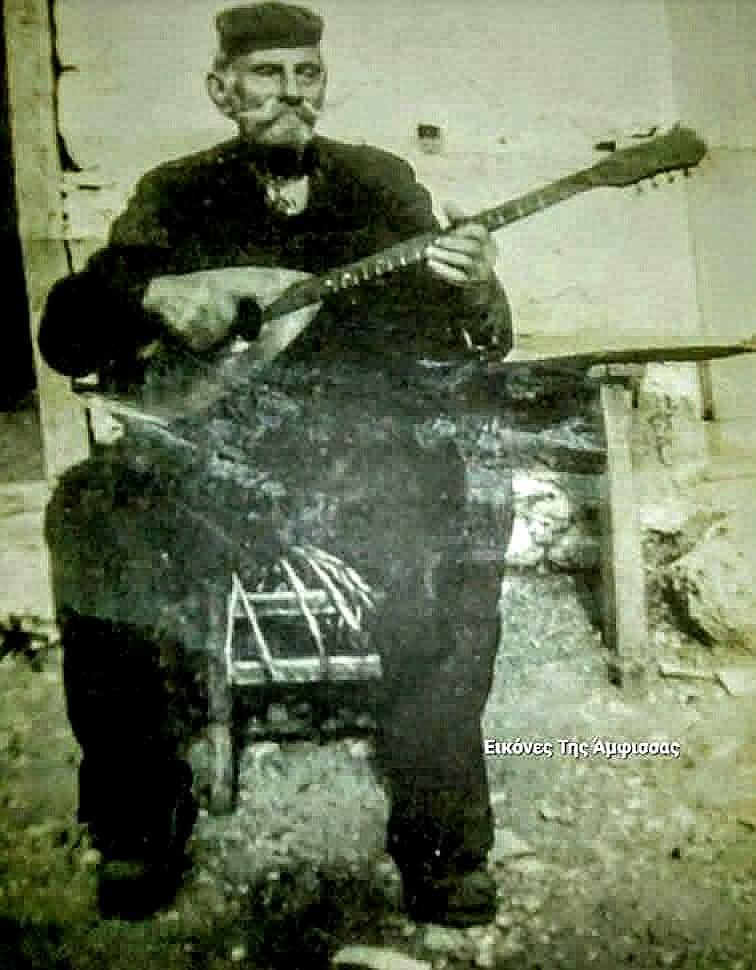
Rare photograph of a bouzouki player in Prosilio, Segditsa, Phocis…!
Athanasios Kritsas from the village of Prosilio, Segditsa, Phocis… In the 1910s, he went to America in search of a better life. He did not stay for long, returning to the village, where he used the money he had saved to buy a plot of land. There, he built a shop, with rooms for rent on the upper floor.

A pioneering investment for the time. There is also a listing and advertisement in the local press from that period (the newspaper Fokis), from 1926… He then bought the bouzouki that a friend from Asia Minor had shown him, and later played it at the shop..!!

9 Likes

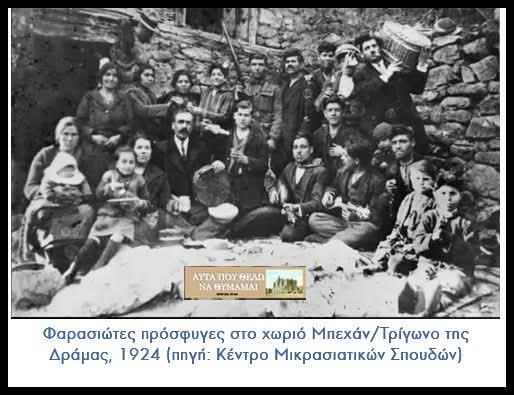
While I was idly scrolling through Facebook, I came across a post about Pontic refugees and, even though I can’t see all that well on my phone, I’m a proper bloodhound after all. I think they’re playing baglamas or something like that. Get herrrrr!

3 Likes

The Farasiotes aren’t Pontians; they’re Cappadocians. I think that in a documentary (a programme about local musical traditions), somewhere featuring Cappadocians, a local informant says that they used to have baglamas as well. I’ve written this down before, but I keep putting off looking for the exact reference. If it was a Samiou programme, then it’s very likely to have been from Platy in Imathia, where there are indeed Farasiotes. If it wasn’t by Samiou, then it was by Meliki, who has visited countless places; even then, it could still have been either in Platy or somewhere else with Farasiotes. In any case, they were definitely Cappadocians.

In fact, I was also left wondering whether by “baglamas” they meant what we mean by the term, or something more like a saz-tambourine.

From the second volume of the five-volume Archive of Ali Pasha (ed. V. Panagiotopoulos), an entry dated 10/2/1807, from the settlement of Ali Pasha’s transactions with Gaspari, his money changer in Constantinople:

“for violins, tamburas and bouzoukis, charged to Numan Efendi’s account, sent to our master”

Note: “charged to an account”: against an account

And as for the violins, violins they are—they came to us from Europe, so what more is there to say? Now, precisely what kind, size, length, number of strings, etc., the tambouras and bouzoukia were, that will remain unknown for ever. Yet it is quite possible that behind the word tambourades lies an instrument that we call a bouzouki today, and behind bouzoukia lies a fine tambouras, just as the books of today describe it…

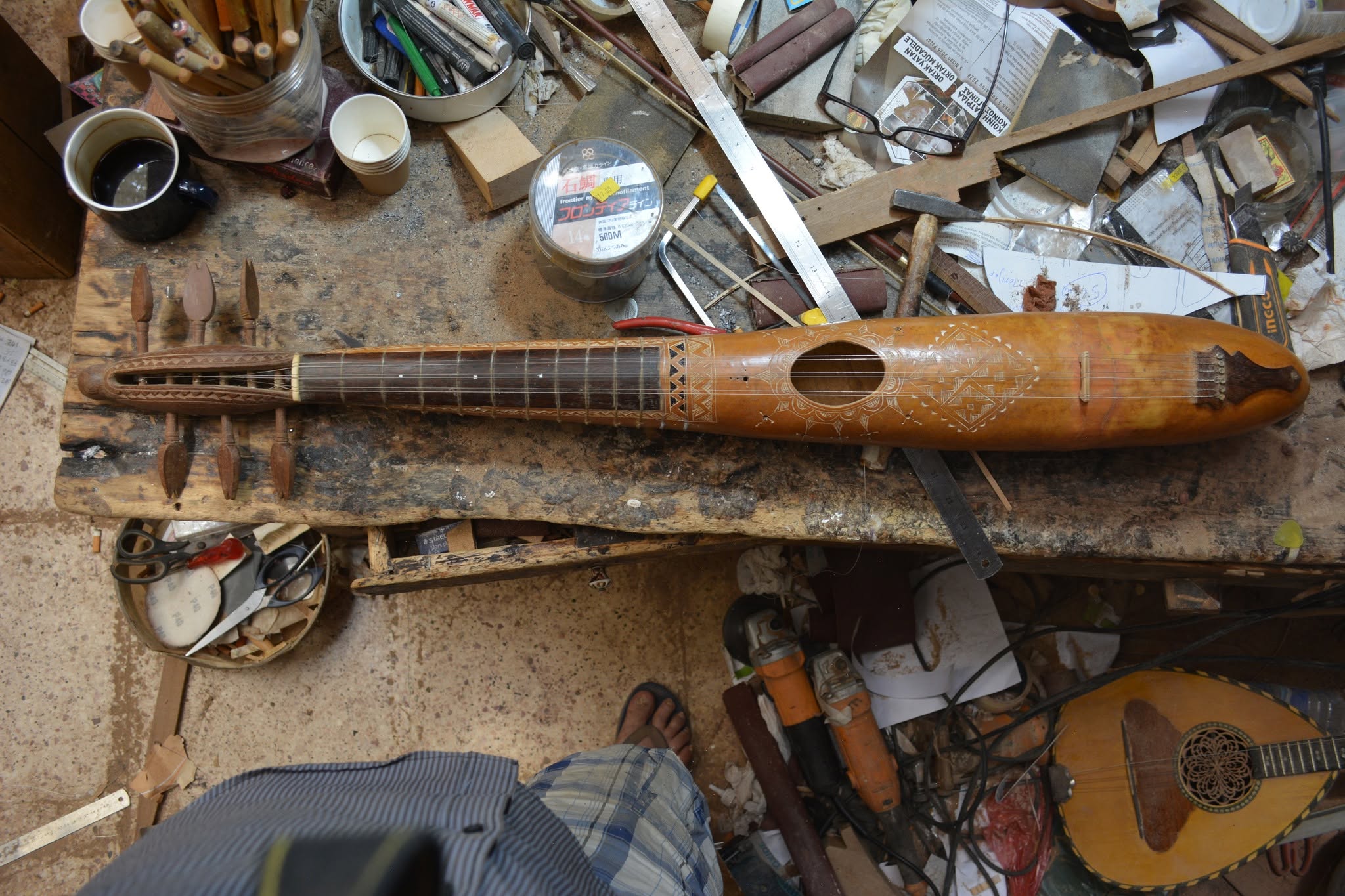
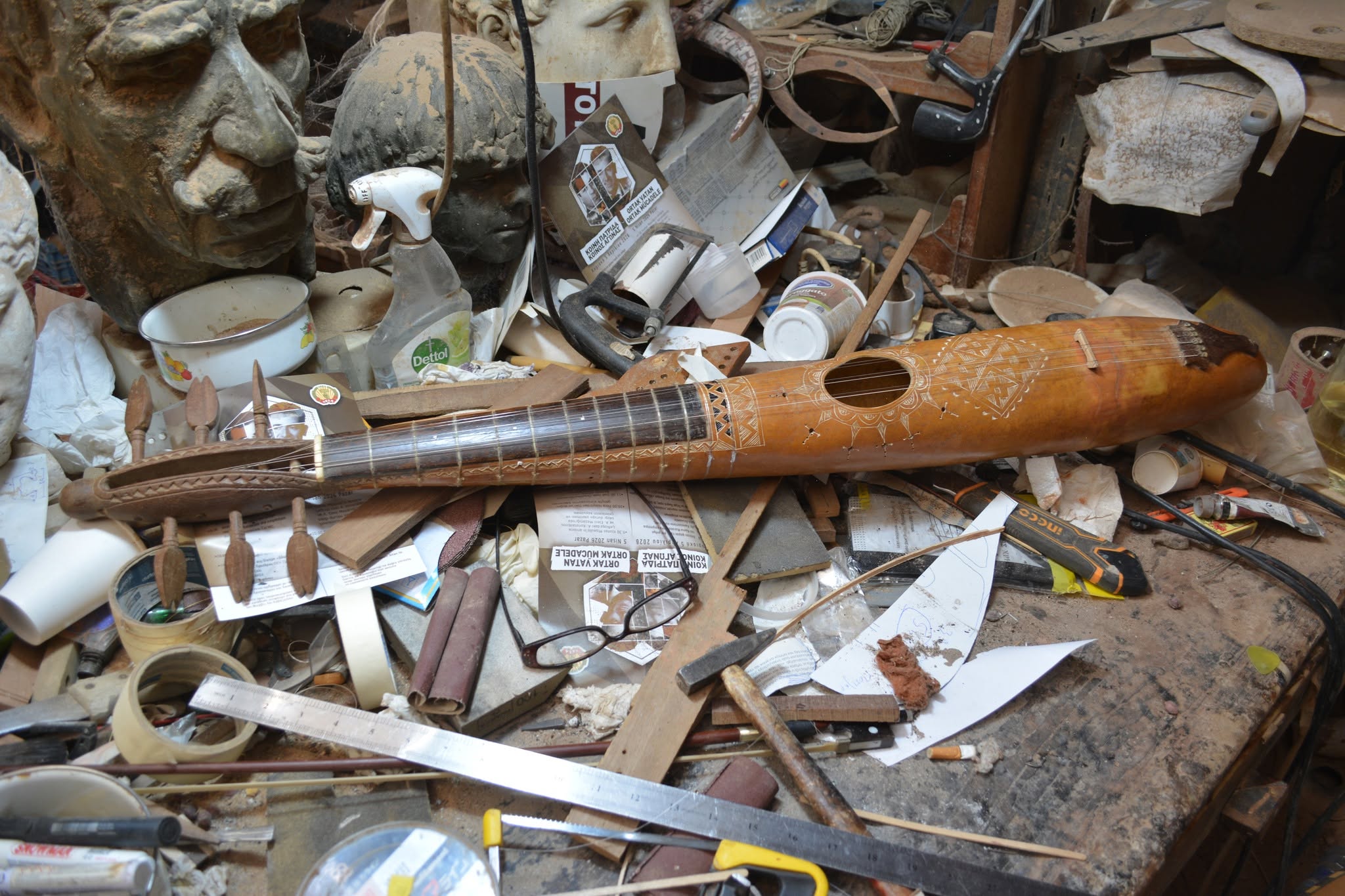
Cypriot tambouras. A copy by Leonidas Spanos.

I’m reproducing this from his Facebook post.

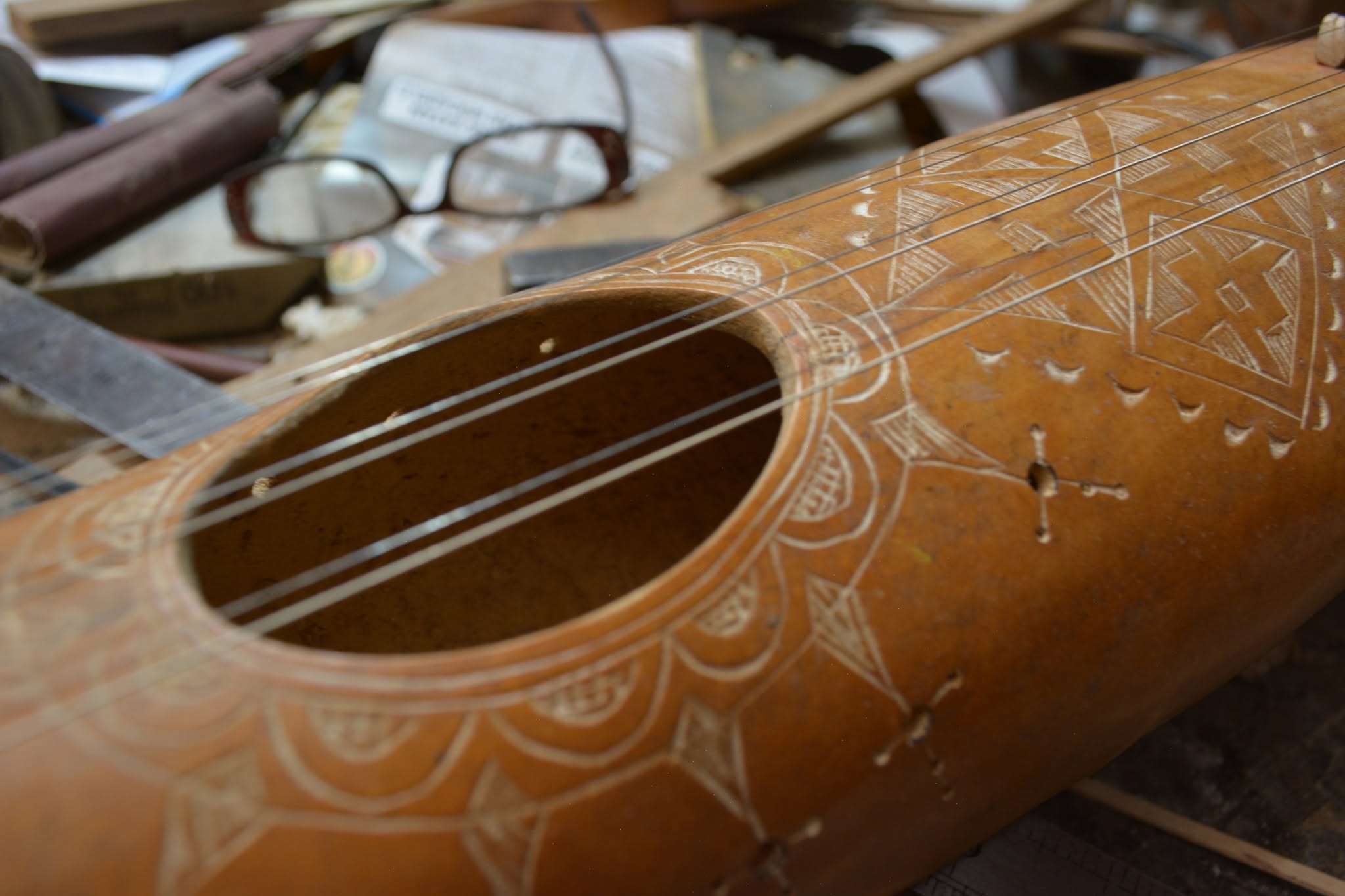
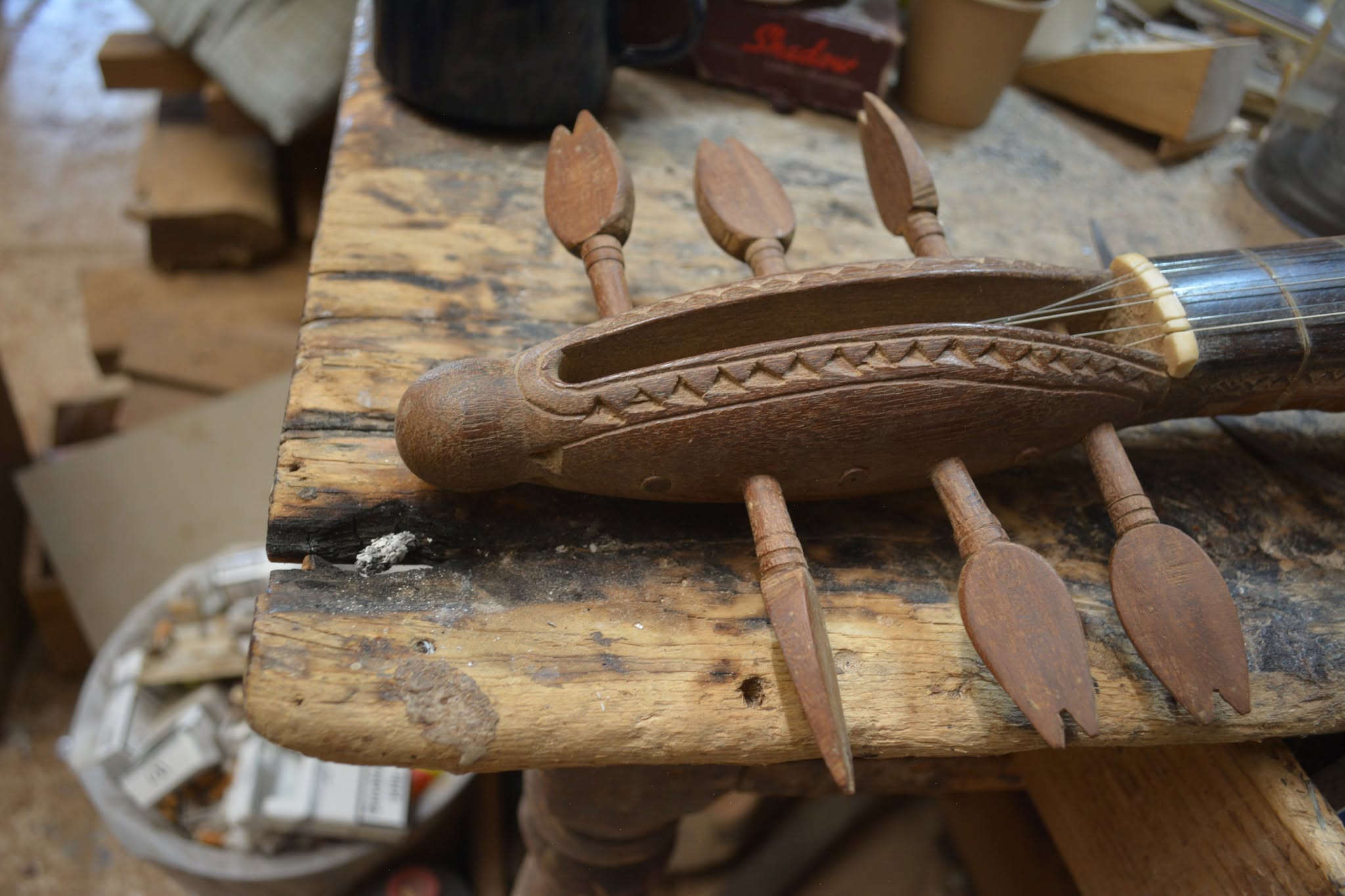
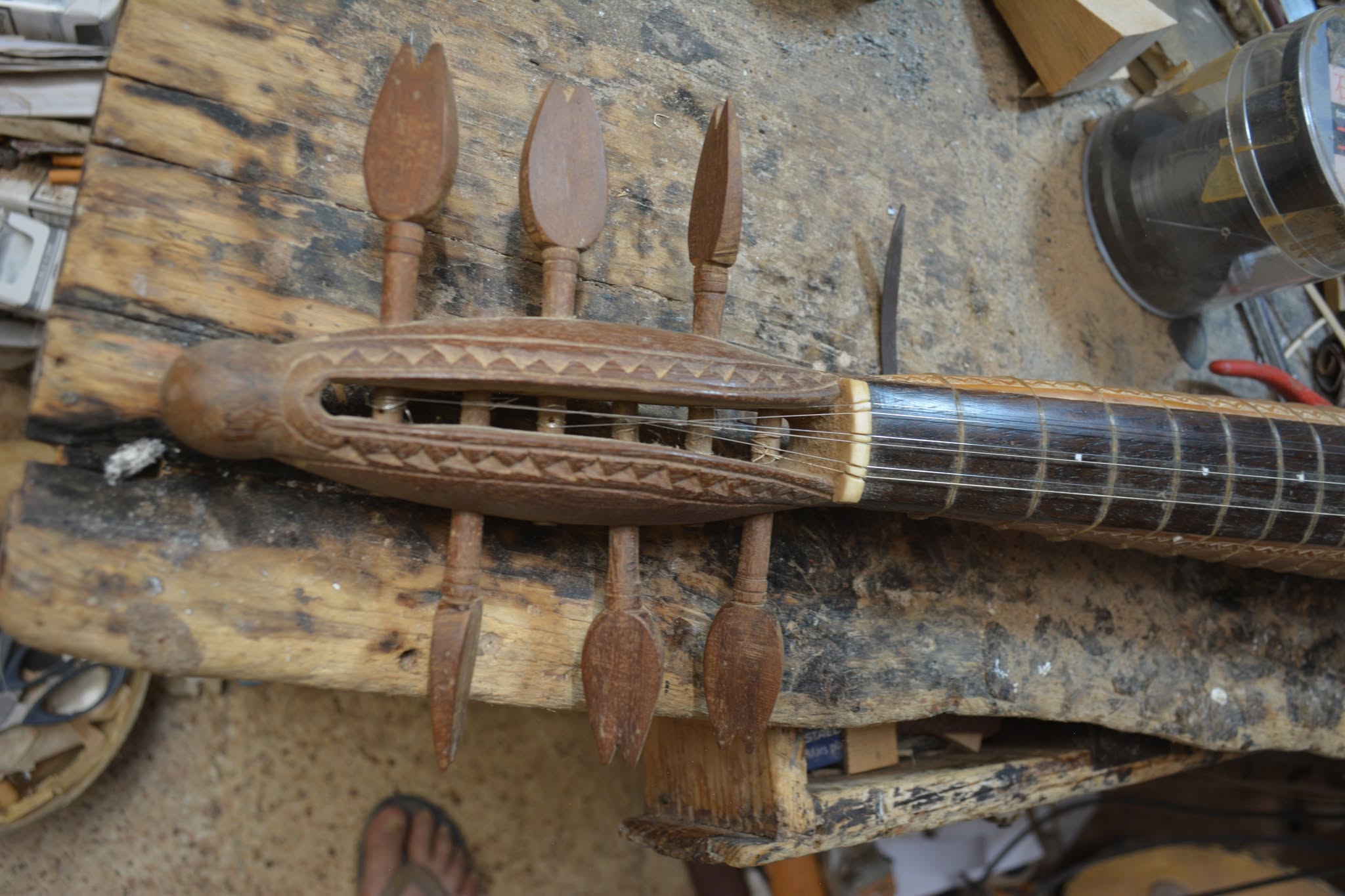
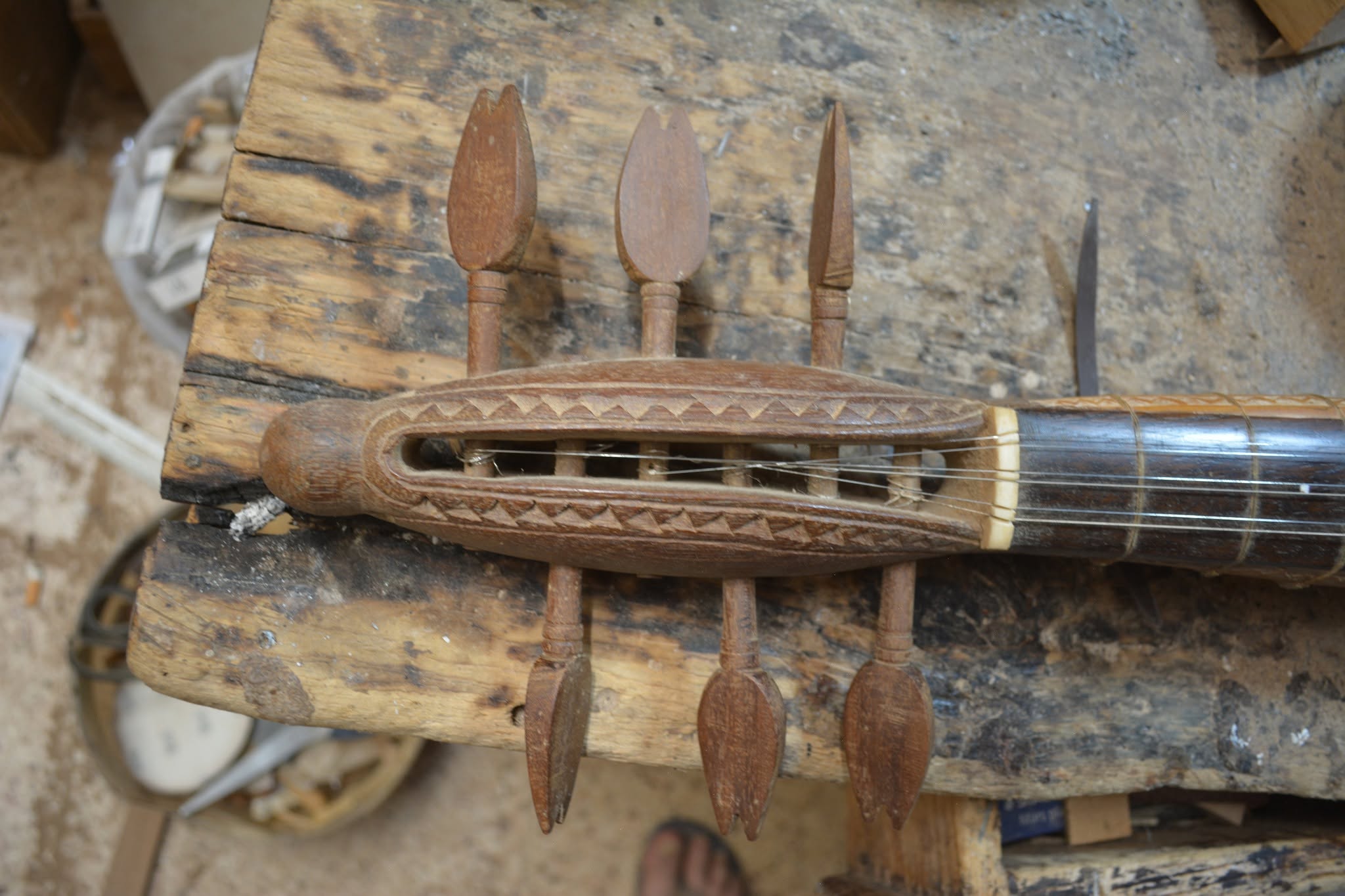
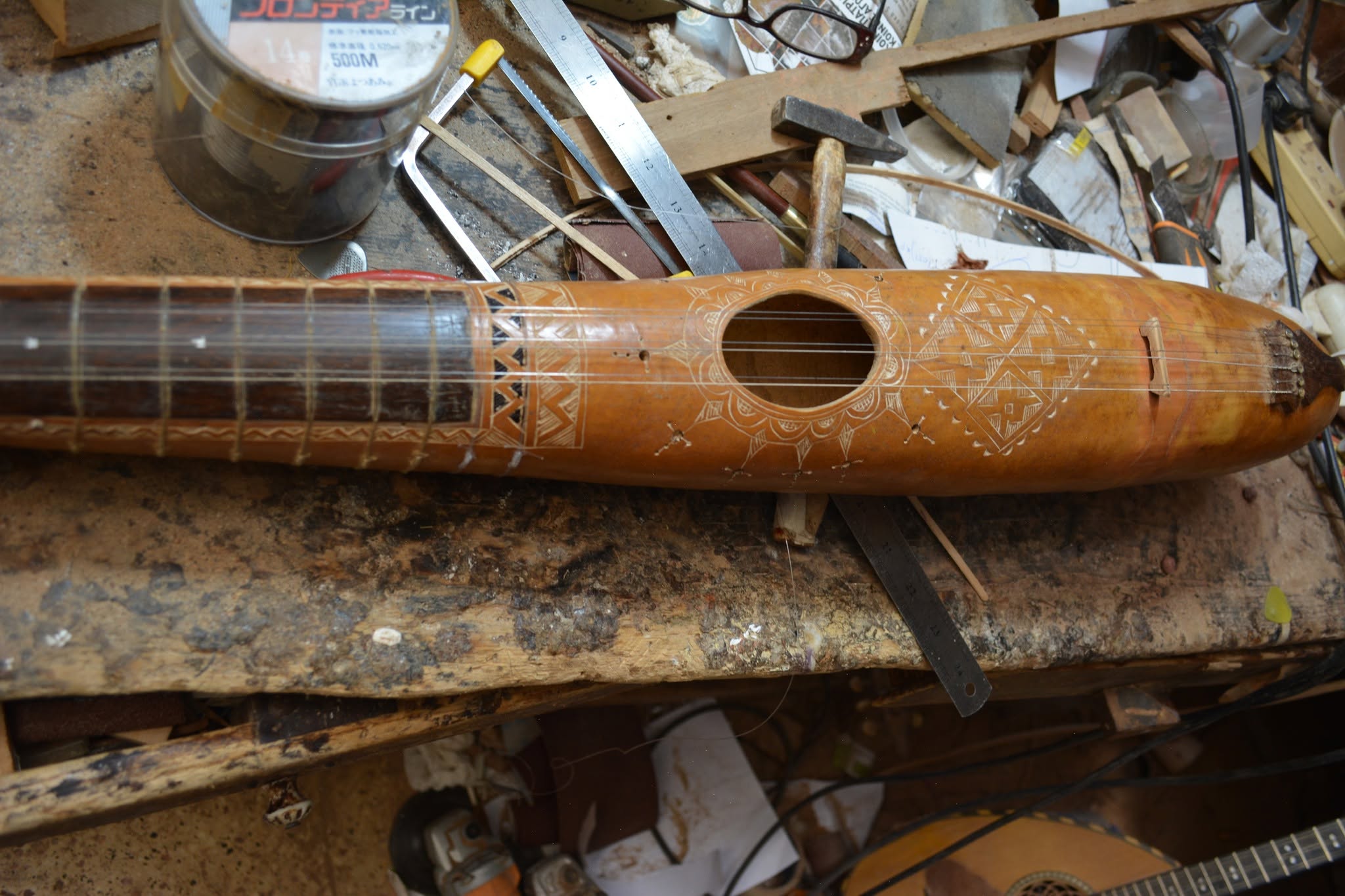
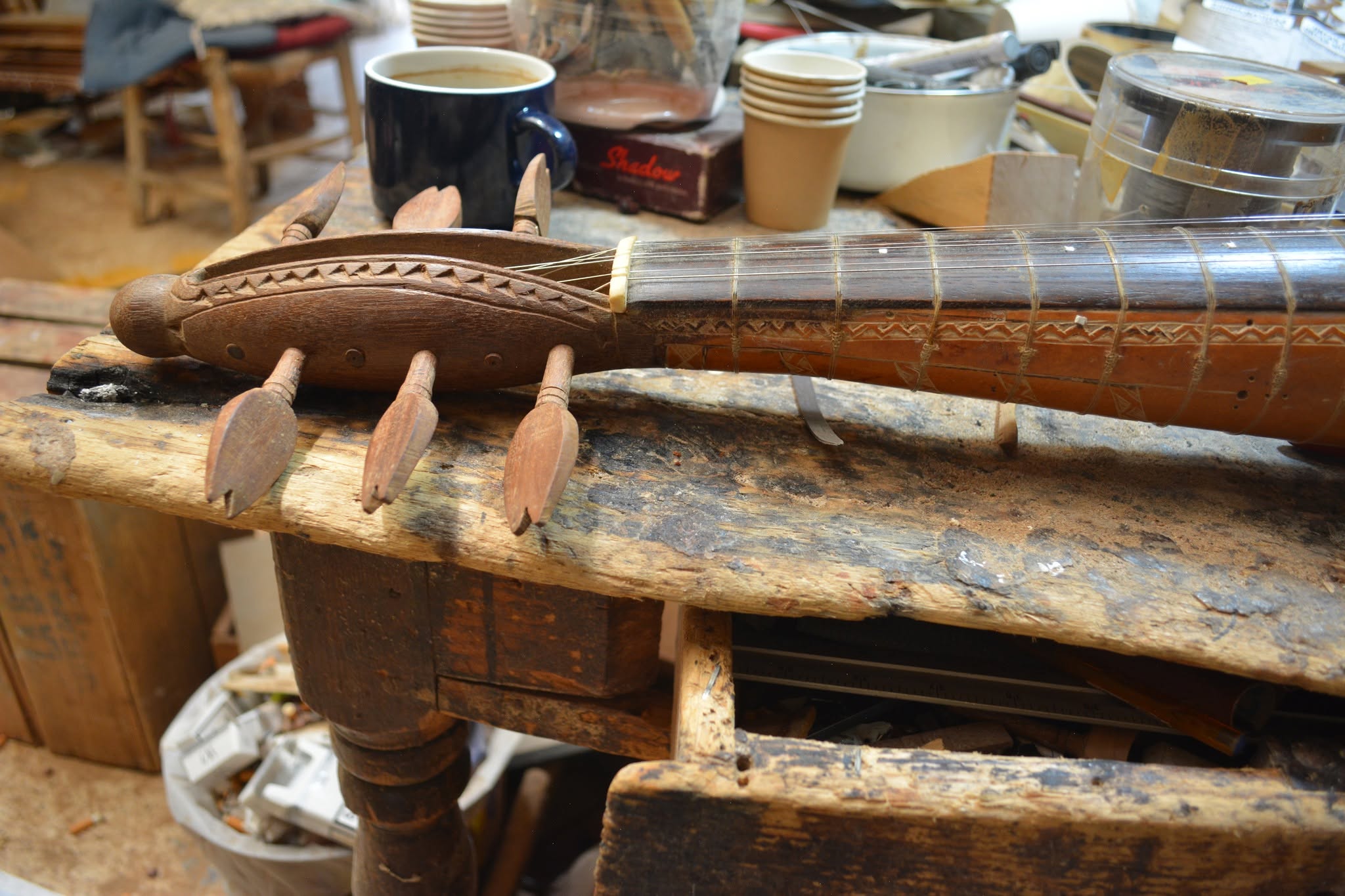
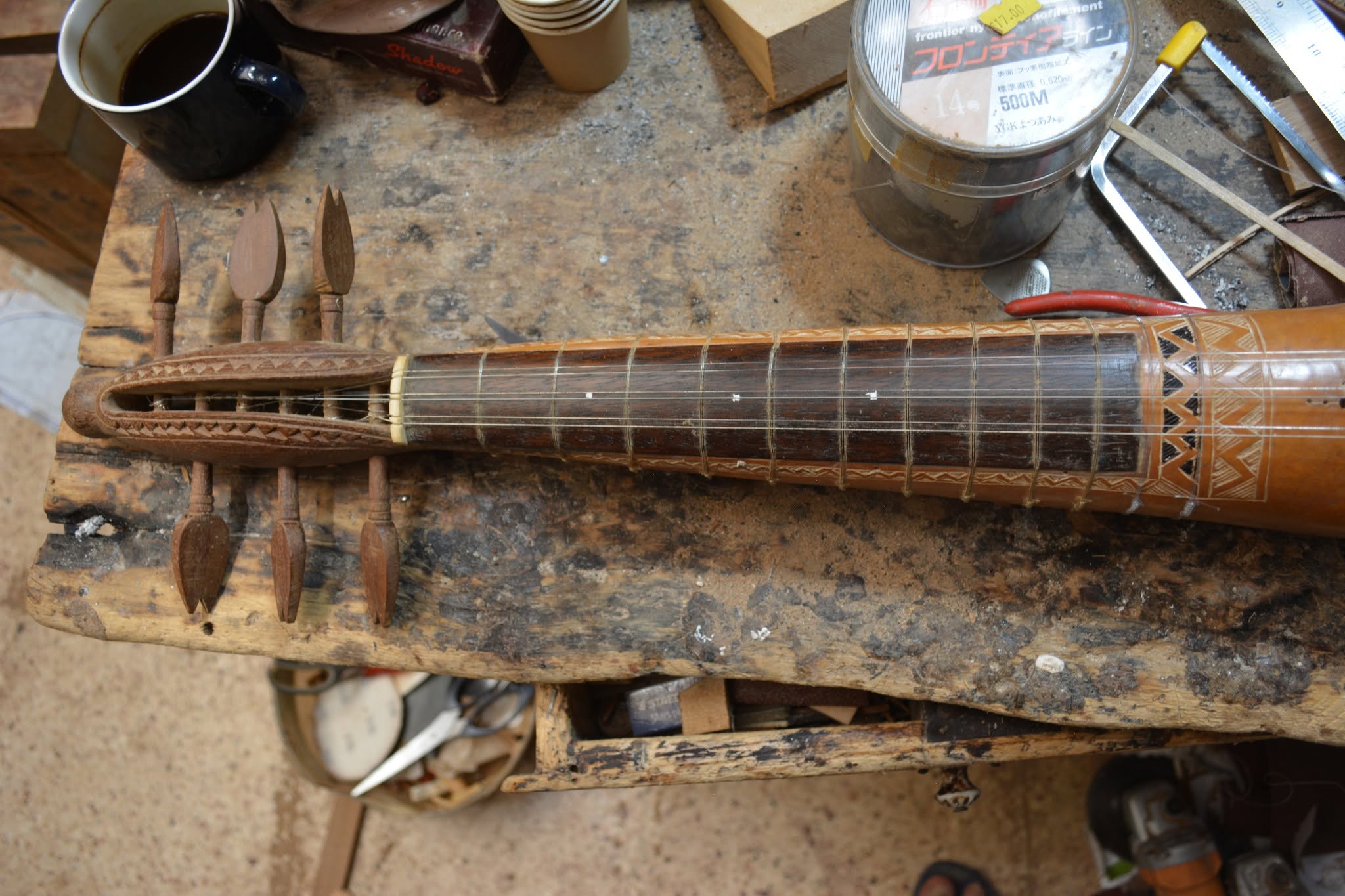
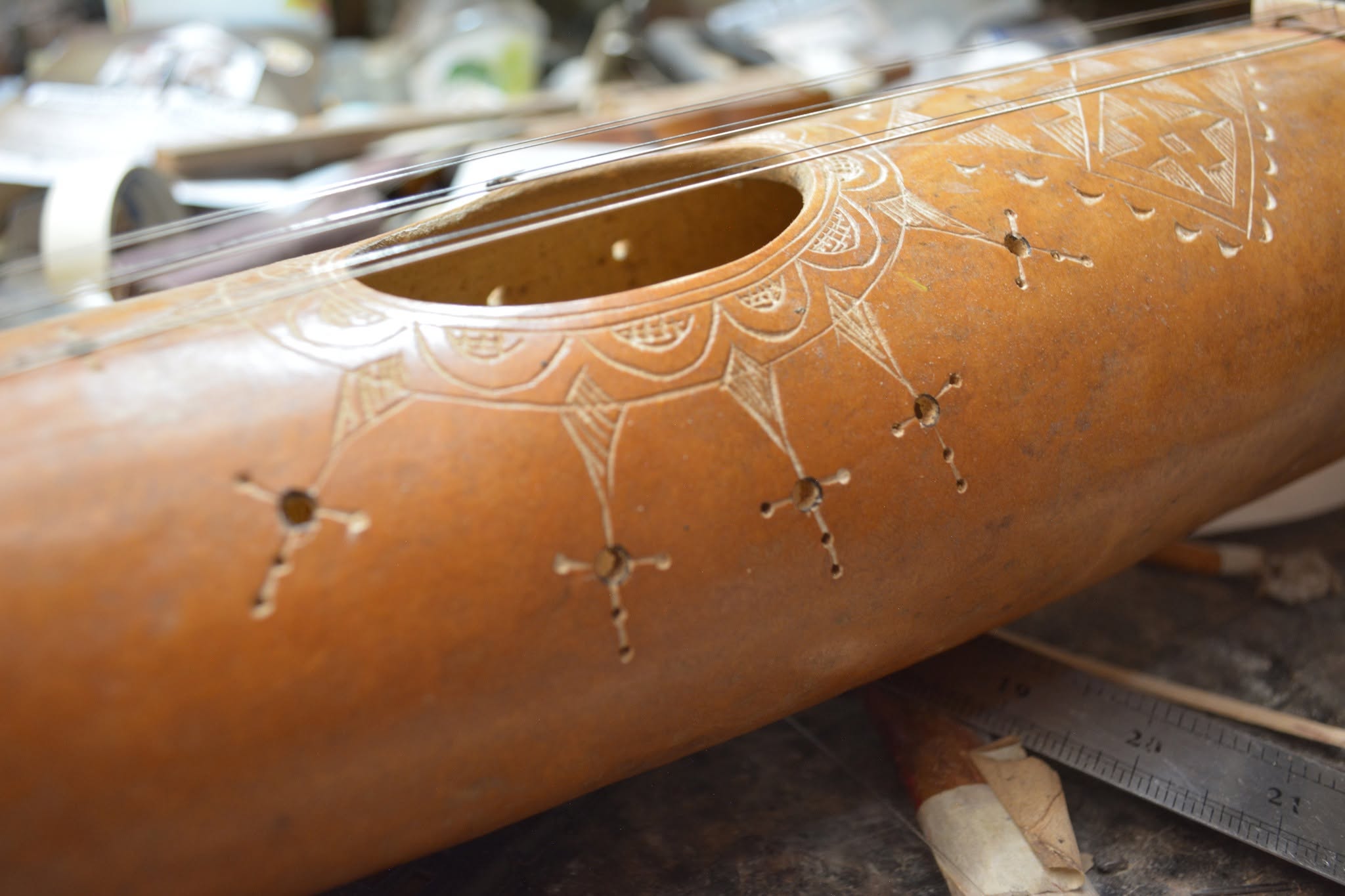
“Α tambouro-koloko from Fikardou. Left outside for several years, in the open air, it hardened. Ready to become an instrument. Cypriot tambouras made from a bottle gourd. The one dating back 200 years or more is in the Geroskipou Museum in Paphos. Tamboura in everyday Cypriot speech. There is no other reliable source. Not even its tuning. There is only one surname that reveals its existence, its use or its construction: Tambouratzis. In my village, Agios Vasileios in Nicosia—now under occupation—as my father told me [,1914,], there lived someone known as Tambouratzis. He would sit all day at a specific spot in the village square and play the tamboura… … .

Now, what is this instrument that our grandfathers played? It is nothing more than an unusual construction, probably improvised, made from materials they found in nature. The bottle gourd served both as the soundbox and the back. What is truly impressive is the tamboura’s masterfully crafted head, which has no equal in terms of beauty and functionality. Ergonomically, it is flawless.

Where did this tamboura come from? Clearly, it has medieval roots, specifically in the medieval lute. It has all its characteristics: 12 tuning pegs, 12 frets and a few more on the soundboard, a sound hole in the same place as on the lute, and a bridge like the lute’s. It’s simply that its maker did not know any other way. He did not know the methods used by Europe’s skilled instrument makers; he did not know how to make the ribs, and he did not have the right wood to cut to a thickness of 3 mm for the soundboard. We are talking about the late Middle Ages, when Cyprus was still far behind the European instrument-making world.

And yet, he saw the foreign conquerors displaying such skill in the art of instrument making and in their performance abilities. That was it. He had to make something similar to the foreign medieval lute. Since he did not have the necessary materials, he took a bottle gourd from his neighbour’s garden and made something similar. He had the craftsmanship, and he also had a love of music; he simply did not have the means. And so the tamboura was born—the Cypriot tamboura of the late Middle Ages…”

Video and photographs at the following link.

Could someone copy the photos here too, please? Thank you.

Interesting that he considers it a Western influence!

If I’m not mistaken, Anogeianakis has also photographed a gourd tambura in Cyprus.

1 Like

I should say again that these photos belong to Leonidas Spanos; I simply transferred them from his Facebook account.

2 Likes

Thank you, Loukas!

The image makes the meaning of the text much clearer to me. From the way I read it, I was expecting to see something different, but the text nevertheless ultimately proves to be accurate. Indeed, the instrument clearly appears to have been influenced by European medieval instruments.

However, we should not rule out the possibility that it originated from local, conventional three-stringed tambouras:

a) It is three-stringed. Would he have made it that way if he had been trying to make a European lute? No—unless he had already seen one somewhere, of course.
b) There may not be strong evidence that such tambouras existed in earlier times (I mean conventional ones, like those found everywhere), but there is nevertheless evidence linking the word to some instrument which—what the devil—it was probably a tambouras.
c) Spanós also uses the word tambouro-kolokytho. If the word really is local, it obviously indicates that they made tambouras from these gourds. (After all, in other places too, water gourds are called tambouras, or even lyres, for the same reason.) And why have none survived? I can imagine them being makeshift constructions with a short lifespan, which people did not mind letting break and replacing with new ones all the time (as with mandoures, for example). And when, on that one exceptional occasion, someone sat down and made a genuine instrument from one of these gourds, with all the knowledge and effort evidenced by the head, its successive owners took care to preserve it because it was worth the trouble.

So the instrument could have been made by someone familiar with both models—a local three-stringed gourd tambouras and a European lute—who made a tambouras incorporating external lute influences (and European instrument-making techniques more generally).

1 Like

From Crete, and with an 11-semitone fingerboard, it would be easier to call it a “small three-string lute-gourd”. However, the fact that there was a “regular” tambura in Cyprus (carved, with a design like those of Foustalieris or Lakonias 1904, or various very rustic two-string instruments that have survived) is attested to by another surviving “Cypriot tambura” with this kind of hull-keel body. It is not a tambura, but a guitar (six single strings and an octave fingerboard), and nevertheless proves that this type of body was known and used. As for the last instrument, it is indeed a three-string tambura with a highly distinctive construction: Western equal temperament and elaborate workmanship adapted to the gourd. I wonder whether the gourd might have been grown in a mould specifically to be made into an instrument. It is unknown whether the tuning would have been along the lines of a bouzouki, saz, short-necked saz, baglamas, or an open three-string tuning.

Here I see an interesting photo of the instrument

1 Like

This is the photograph I meant. It has nothing to do with Anogeianakis’s well-known book or the museum’s collection; it must be from a record release by the PLI, featuring field recordings. (We’re not concerned with the recording, after all — we’ve already discussed it.) The instrument is exactly the same style.

1 Like

We can see “regular” tambourades in the documentary featuring Averof and Pipis: Δείγματα Κυπριακού Ταμπουρά (ο τταμπουράς, ή και η τταμπουρά)

Can you point us to a source for the instrument with six single strings?

The text makes a few leaps, if not logical ones, then chronological ones. It is the text of a maker on Facebook, not a scholarly publication, but it is worth discussing a little. The instrument in the Geroskipou Museum is 200 years old, so roughly from 1800. 1800 is not the Late Middle Ages, unless we are using the term metaphorically to describe the state of the population, in which case we could just as well call it Late Antiquity.
In the actual late Middle Ages, there was probably a lute in Cyprus. Stephanos Lusignan tells us that one third of Cyprus’s population played the lute. Performance ability, if not virtuosity, was not the preserve of some conquerors—the few Venetians of the period from 1489 to 1570—and was probably not the sole preserve of the upper feudal class either. They were Greek-speaking, as the text by Bustronius also shows, even if bilingual in Italian; they were no more foreign than Kornaros in Crete or Count Solomos in the Ionian Islands. Whether there were makers is an important question; it is reasonable to assume that there were at least some in one or two major cities.

The leap from the 13th–16th centuries, for which we have texts of historical interest, assizes, chronicles and so on, along with some records of vocal music, mainly church music, to the 19th century, from which we have instruments or records of oral musical history (for example, Averoff’s account of “Yiannis the Serb”, who was among the first to bring the violin to Cyprus), is a leap into the unknown. It is not unlikely that something from the earlier period survived into the modern one, but on the other hand Cyprus was not put on ice for three centuries. Contact continued both with the West, chiefly Italy, and with our neighbours.
This pegbox may bring a Renaissance lute to mind, but it may also resemble instruments from 1750, citterns, and earlier German and English “guitars” that later adopted the Preston mechanism, which survives to this day in Portuguese “guitars”. See, for example, the English guitars in the Takeuchi collection, at the bottom of the page; at least half of them have a pegbox like that of the Cypriot tambouras-gourd, while the other half have the Preston mechanism
http://tarolute.crane.gr.jp/englishoriginalinstts.htm

See also another related thread:

An unfamiliar word. A collection of laws, I gather—this must probably be it:

The name Assizes of Jerusalem refers to a collection of laws of the Kingdoms of Jerusalem and Cyprus. According to tradition, Godfrey of Bouillon summoned wise men, who based their work on the feudal law of France and the local customs of Palestine and the lands from which the Crusaders came. This collection of laws provided the framework for the administration of the Crusader Kingdom of Jerusalem.

In reality, the Assizes took shape during the 12th century, based on the traditions and customs of the kingdom’s inhabitants. They were first recorded in French during the 13th century, traditionally attributed to John of Ibelin and Philip of Novara.

The Assizes were also drawn up in Greek during the 13th century, on behalf of the Kingdom of Cyprus and certain Frankish-ruled regions of Greece.

(source: Wiki)

RIK Archive
GEORGIOS AVEROF 1913–1990

Summary

“ A feature on the life and work of Georgios Averof, a folk musician from Cyprus and researcher of Cypriot folk music. People from the arts, relatives and friends talk about his life and work. The documentary also includes an interview with Averof himself. Footage from his funeral is also shown.”

I think Viki is talking nonsense; the translation must have been made exclusively for Cypriot use. The text is considered an important linguistic monument of the medieval Cypriot dialect. It wouldn’t make sense for the laws of Athens or Constantinople to be written in Cypriot. It can be compared with the “Chronicle of Morea” and other texts from the period.

For the Cypriot Assizes, see the excellent text by P. Zepos, “The Law in the Greek Assizes of Cyprus” (YEARBOOK OF THE SOCIETY FOR BYZANTINE STUDIES, XXV, 1955)

Here, pp. 307–330

Issuu.

Also, since we are discussing the Cypriot Assizes, let us remember that one hypothesis concerning the word “rembetis” also referred to the “right of the rembet” in a passage from the Assizes.

Our eminent etymologist K. Karapotso­glou has commented on this:

Etymological Notes: Medieval Cypriot rembet and Others.

In medieval Cypriot, the word rembet occurs in the following passages: a) “The duty of the rembet, which justice commands them to receive, is 100 marks, 8 and a half marks,” and b) “From the rembet. The right of the rembet: from 100 hyperpyra, he shall take 11 hyperpyra, 8 koukia” [Assizes of the Kingdoms of Jerusalem and Cyprus, Medieval Library, ed. K. N. Sathas, vol. 6, Venice 1877, pp. 24116–17 and 49217–18 respectively.].
Du Cange [Graecitatis 1289] recorded the word rembet from the above passages of the Assizes and interpreted it as: “Rebet, a type of drink”; in reality, the two passages from the Assizes above render precisely the Old French passage from the Munich manuscript: “Know well that reason commands that one should take from the rebeth, from 100, 8 and a third bezants, which amounts to the due,” [The Books of the Assizes and Customs of the Kingdom of Jerusalem, ed. E. H. Kausler, Stuttgart 1839, p. 280], while the passage above is also found in the form “From the ribes one must take 100, 8 bezants and 8 karoubles as the due,” [Assizes of the Kingdom of Jerusalem (French and Italian Texts), ed. E. Victor Foucher, vol. 1, Rennes 1839, p. 594], who notes(p. 594,note 39) regarding the word ribes: “Munich MS, Rebeth, a kind of rhubarb of the Arabs”.
The word rembet renders the Old French rebeth, ribette = redcurrant [=Ribes or Ribesion, the red (Ribes rubrum), commonly the gooseberry, which “is cultivated in numerous varieties, like Ribes grossularia, for its fruit… or also for the preparation of sweet drinks, especially the one known among us as groseille, from the French groseille”,while Beugnot [ Assises,vol. 2,p. 177,note d]concludes: “Ribes is the juice that pharmacists sometimes give for redcurrants, for they call the juice of redcurrants, when it is candied, rob de ribes: Succus grossularius.
[
K.Karapotso­glou, “Etymological and Semantic Notes on the Text of the Assizes”,Cypriot Studies 64–65 (2000–2001) 767–768.By the same author, “Comparative Investigations into Modern Greek”,Lexicographical Bulletin 16 (1986) 283–284]

The conclusion that emerges is that the medieval Cypriot word rembet is a homonym(homonym)of Greek and is not connected with the word rembéta,rembetis.

Η ρεμπέτα, οι δερβίσηδες κι οι φίλοι | ο δύτης των νιπτήρων