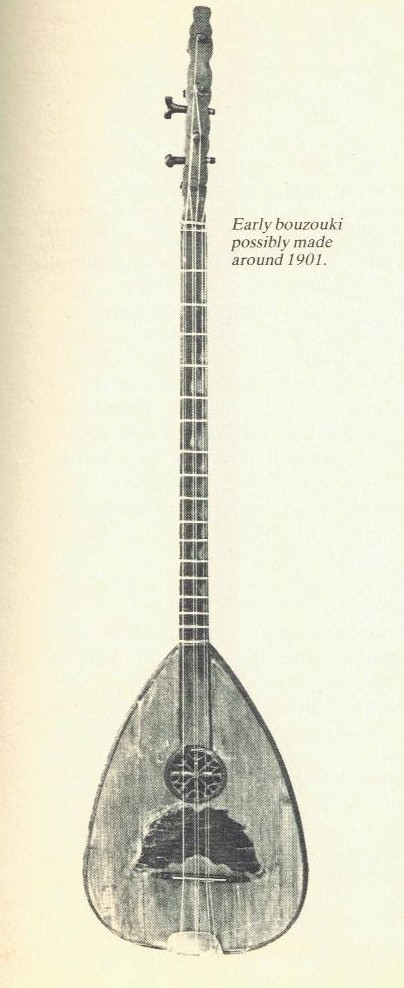
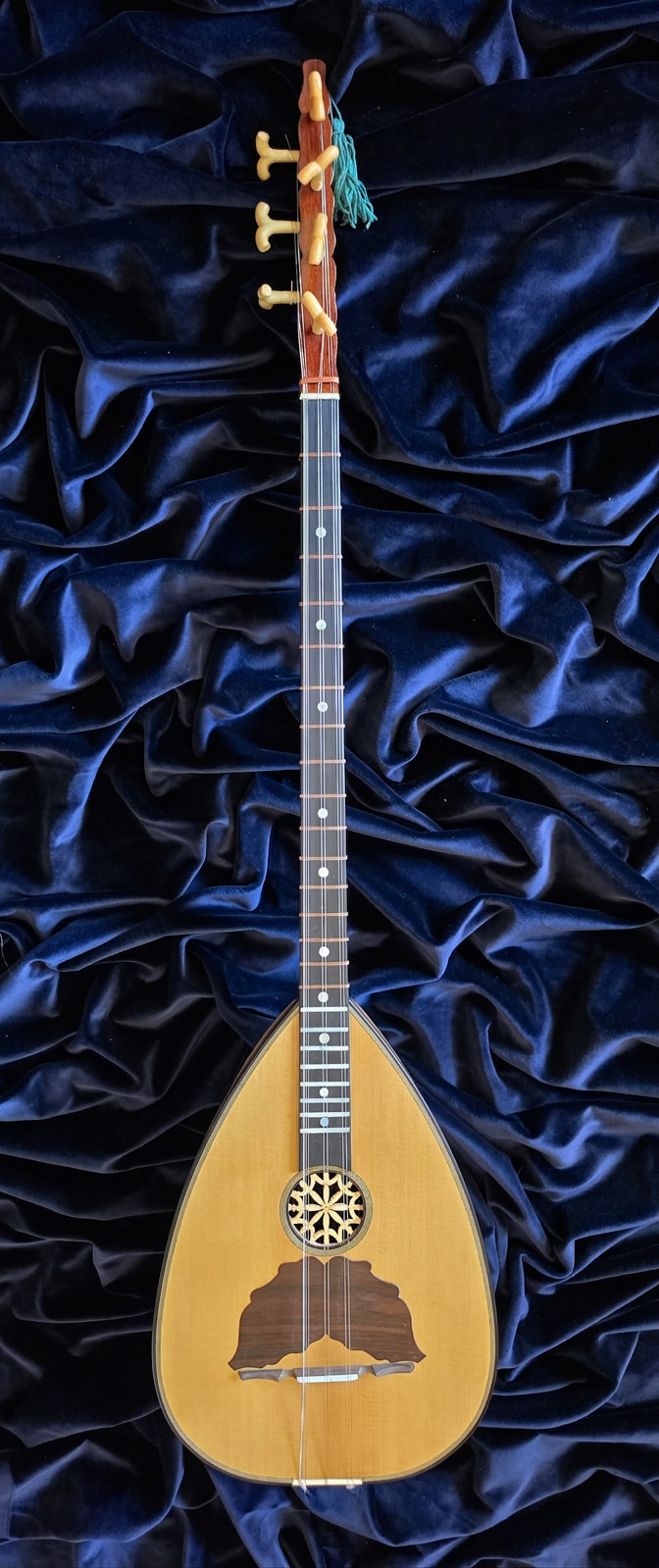
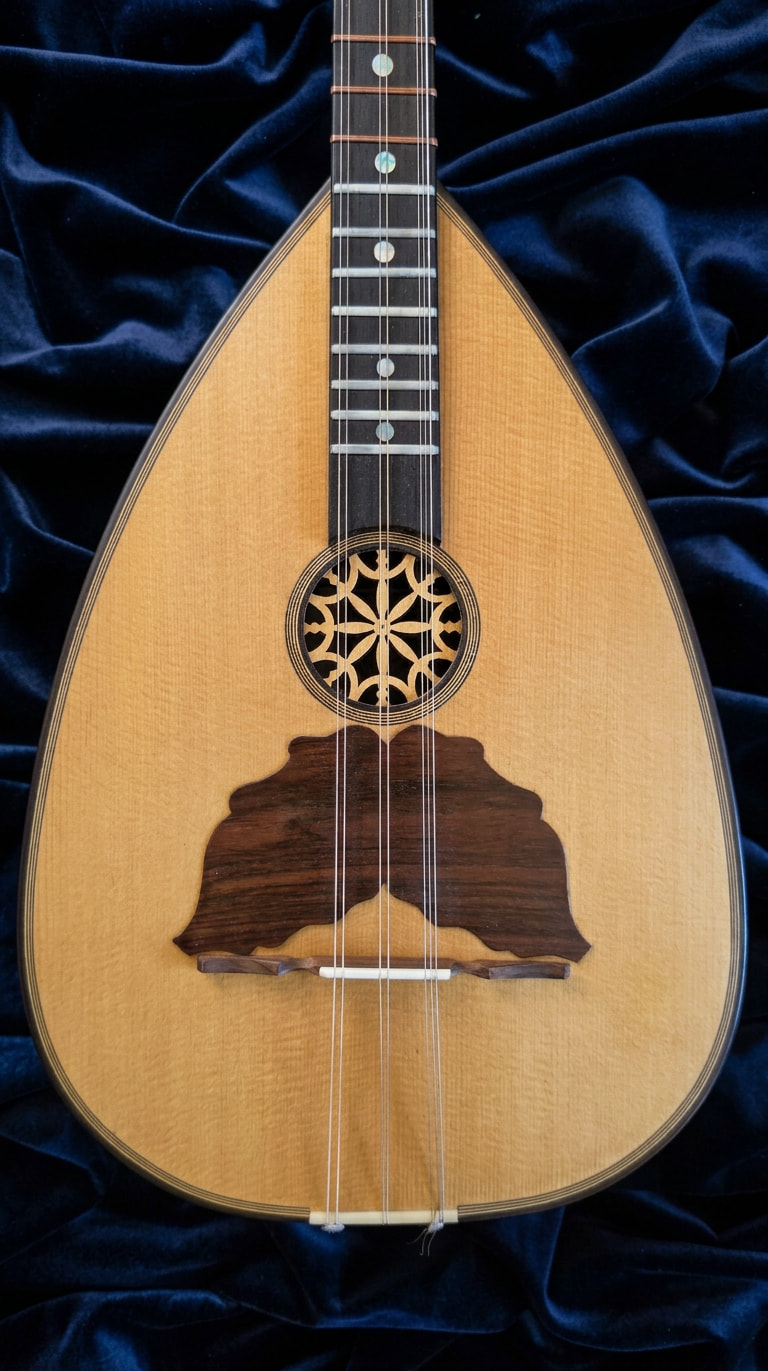
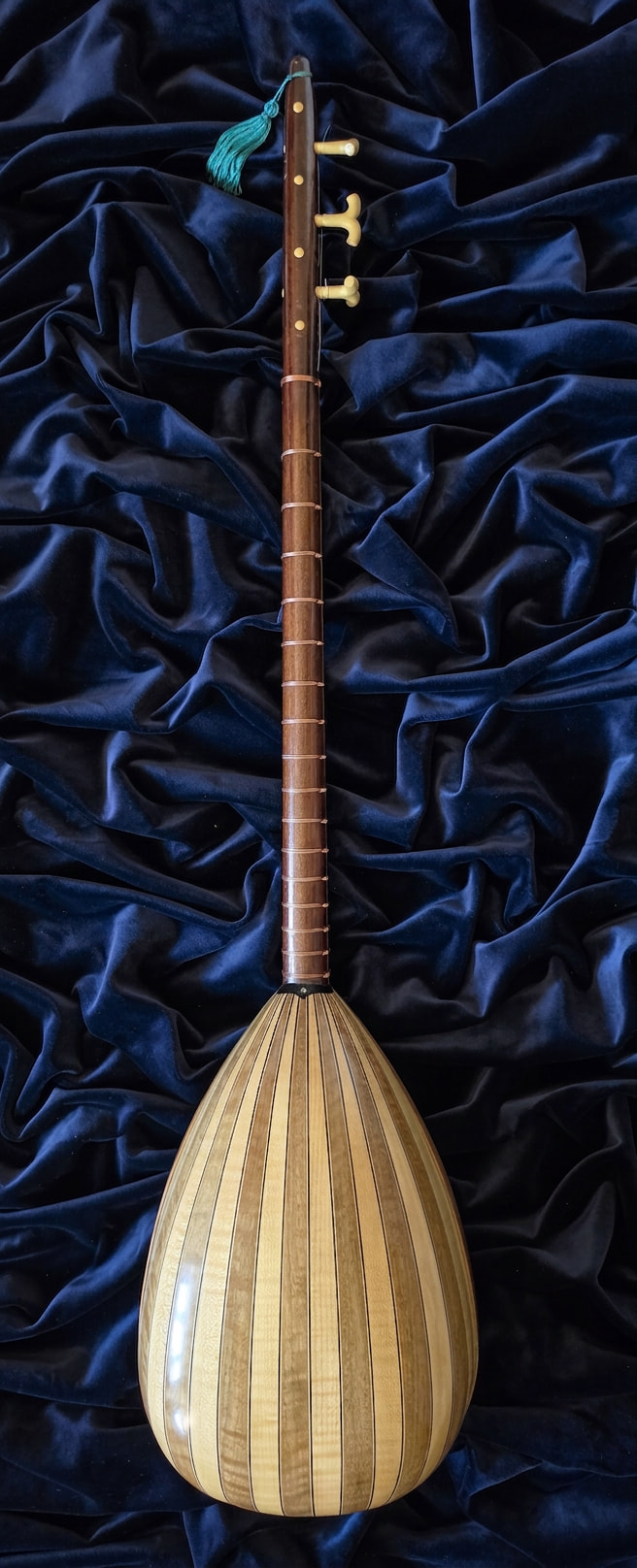
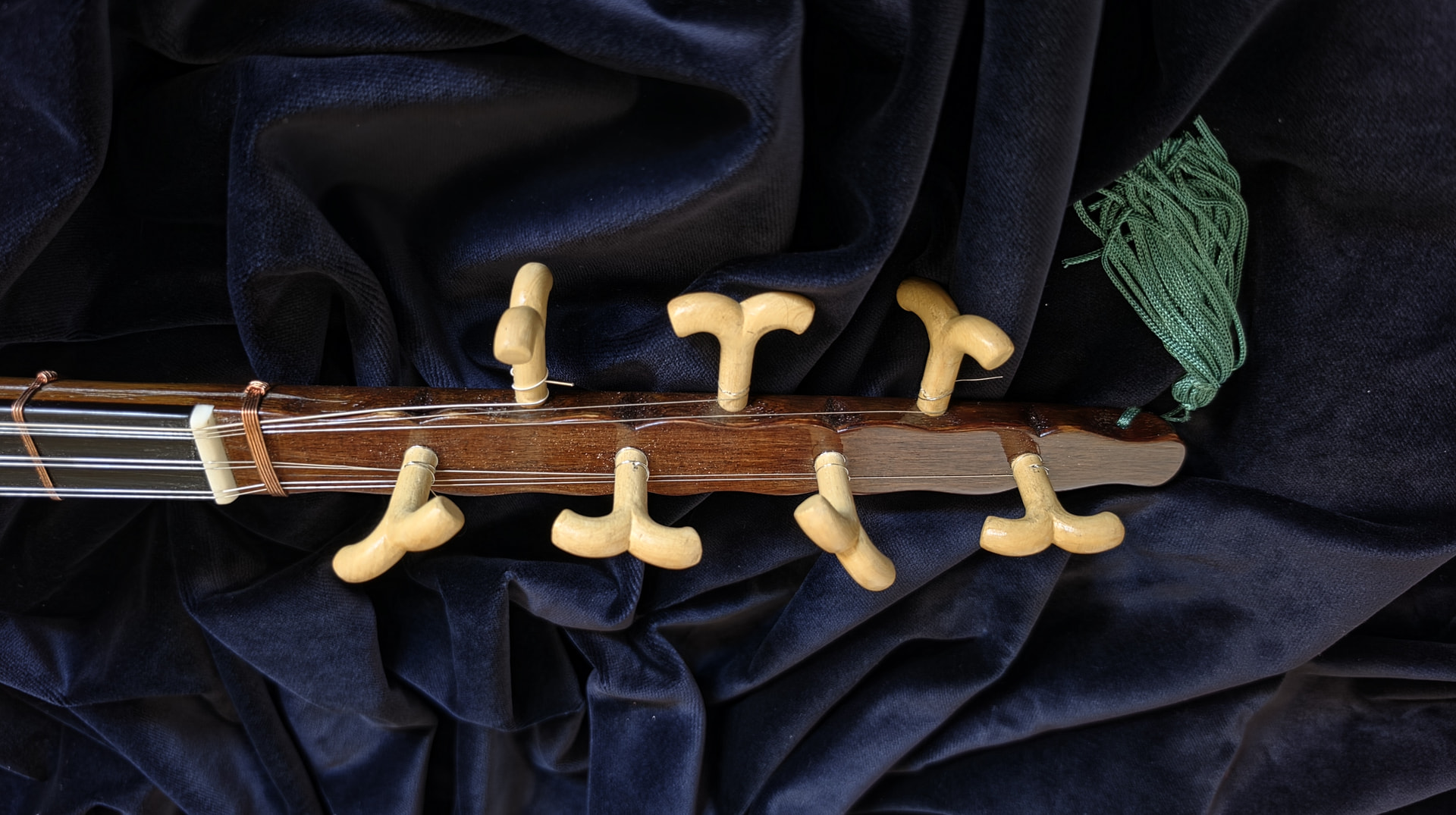
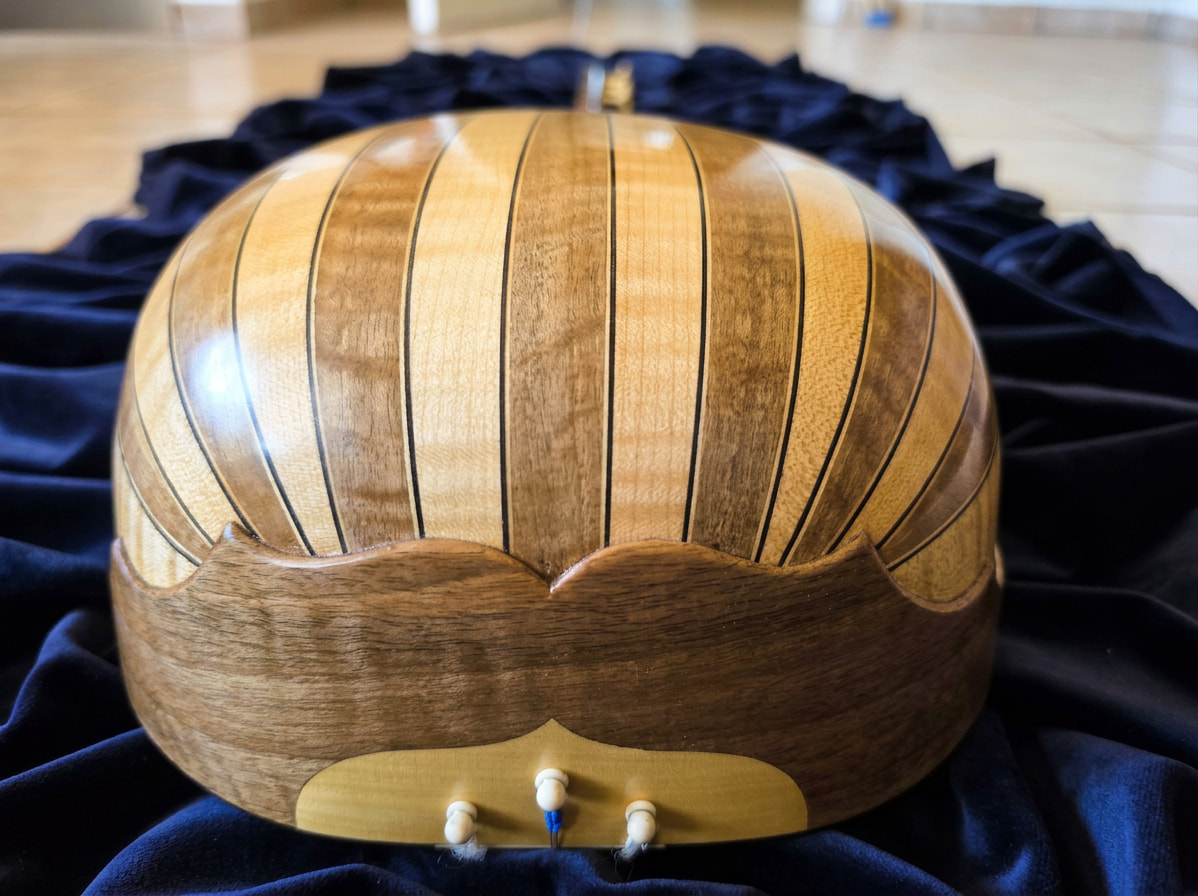
…The fourth pre-war bouzouki model I decided to work on is based on a very old instrument by an unknown maker, which I believe was made towards the end of the 17th century. It is one of the very few surviving examples from the early period of bouzouki making, when the instrument borrowed technical features from the construction of the laouto: a body flattened at the base, fairly shallow, with the soundhole near the centre of the soundboard and fitted with a rosette, the bridge close to the base of the soundbox, and a neck with frets and tuning pegs reminiscent of the tambouras. For this reason, I named this type of pre-war bouzouki „laouto-shaped“, distinguishing it from the instrument’s subsequent evolution at the hands of many renowned makers into the next and better-known type of pre-war bouzouki, which by then borrowed technical features from the construction of the Neapolitan mandolin.
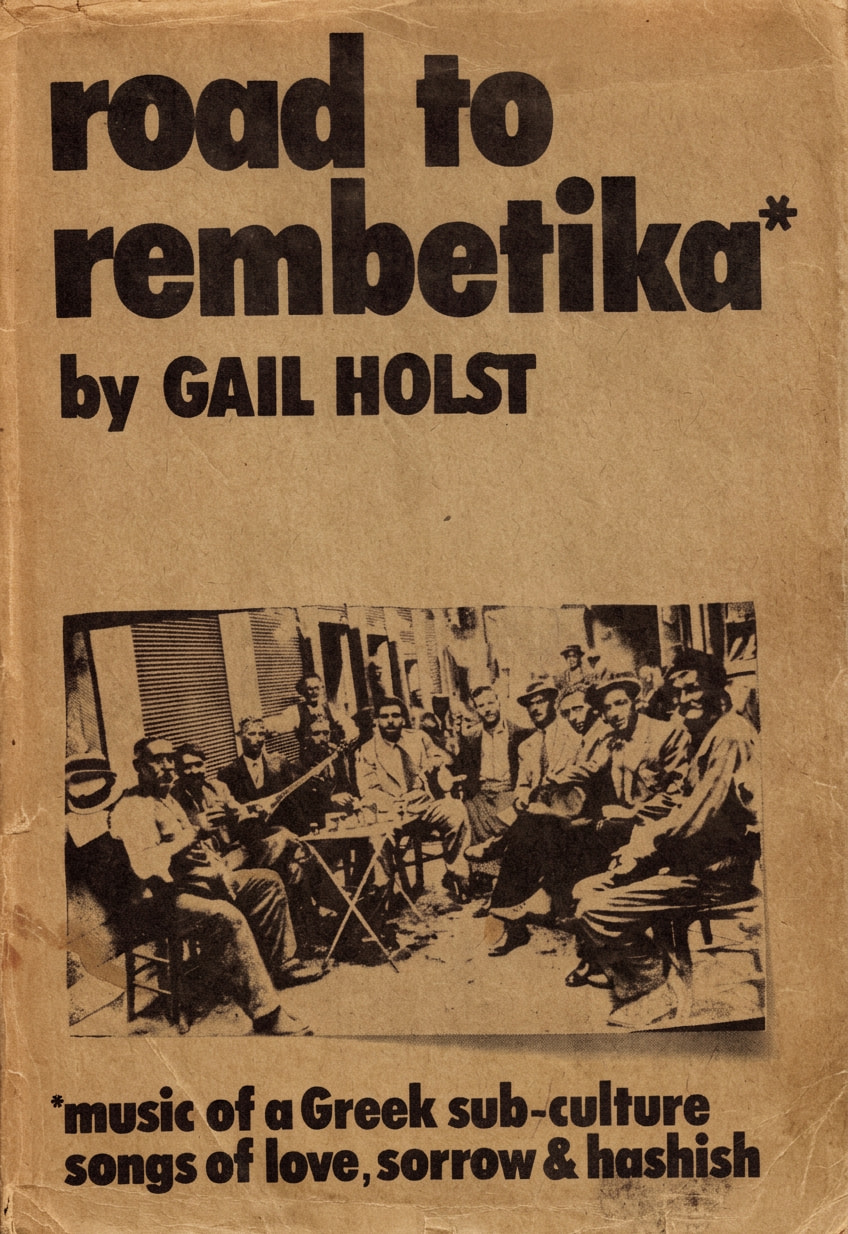
I first saw the original instrument in 1974, at the home of the then very young English teacher and friend Jan Miller, through whom I also met my bouzouki teacher, Thanasis Basta (from Syros). There is also a photograph of the instrument in Gail Holst’s book Road to Rembetika, one of the first books to be published about rebetiko. Last summer, the researcher and collector Stavros Kouroussis brought it to my workshop; he is now responsible for Jan Miller’s collection. With great emotion, after more than fifty years, I held the instrument in my hands again and took the necessary measurements to document the model, so that a year later I could make its first copy…