Ah, so I was wasting my time trying to take pictures of all those pitch-black things!
Well, you’re right. Both that it has no soundpost and that, for various reasons, it appears to be decorative. On the other hand, what I wrote about the pegbox being like those on our lyres isn’t correct.
But even so, it isn’t an instrument; it’s an imitation of one. And even then, it’s an imitation of a rebec, or at any rate of a pear-shaped lyre, but the caption calls it a “pochette”.
I’m bringing this over from another thread so that the topic can remain there while it’s being worked on:
Well, would you look at that! In the first video, the Amsen (Muslim Armenians) play two kemanes and a kemenche. I can even see in the description that the names of the instruments are almost the same in their language too.
The view was put forward that the kemenche, although it looks like a kemence with different strings (more of them, plus sympathetic strings), is in fact closer to the viol family: the different paths the two instruments (the kemenche // the violin and its family) may have taken could indeed have led to different developments, with the result that they no longer resemble each other, but their—admittedly conjectural—kinship is revealed by the detail of how the pegbox is made and how the strings are fitted to the pegs.
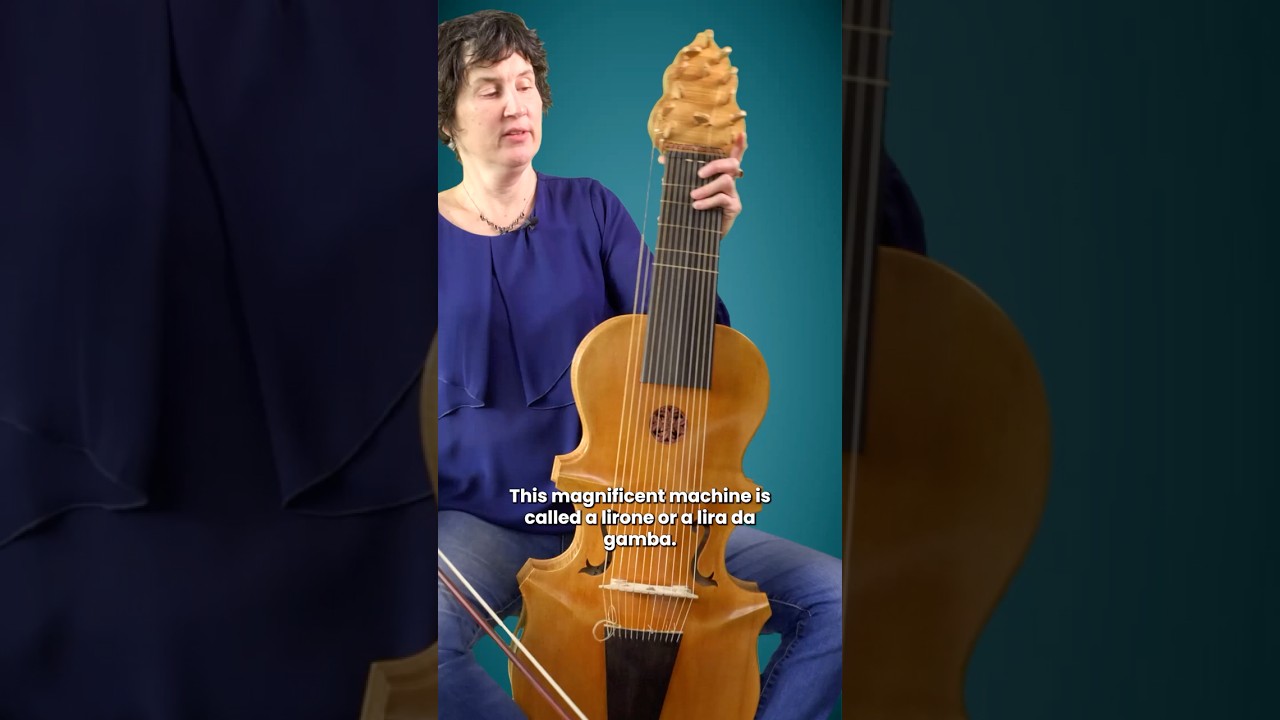
Well, I’ve just come across the opposite case: the lirone / lira da gamba looks, at first glance (have a look at the video now, before you’ve even set it playing), like something akin to a cello, with many more strings and a somewhat altered shape to the soundbox. And yet it is a type of kemence, as I realised when the brief presentation came back to the same point: pegbox, pegs, and the way the strings are fitted.
The way this is done on the kemence is far too intricate and peculiar for us to suppose that it developed independently in different families of string instruments. There is obviously a common origin!
(Throughout history, musicians and instrument makers have not hesitated to change the dimensions—or just one dimension—the tuning, the number of strings, and other characteristics of an instrument, provided these affect the music it plays and they themselves have musical aims different from those pursued up to then. By contrast, in certain details whose alteration would have no functional impact—for example, here, the concept of the pegbox and pegs—they often display remarkable conservatism! Many years ago, there was a brief discussion here about the “shoulders” of the violin, viola (viola / alto), and cello, which differ from those of the double bass, placing the double bass in a different family from the other three.)
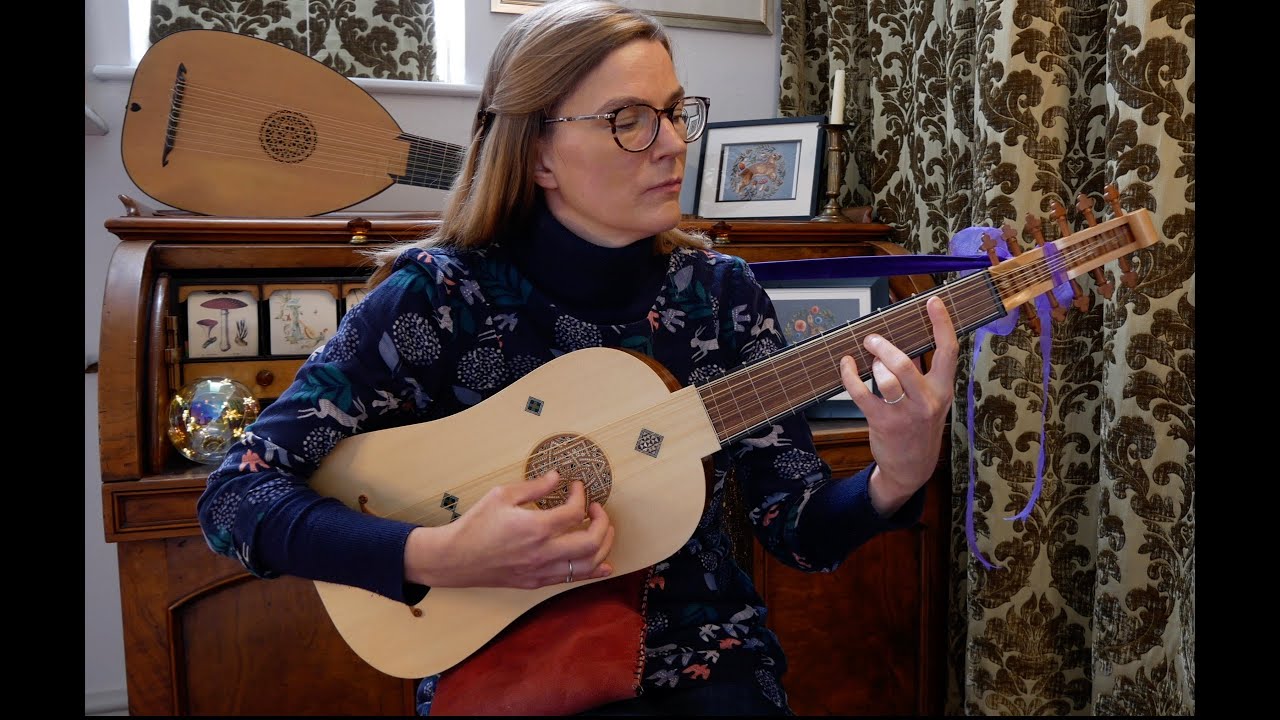
I don’t know the families of bowed strings all that well, but there were bowed and plucked versions of the same instrument, vihuela (in Spanish) or viola (in Italian and Portuguese) de mano (plucked) and d’arco (bowed). In Spain especially, they preferred the vihuela to the Renaissance lute because they regarded the lute as an Arab relic; the tuning and technique of the two instruments were more or less the same. In Portugal and Brazil, too, the name viola/violão is still used today for the “Spanish” guitar, because guitarra is used for the Portuguese guitar, which is quite a different instrument, descended from the English guitar of the 18th century, which originated in Germany, where they still play the waldzither.
These bowed Renaissance viols are characterised by polyphonic playing, which is easy thanks to the frets and the relatively flat bridge, allowing the bow to catch several strings at once, while the tuning and the number of strings help as well. To me, these are the defining characteristics that influence the music written for these instruments and what can be played on them. I don’t know whether they all have the same pegbox/pegs and so on, as appears to be the case here.
The violin and its family gradually displace the viols during the transition from the Renaissance to the Baroque, when polyphony gives way to monody and figured bass. The two instruments will coexist for roughly a century; Marin Marais was still writing for the viola da gamba at the beginning of the 18th century.
Yes, quite. But that is one thing, and their origin is another. For example:
A modern Greek four-string lyra, such as can sometimes be found in Crete and other islands, is intended to play roughly the same repertoire as a violin. Sometimes you hear one and cannot tell whether it is a violin or a lyra. An old-style lyra with a high G and double-string playing does completely different things—the things required by old island music—and comes very close to the capabilities of the tsampouna.
But both are lyras: they are instruments of the same family, distinct from the violin (and, of course, the tsampouna). We can see this from certain obvious features: their shape, the soundpost (in the bridge, not the soundboard), and the way they are played from the side with the fingernail.
So sometimes we also have less obvious characteristics that indicate a kinship between instruments which differ greatly in their final form.
My thought is that in this medieval or Renaissance „lira“ we have such indications of a relationship with the kemenche family. Not that I consider it proven, of course—many steps would be needed even to establish a more coherent and well-founded hypothesis (the history of the movements of peoples and influences, etc.)—but it could be the case.
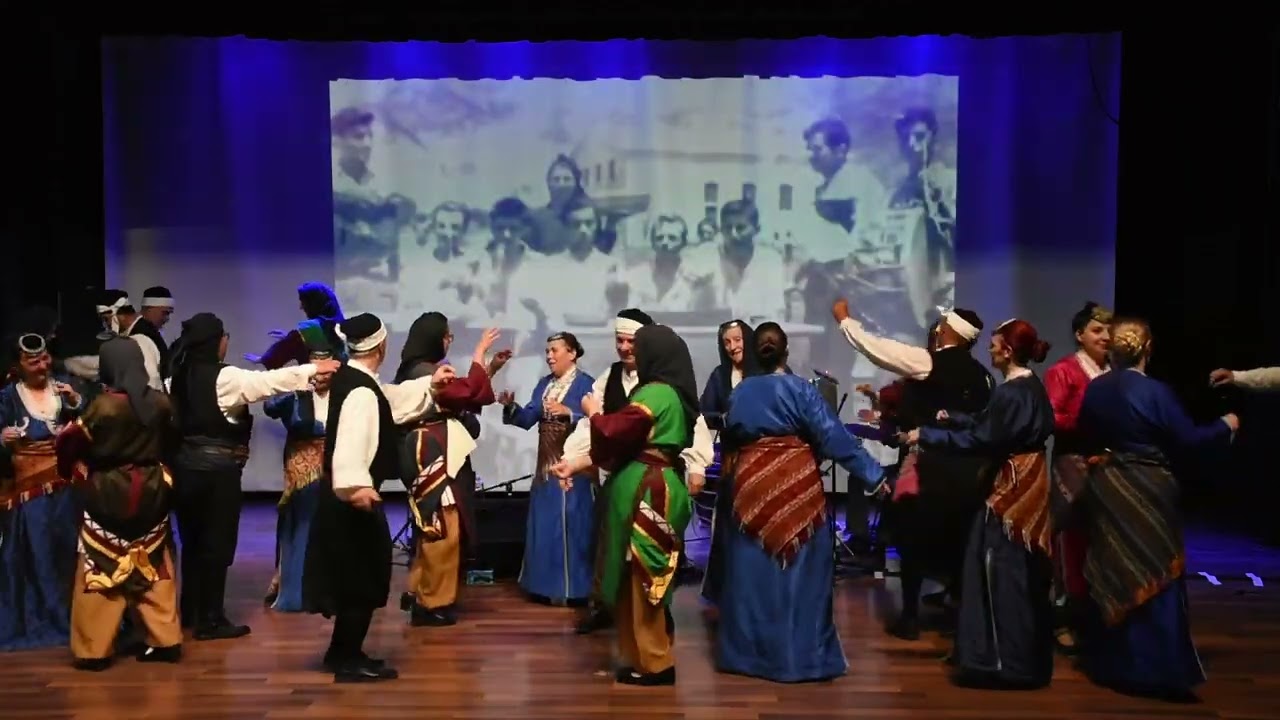
Recent event on the subject, in Ampelokipoi (Western Thessaloniki)
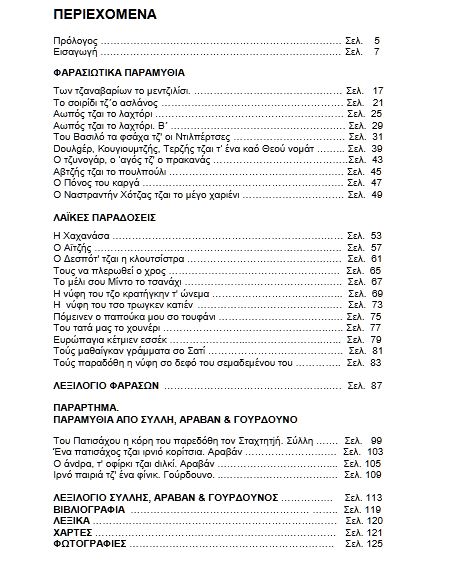
As for the Cappadocian dialect mentioned at some point in the thread, if anyone is interested, the Ke.Mi.Po. (Nea Ionia) website has a book in the “Publications” section, among the books available for free download, entitled “Cappadocian Folktales and Folk Traditions”. It includes stories in the dialect, interpretations in Modern Greek, a glossary, maps, photographs, etc.
Vasileiadis, a maker in Kozani who moved from lyres and kemanes to classical guitars:
“From a very young age, I had a tendency to make all sorts of things. After making toys during my childhood, I went on to make small instruments, starting with Pontic lyres,” explains Vassilis Vasileiadis, speaking to the Athens-Macedonian News Agency.
The right conditions for him to begin working in this craft were provided by his father, who, as a beekeeper, had woodworking tools. This meant that he, too, became familiar with handling them from a very young age. After the lyres came the baglamadaki, the tzoura, the kemane, the laouto and the bouzouki, while he also made sure to learn how to play every instrument he built.
However, the moment that would determine his future came when he was 25, through the pages of a magazine—specifically, an article titled “Make It Yourself”—from which his first guitar took shape. “In 1982, I came across the magazine TaR, whose publisher was the composer, songwriter and guitarist Notis Mavroudis. It featured the construction of a guitar in stages and instalments. So that was when I built my first classical guitar,” recalls Mr Vasileiadis, who, despite his main job at the Public Power Corporation (DEI), has never stopped building classical guitars.
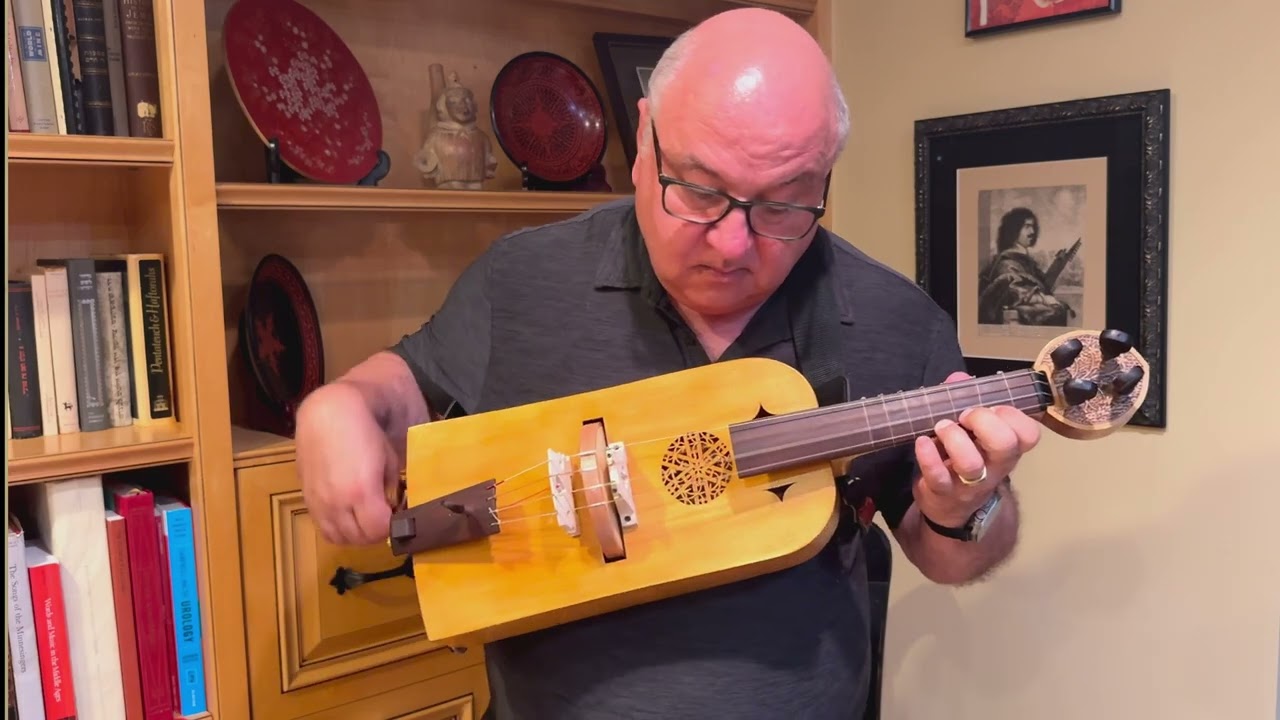
Another old—very old—European stringed instrument which, judging by the pegbox and pegs, also seems to be related to the kemenche:
A medieval precursor of the hurdy-gurdy, the wheel fiddle. The “classic” wheel fiddles are stringed instruments which, on the one hand, have this wheel instead of a bow: it rubs against the strings from inside and is turned with a crank; and on the other hand, instead of a fingerboard, they have a keyboard, where each key presses the appropriate one of all the concealed strings at the appropriate point. Here only the first stage has been implemented—the wheel—while everything concerning the left hand is as on an ordinary stringed instrument.
It is worth noting that in the Spanish name we see in the title, vihuela de rueda, both -ue- sequences correspond to -o- (as in Puerto Rico – Portorican), so it is pronounced “viola with a wheel”. Viola, then, like the viola da gamba and viola d’amore families.
If the similarity of the pegbox to that of the kemenche makes us prick up our ears, we then notice that the shape of the soundbox is also essentially a flattened kemenche. A box with the soundboard parallel to the back and with sides, without either the undulations of a violin’s soundboard or its figure-eight outline. The holes are of course different: on the kemenche they are somewhat reminiscent of violin f-holes, plus a few little holes in various parts of the soundboard, but this may be due to the presence of the opening for the wheel, which generally changes the design constraints.
During the Renaissance, there was the plain vihuela, which was guitar-shaped and was the Spanish equivalent of the Renaissance lute, with six courses of strings, and was played roughly like a guitar. Perhaps the shape of the body was simplified for practical reasons, to make room for the wheel? In Portuguese, to this day, the “Spanish” guitar is called a viola, because they have the Portuguese guitar, which is quite a different instrument.