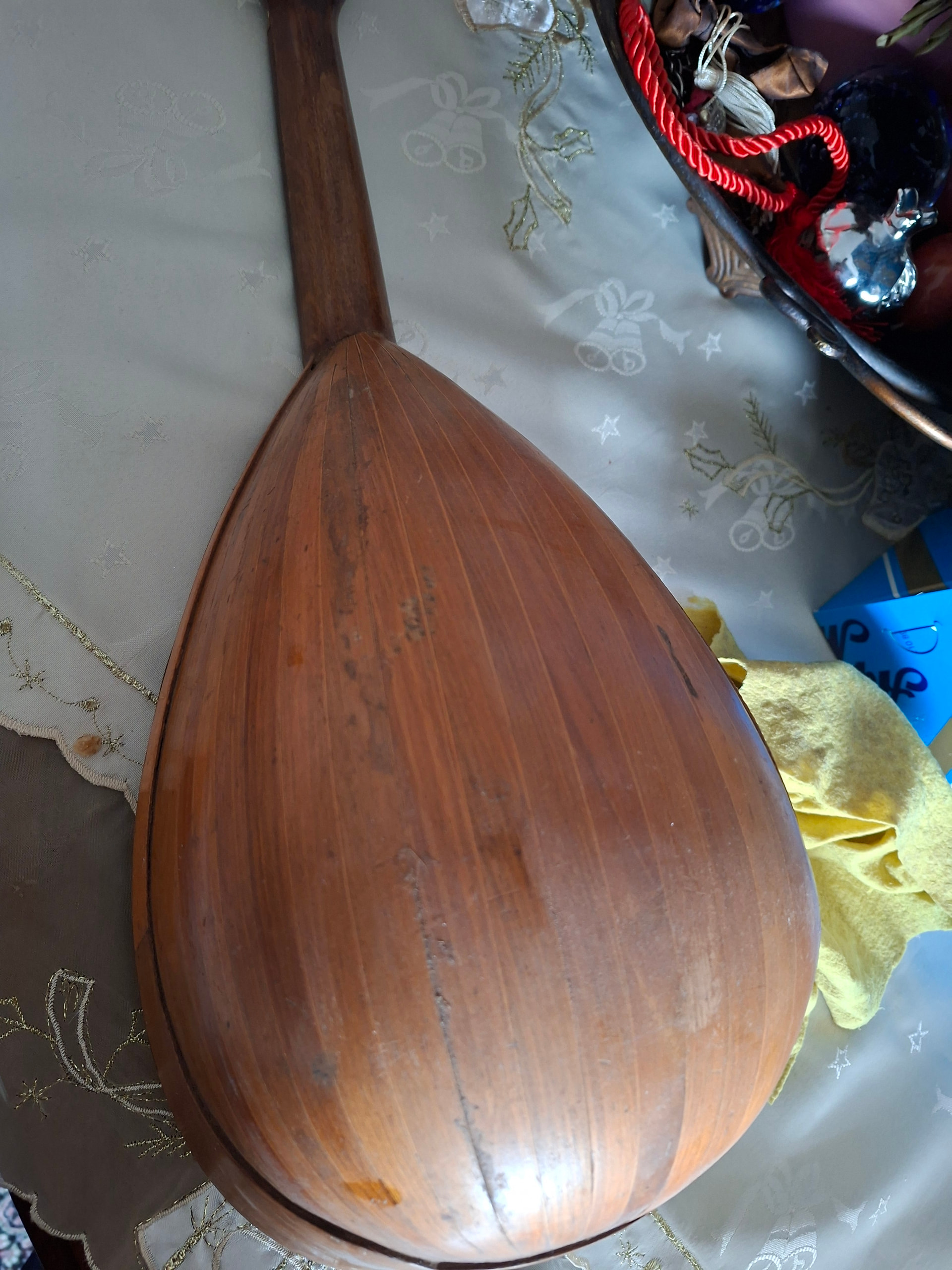
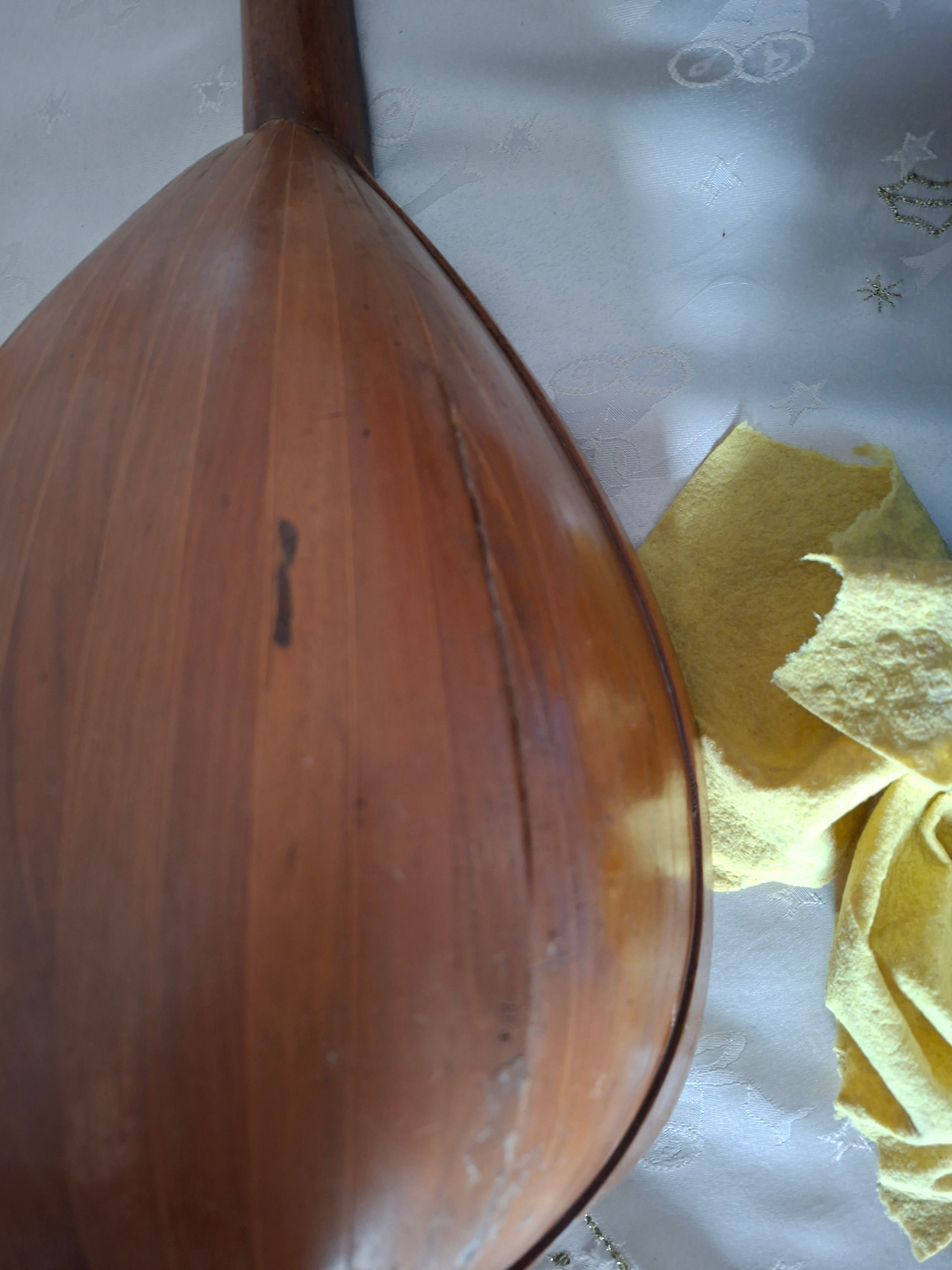
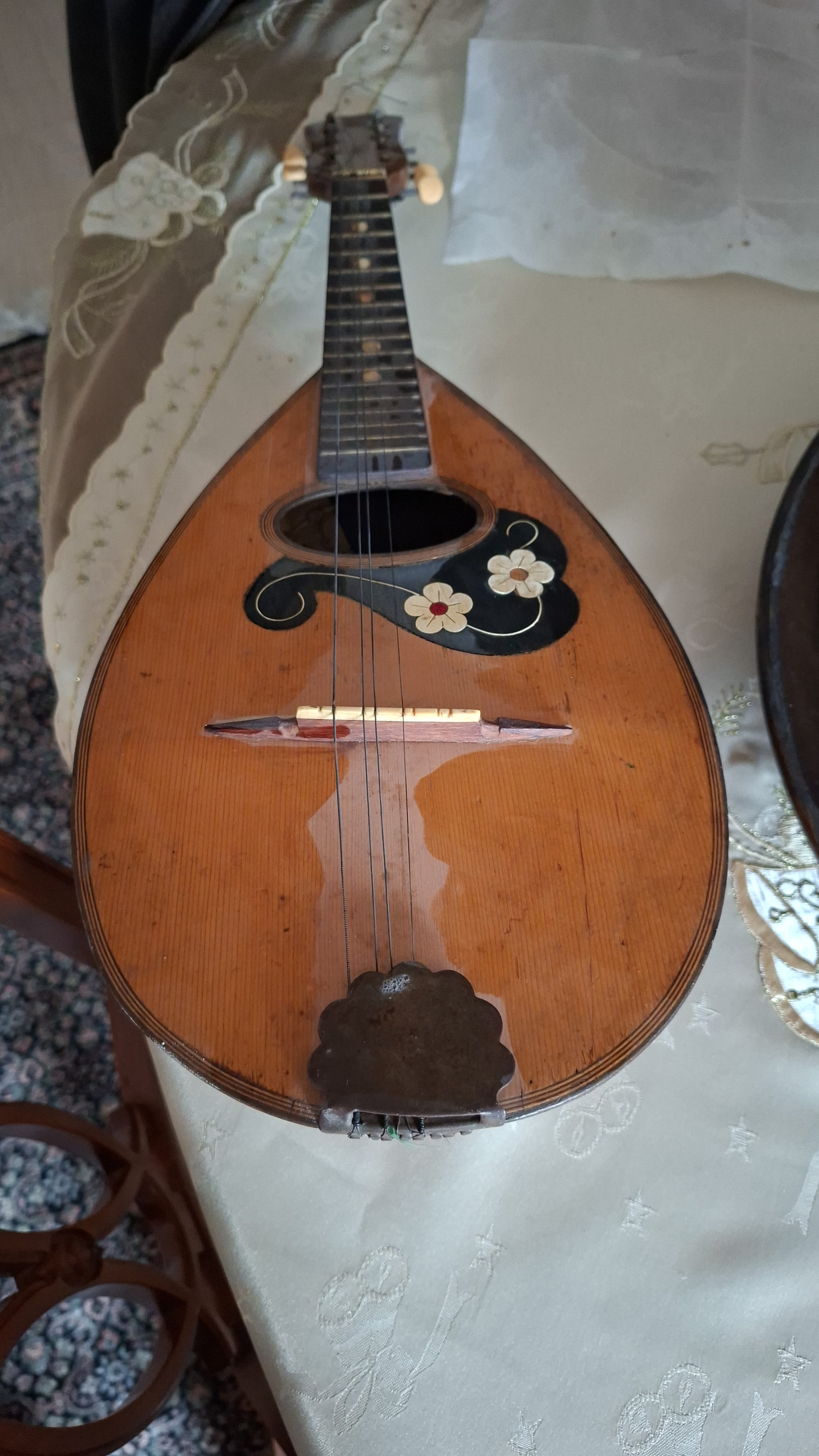
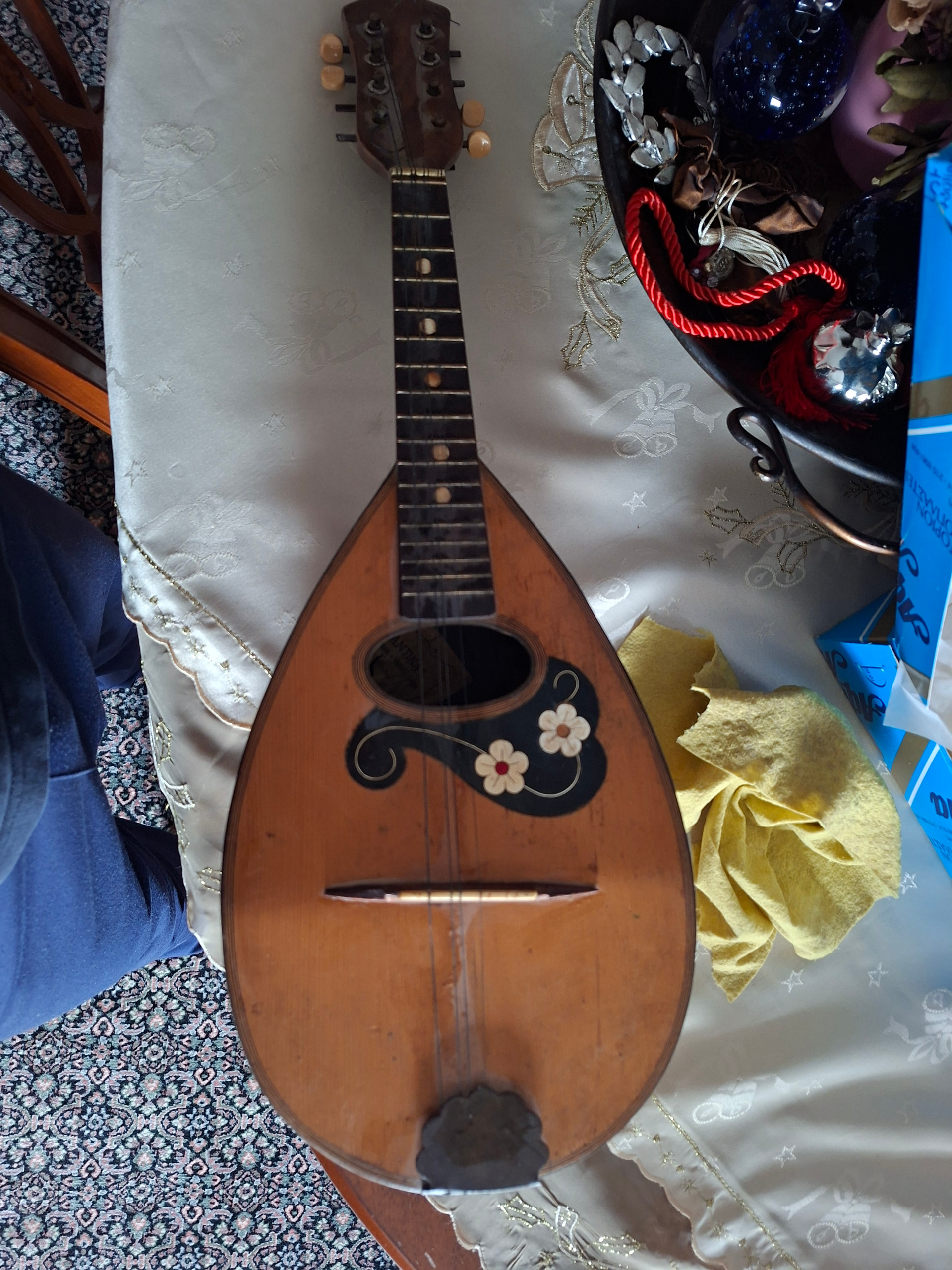
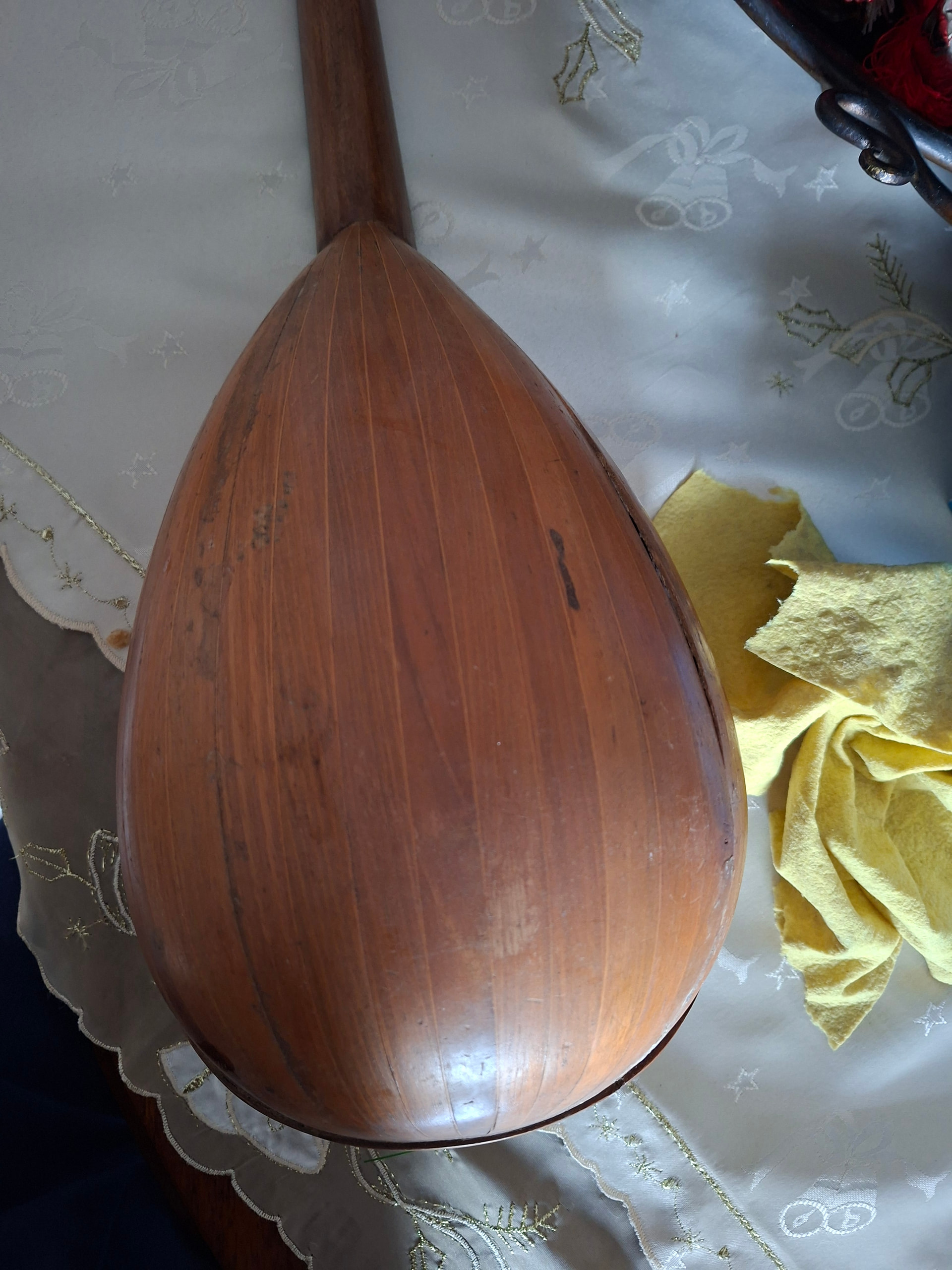
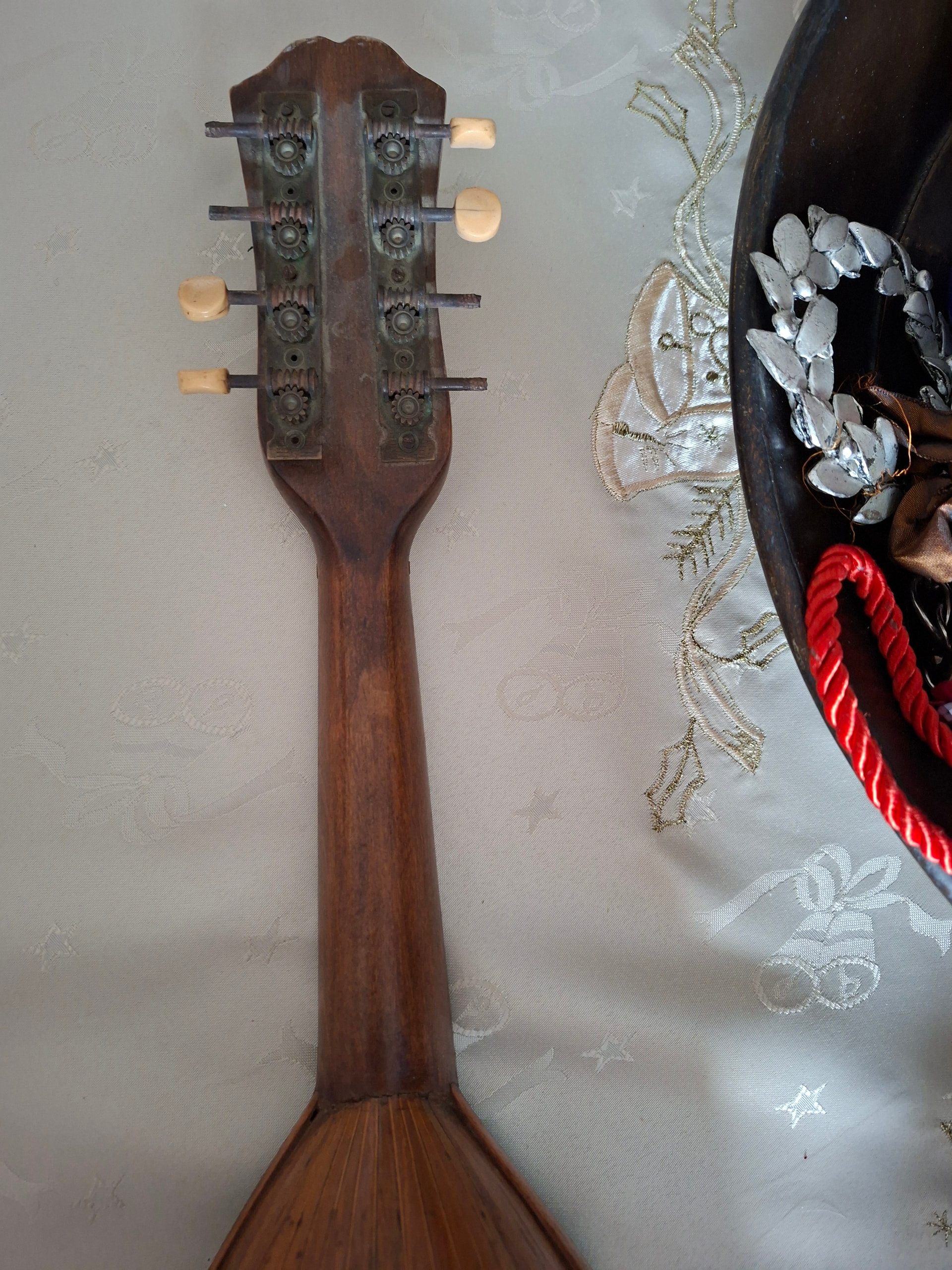
My grandfather used to play the mandolin when he was young. He stopped playing at the age of 50, and it had been in the attic ever since. We’ve just taken the mandolin out of the attic. It was made by Estudiantina Vito Moro (3 via Nino Martoglio), in Catania.
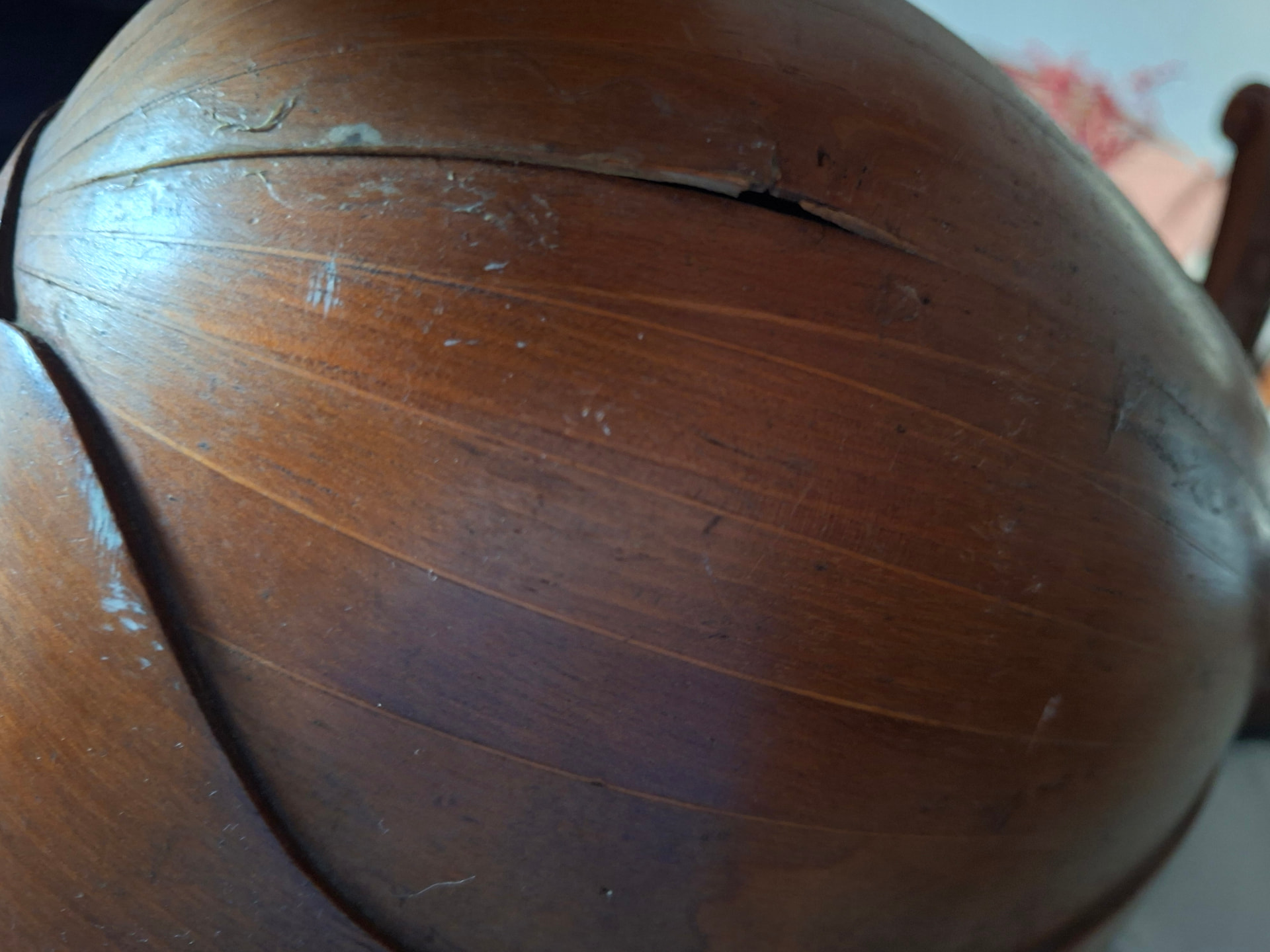
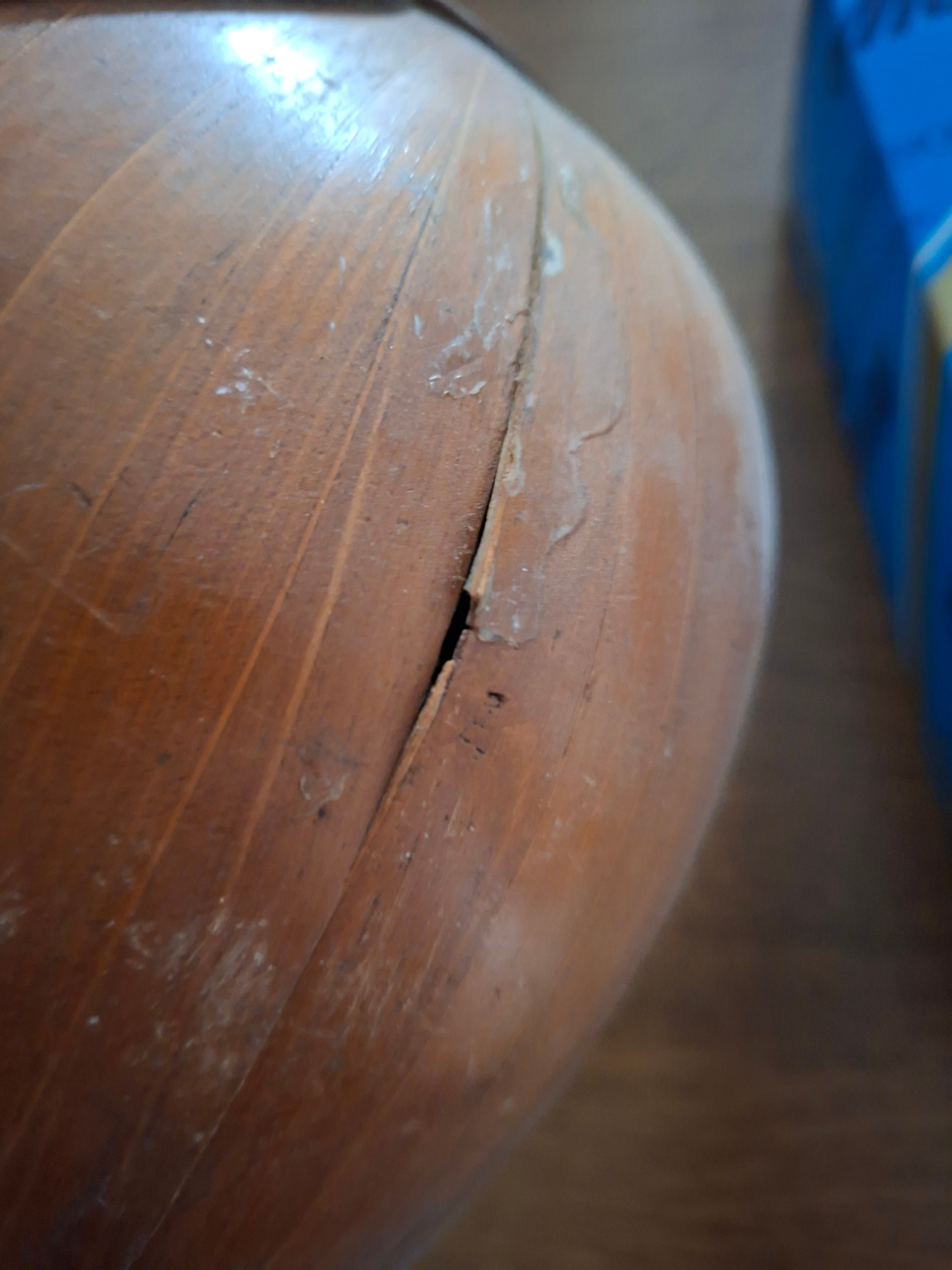
I don’t know whether it was already like this, but it isn’t in excellent condition (it was probably like this when they put it in the attic).
As you can see in the photos, there is a fairly large crack in its body (between two of the body’s panels).
My grandfather wants to give it to me, and I’d like to know whether anyone can repair the crack.
The tuning pegs obviously need replacing too, but that isn’t the biggest problem .
I don’t have any further information (e.g. the type of wood), and the instrument maker must have been dead for at least 60 years by now, while the workshop must have closed down.
You should bear the following in mind: Most mandolins made around the beginning of the 1900s were mass-produced and aimed mainly at amateurs. Many of them did not have frets cut with absolute precision, and the string action was often higher than would be considered acceptable today. So, quite apart from their sentimental value, you should be aware that their musical and financial value is limited. Naturally, you could spend a great deal of money on it and make it play as well as possible, but it may be difficult to justify such an investment. In other words, whatever money you put into it, be aware that you will not recoup it if you resell it.
My advice: If you see it as a family heirloom, find a luthier to carry out the essentials, preserve it as it is, and accept that it plays… the way it plays. Don’t try to upgrade it with a new fingerboard and so on.
If you want to play the mandolin seriously, you would be better off investing in a modern instrument.
I don’t know anything about mandolins. But this remark by @alk, which hints that when it comes to string height there isn’t just what is right/functional and what is wrong/non-functional, but also personal preference (that of a player, an era or a school), reminds me of something unusual that happened to me the other day:
I played a laouto that was excellent both in its construction and its condition, and had a much lower, softer action than my own, which I’m used to. Well, for the first time, the soft, low action seemed like a disadvantage to me: it wouldn’t let me play the way I knew how.
So there really is room for personal judgement in the “correct” string height each person prefers.
Even so, with the mandolin there is also the objective factor of the very small intervals once you get beyond a certain point. With the strings set high, the small intervals simply can’t be played.
What a lovely story about a grandfather and grandson! For its sentimental value alone, I think it would be worth having it repaired. It isn’t a particularly special instrument—it was mass-produced in its day—and that may mean there are limits to how repairable it is. Let an instrument maker take a look and then decide accordingly. Most people who make bouzoukis usually know a thing or two about mandolins as well. Which town are you in?
I agree with the previous posters. The instrument doesn’t appear to be a particularly expensive model. Repairing the crack it has should be easy and can be done by someone who knows what they’re doing without opening the instrument, if that’s the only problem. If it isn’t warped and has no other internal damage (e.g. detached braces), it should be easy to restore, and you’ll be able to have an instrument to play and remember your grandfather by. If you want something more advanced, you’ll need to look for an instrument in a better category. In any case, if what I mentioned above applies, it should be a perfectly good little instrument to start with.
I’ve had quite a few instruments brought to me for repair. I’ve seen that some old instruments, even if they aren’t top-of-the-range, can produce a lovely sound as the wood ages, provided they don’t have any structural defects. You should always bear in mind, though, that an old, worn or poorly maintained instrument is more likely to be fragile than a newly built one.
 .