Something very interesting is happening in Piraeus!
Usually, such associations leave those who are closely and passionately connected with rebetiko (listeners, musicians and researchers) indifferent. Here, though, I see such people taking part—even in the talks; as for the performances, that was to be expected—such as Charoula Tsalpara and Theodora.
It could actually be interesting.
1 Like
In my view, the combinations and fusions of the two genres can only be beneficial. If anything, they also provide a great opportunity to explore rebetiko. It’s not uncommon to see younger people asking you for tracks that their favourite rapper has looped and incorporated into a song. I believe that this is where us rebetiko fans stop relating to one another: when it comes to aesthetics—and that’s only logical… As for the event mentioned in the post, it really is an interesting idea…
3 Likes
Just a note. Charoula, Theodora and Alexandra will speak about the „Piraeus and Rebetiko“ pairing, while George Dalaras, Christos Nikolopoulos, Tiny Jackal and Thanasimos will speak about the „Greek Popular Song and Rap“ pairing.
1 Like
All four days look interesting, at least from where I’m standing. Both in terms of the topics and the participating speakers and artists.
Delinquency and illegality were once associated with rebetiko, but now we see rap and hip hop taking up the baton.
The documentary by Anestis Barbatssis on the journey of the bouzouki through time, from the teké́s and illegality to its incorporation into the heart of Greek music, also looks extremely interesting!
We shall see!
1 Like
On Sunday, I attended the first of the four days of Intermission Gallery’s Sonic Histories! What the three speakers (Alexandra Mourgou, Theodora Athanasiou and Charoula Tsalpara) had to say was extremely interesting — each one better than the last!
It’s well worth attending the remaining sessions too.
Here is Alexandra’s exceptionally thorough presentation!
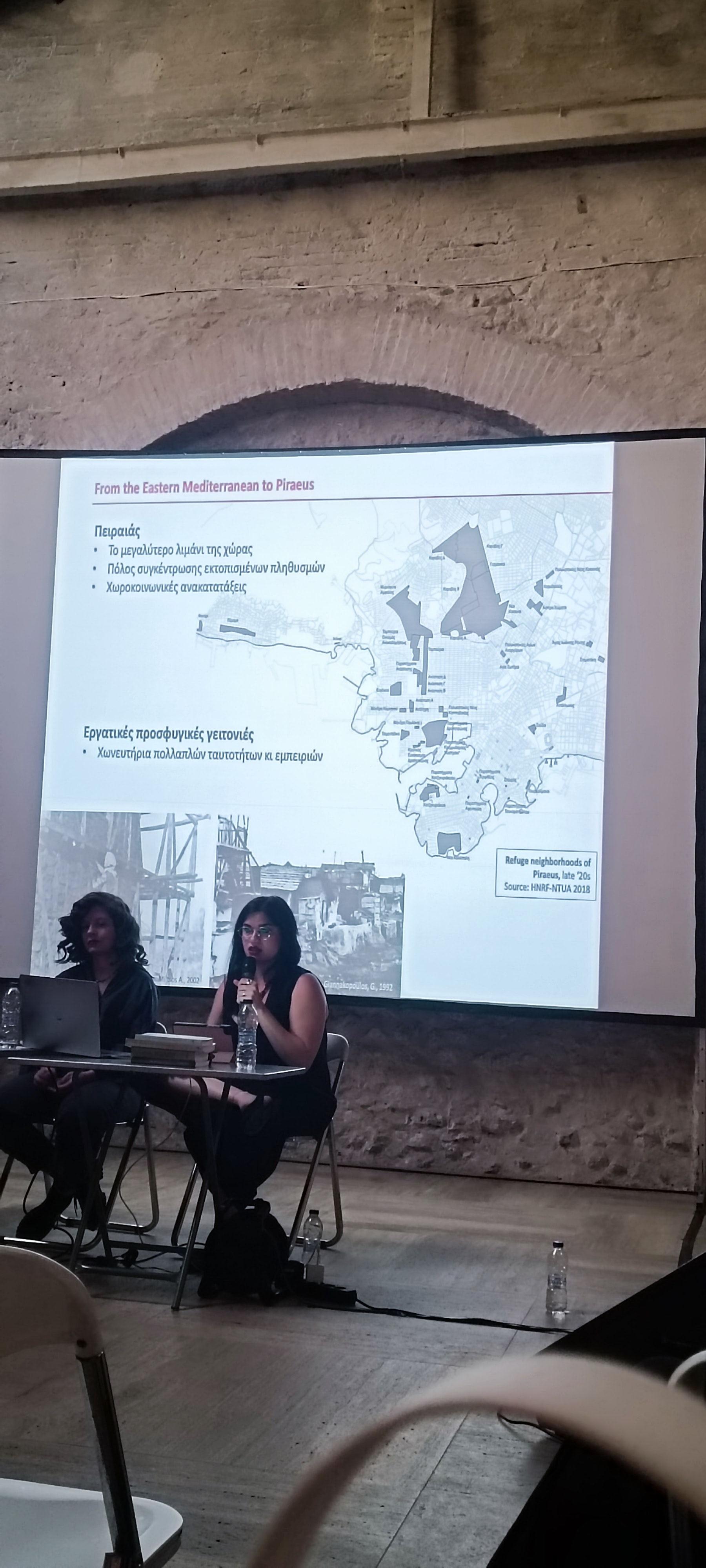
I’m including the announcement as it appeared in the programme.
Piraeus & Rebetiko
Sunday 10 May 2026, 7:30 p.m.
The lecture explores the relationship between Piraeus’s urban landscape and the emergence of rebetiko, shedding light on the way in which the city’s development and the formation of this musical idiom were closely intertwined and mutually influenced one another. Central to the discussion is the arrival of refugees from Asia Minor after 1922, which played a decisive role in creating the social and cultural conditions in which this distinctive musical blend took shape and became established. The experience of displacement, accelerated urbanisation, new forms of everyday life and social marginalisation converged in the emergence of a new musical language with a clear urban and popular character.
The event will also focus on the cultural background, practices and social norms through which rebetiko emerged, as well as on the question of how and why it took root specifically in Piraeus. Its relationship with earlier or related musical genres will also be examined, along with the influences and ‘borrowings’ it received, and the extent to which it can be viewed as a continuation of urban popular music or as something more complex and historically distinctive. Finally, the discussion will turn to the present day, raising the question of rebetiko’s survival: through which musicological practices and stylistic forms does it continue — if it continues — to exist today.
1 Like