To take the “myths” that Kafetzopoulos deliberately mentions precisely to denounce the myths circulating in the world of instrument-making at face value, while at the same time paying attention to the advertising material of every mass-production workshop, is beyond me.
8 Likes
10 messages were split into a new topic: Katrani (cedar of Lebanon)
Life itself has shown that when something is no longer serving its purpose, it is retired until it can serve a different one.
We have already talked about wood from roofs being used for instruments. In fact, it is among the most desirable.
So anything that ceases to serve the function for which it was made can be recycled.
Do there need to be parameters and rules? Of course there do.
Roof timbers or choir stalls worn away by use or the weather are one thing, and icons are another.
But is it a logical process to do so?
Logic says that it must be done; otherwise, there would not be enough space for us to live, quite apart from the even greater destruction that would be caused by searching for new resources to replace old, tried-and-tested materials (stone and wood).
But I have the impression that we are “dipping into” various subjects.
We started talking about a particular instrument maker, and moved on to coffees and coffee-makers, Doric qualities and Greekness, then went to capitals, and ended up with consecrated spaces and icons. After that, we moved on to who shares knowledge of instrument making and who does not.
There is nothing wrong with that; it is just that when too many subjects come into play, we may lose the thread.
3 Likes
Markos Vamvakaris, autobiography, page 263
I had a lot of bouzoukis made by Deli; I had them, but I sold them. When I was learning the bouzouki, people would come here. “Will you teach me the bouzouki?” “I’ll teach you.” “Do I have to buy a bouzouki?” “I have a bouzouki.” I used to sell them and get others. I haven’t kept them. Now I’ve gone five or six years without buying any because I had managed to acquire some mulberry wood from a Turkish mosque. I brought it back from Andros, where I had gone to play. There I saw a woman cutting it every day and taking it away. “What is that?” “Well,” she said, “it was in a mosque.” It was big, very big, long—fifteen, ten metres, I’d say. It was useful wood, a thousand years old. These bouzoukis from here, the red ones, have very old wood in them, black mulberry. The older the wood, the better. So, after a great deal of persuasion, I took a piece from her, and when I came back here I made six bouzoukis, six. Some were made for me by Joseph, others by Grigoris. Grigoris was also from Asia Minor.
So the value lies in the age of the wood, not in its… holiness.
This business about “holy” things that we mustn’t touch is very funny…
For me, for example, something sacred is a bouzouki made by Gkellis. Imagine, say, that some auntie bought it, hung it over the fireplace in her taverna and painted it pink, because to her an old bouzouki isn’t sacred…
Likewise, for me, Jesus on the cross isn’t something sacred, nor is an icon of the Virgin Mary, nor a little statue of Buddha, nor, I don’t know, Olympiacos’s badge.
What I mean is, I wouldn’t have a problem if my bouzouki were made from wood from a place of worship, just as Markos didn’t.
But I would never desecrate someone else’s holy place to make a bouzouki, just as I wouldn’t arbitrarily cut down a tree.
P.S. I remembered an amazing TV-shopping advert that was selling necklaces containing a piece of wood from the True Cross!!
5 Likes
That’s not really where the issue lies. You don’t have a problem with it, but even if you did, someone else wouldn’t. The point is that in the church, mosque or monastery itself, when they replace the stalls, they don’t consider the old ones sacred. They might keep the stall used by some particularly notable person—the such-and-such abbot whom everyone remembers for his kindness and who is now being considered for canonisation—as a relic, I don’t know, but that’s about it. The rest are utilitarian objects which, as they grow old, have lost their usefulness and retain only the value of the material.
I don’t find it cynical or hypocritical on their part. I simply find it normal. And they paid money to have them made in the first place. If they can recoup some of that money while also clearing the place out, they will. Otherwise, every stall made since stalls were invented would still be in place, riddled with thousand-year-old woodworm and crammed in among the newer ones.
Which Gregory was Markos talking about?
Do we have any other clues?
Mr Spyros, it was probably Grigoris Kovousiadis or Apartian, according to the information provided here by the relevant experts:
https://greekluthiers.wordpress.com/2009/04/20/ποιοί-έφτιαχναν-τα-όργανα-του-μάρκου-β%
1 Like
Good morning to you too!
To be as fair and objective as possible, I visited Mr Palavratzis’s e-shop. I’m itching to get a second three-course bouzouki! Not that I’m not already well equipped, but all of us always find “one …even better”!
So there we see the paradox: you need to fill in an Order form. Why shouldn’t there be one basic price, followed by an automatic shipping-cost calculator? Dear makers, when you do something, it should be done properly. Shopping banner, plus or minus one, cost calculation, and bang—order placed. Of course, bouzoukia aren’t Samsung or iPhones; they’re handmade, so some people might question everything I’m saying. But if you enter a shop, whether you’re Swedish or African, shouldn’t there be one single price? Why should I have to fill in an Order form? What’s the point of making phone calls and sending emails when you could have informed me beforehand…? Same price, same product. Why should I have to come with my teacher?! In order to perpetuate a “hidden school” situation, or to enter into a commercial process?! I believe that the modern, forward-thinking maker should: 1) display prices. Not “order and see what happens”. The price of the instrument should be visible at that particular hour and minute. A GEMI number should be displayed whenever there is an online shop. General Commercial Registry. 2) Provide at least one audio sample. The person presenting them doesn’t need to be a great player. Let it be an average musician, or (even better) the maker himself. With other instruments, how is it that the maker can also be a good player? How is he supposed to understand, for goodness’ sake, certain differences if I describe them to him?! Get a programmer, man, to create a basic video! Have the instrument rotate, so that people who come from far away can get information too… 3) Make an effort to communicate with the customer—me, that is, all of us—with us taking centre stage… “…wait, let me hear you” and then “I’ll make you a little suit, my child”! 4) There should be availability (when the final visit takes place). Katsifis, for example, has a sufficient quantity. “Go on, try it, and tell me, so I can understand too what you liked”, and then I’ll tell you, “Ah, I had added mustard, tzatziki and Ioannina feta”, but… ask me, maker! “What style do you play, my child?” 5) We should have eyes all around us… There are instrument-making tools—even the absolutely essential ones—machines, planes, workbenches, for example, or are we going to have the fact that everything was made by hand loaded onto the price? And apparently I’m an artist who fishes for perch in the Nile with my bare hands! 6) The instrument maker should “come down” and be open to “banter” in the forum, open up, show things, and teach ethics and construction techniques. 7) Give people something of quality as well, some kind of school, something, for goodness’ sake—something stamped with your name, a representative sample. A donation to those Music Lyceums (do they still exist?!). 8) Show his methods, his degree of “industrialisation”, his tools. Don’t be afraid: the subject of bouzouki making does not belong to him! We will all end up under two metres of earth, and music will exist without us! 9) Be generous and polite. Don’t bad-mouth the work of another instrument maker. 10) Listen first (to our voices and …our picking!) and then “speak” through his creation. 11) The subject of guarantees—for example, Spourdalakis’s policy may be a good one, although I have some reservations, because someone could have a bouzouki from Spourdalakis indefinitely, which in itself isn’t a bad thing. To have a new instrument forever, so to speak. Fellow forum members… Do your research, visit, listen. The subject of the bouzouki still holds many secrets. It’s up to us to unlock them. Let’s not remain stuck in the medieval “learn to steal” (musically). Instead, let’s learn to give. Only generosity will move the instrument forward (and bring the prices down!). The questions above arose from online visits (and a few, limited, in-person ones) to Katsifis, Palavratzis, Papadamis, Stamkos, Varla and Panagiotis Toulikas. Bouzoukia (and I apologise in advance if I still haven’t…tried some of them) aren’t souvlaki, so there can’t always be one available for tasting and visual inspection. But you, Mr… Ideal Maker, are obliged to have a price list displayed and (normally) a final price, with a label showing the value at that particular time and moment—the amount you will need to charge us for the bouzouki of our Dreams. What don’t you understand?! Why don’t you display a sale price? Put a price on the damn things! I mean… the final price starts at zero and reaches all the way to Infinity!! That’s what we understand if you don’t put a value in euros. And I’m not making this little complaint because I dislike the cultivation of mystery! The Law says so. (That “wherever there is a sale or provision of services, you are obliged to display a price and a price list”, which “must include the tax”.) Why?! Have you ever gone to the grocer’s or supermarket and been told, for example, “The cheese is 10 euros” and then, “Psssst, where are you going?! Give me another 1.30 euros! It’s VAT!” The search continues! I’m not absolutely sure about the sound (unless I try all of you!). In this multiple “test drive”, Stamkos and Papadamis seem to score highest, just ahead of Katsifis, who doesn’t want to put prices in his online shop. What a character! All he has is a “referral” to YouTube featuring the great player Nikos Tatassopoulos! Come on, put up photos, with rotating videos! And prices! Put up prices! Happy name day to Thessaloniki and its makers! I thank them too, as well as everyone who has put up with me to date! Happy picking! P.S. Every single one of us, being good and decent people, if we go to any instrument maker’s workshop, or to a friend’s, etc., especially in front of a camera… Is there any chance we’ll say, “OH, COME ON…!!! It doesn’t play properly!”? Of course not. That’s why a limit needs to be placed on this situation. The player is me, you, the fellow forum member. I’m the one who will go without in order to buy from you, O Ideal Maker! I’m not… the Apostle Paul writing to the “Thessalonian” makers and not only them! I’m the end consumer—or rather, the user, since the payer may be one person and the player another. Finally, I want to mention that quite often, content with free Facebook, some people don’t bother creating and maintaining even a basic online shop. Nowadays, when everyone has the internet, with all these electronic conveniences… Why, for goodness’ sake, don’t you make a website, something, a WordPress site? So that we can get to know you too, and understand that in the end… you’re not so far away from us! You might be right next door! But how will we find that out (for goodness’ sake!)? In short, let’s finally cultivate a polite, artistic culture, and stop going like sheep simply because “that great player XXX got his from there” (so I’ll go too, because the instruments are super-duper). Let “word of mouth” be curtailed and give way to Publicity, Transparency and, ultimately, Justice. Otherwise, musically, we’ll remain at nursery-school level forever. (Why are we better in other fields?!). One final example—though no less important—of a recent visit of mine to Varla: I open the door. “Good morning.” (“The Heir” was extremely polite!) “Good morning. I’d like you to tell me the prices for a three-course bouzouki.” The answer: “For the best price on a three-course bouzouki, you should go to our pupil Toulikas, who has opened his own workshop and is waiting for you at XXXXXX Street and so on!” Why, my dear Nikola, are you allergic to prices? Why the concealment and cover-up? Why are you sending me away instead of letting me come in and explain what I want? (I don’t remember whether I got as far as saying, “…with a value of around 1,200 to 1,500 euros”.) Do I have to wear a suit for you to receive me, or who knows what else must we buyers do to buy from you?! Should I sell my kidney, for example, to get an instrument from you? I heard astronomical prices. But that’s the problem! I heard them, I investigated, people told me. You didn’t tell me them, they weren’t publicly visible, and therefore they were unfair. Are you afraid of something? I’ll tell you this: only what is public is fair. What is visible, certain and lawful. With that sort of reception alone, you drive people away, and eventually this “I’ll be right back” routine we see in Greek films from the 1960s has to stop. What time is “right back”?! Where is one of your colleagues “to keep the lamp burning”? Only you know. The story continues. From father to son. But we are here too. By contrast, Niavent gave a full costing, showed the margins and laid his cards on the table. I believe people liked it. It reminded me (and this does him credit) of the law that obliges restaurants to state on their menus, even at the bottom, that… for example, “Koroneiki olive oil was used; feta cheese made from cow’s milk, 100% pasteurised”, and so on. The Buyer is entitled to know. The Seller is obliged to disclose. Everything. To be continued
2 Likes
I read the first 15–20 lines carefully, bringing my knowledge up to date to a satisfactory degree, according, of course, to my personal opinion.
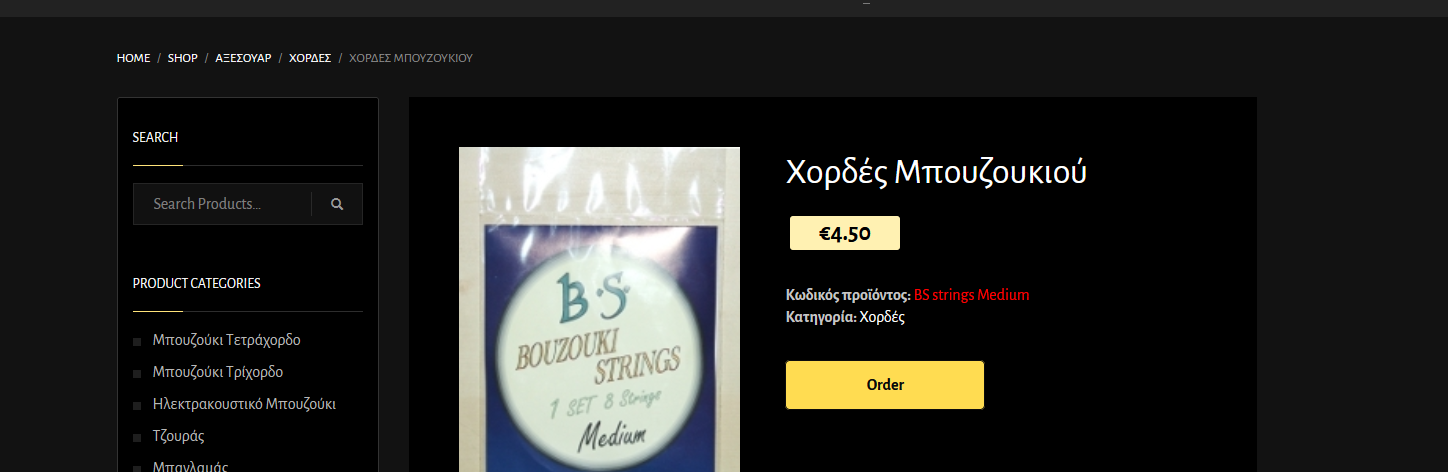
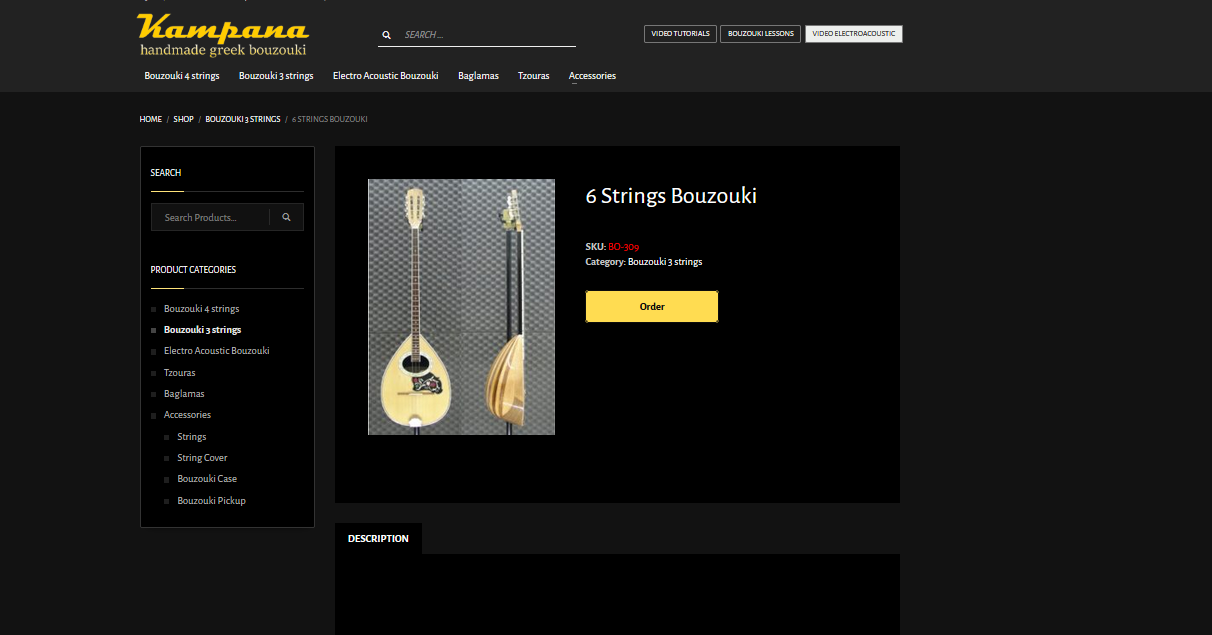
Thank you for the reply, although I didn’t really understand it! In these few lines, as well as in the text in general, I tried to ask myself why the price is not stated.
You expressed an opinion, and I tried to understand it. Thank you!
And I wish you all the best too! For obvious reasons, I’ll be changing “my photo”; for example, today I’m putting up Karandrea! Seriously, where did that good fellow go? Is it true that he no longer goes to Alkiviadou? Like many others, he doesn’t list prices either. I believe that publishing information and providing documentation are very important: what wood was used, what the final sale price is including taxes, and so much more. Why are so many people allergic to announcing the final price? In the end, I believe that with this screenshot, I am complying with the forum’s principles—the infamous Documentation (from the …Ancient Greek word “tekmar”, meaning a bright sign! Let the elders correct me!). Thank you! May we have good prices and good quality. And, just to disclaim any responsibility: I have nothing against anyone; I’m a lover of art, just a player and nothing more. I don’t make anything, nor do I want to enter the commercial side of this wonderful world!
The output of a workshop making genuinely handmade instruments is generally small, and usually the instruments are made to order. I imagine the form doesn’t commit you financially, but is an indirect way of communicating. Probably not entirely successful, but perhaps it’s convenient for people from abroad too. There are many makers who have their prices listed, but even so, a made-to-order instrument may end up having its own price, depending on the customer’s requirements.
And what will you understand from the audio, unless the instrument rattles or plays out of tune? I don’t think much.
Who has refused you that? No one I’ve spoken to; they’re all extremely polite and open to communication — it’s their job.
That’s not realistic. It takes a craftsman working alone weeks or months to make an instrument. So is he supposed to make a dozen and hang them in the shop, and then have us tell him to make another one the way we want it? Only a few workshops have that kind of capacity.
How else do you think instruments are made? Apart from a few things done with CNC machines in certain workshops, most of the work is done by hand.
Why is every craftsman obliged to do that? Most of them are open, of course, and many have assistants who are gradually trained, but if I, who know nothing about it, turn up, does he have to teach me how to make one?
Do you work for free? I don’t.
There is no industrialisation!!! Where did we see that? Are there machines where you put in wood and bouzoukia come out? Some people simply work on their own, while others work with company.
Who isn’t?
The relationship between musician and craftsman is two-way. Which craftsman denies that, and which musician does?
I honestly don’t understand your position
3 Likes
To be precise, I wrote “industrialisation” in quotation marks, meaning standardisation. Of course they are handmade; we could call them works of art, since they are unique. However, I made an effort to show—by going into as many shops as possible, both physical and online—the issue of price and cost. For example, comparing Toulika with Papadamos would be like David versus Goliath. The former is a good, conscientious fellow, but when I went there, he had absolutely no instrument for me to try. He told me, “I’ll call you when someone brings something in for repair.” But I called him myself, and he said, “Oh, some friends with instruments I made have just arrived. Come over now!” (He didn’t say it to me exactly like that, but that’s how I understood it.) So, even though what I’m saying isn’t entirely objective, why should I wait even longer (how much longer?) instead of going to Katsifis? Why shouldn’t someone also look at Papadamos’s tools, given that he clearly has invested a great deal in auxiliary machinery, whether handheld or fixed, or at Palavratzis’s CNC equipment and so on, rather than wait for someone to make me a trichordo someday? Am I really asking for something terribly difficult? In general, this whole veil of mystery, this haze surrounding prices, has to end somewhere. Perhaps instrument makers should start looking for us, instead of us looking for them? Unless they want to make instruments for an elite, or for themselves, privately, and so on. There is no ideal maker! After all, I have my flaws too! Availability, I believe, is—in contrast to ordering—a subject in its own right; thank you for pointing that out. They are two opposing situations, at least for those who cannot wait a long time. I respect Mr Toulika; after all, one of my first posts was about him (“Help the newcomers”), but the other one too—for example, Papadamos, or X, Y—has invested a great deal of money and time so that we can have instruments at competitive prices and, above all, with quality. A bouzouki is certainly not a mass-produced item, but all the methods that ultimately benefit us should be highlighted. This attempt to sketch out the ideal maker may not be accepted by the administrators. Nevertheless, there are quite a few points where it hits the mark, always with a sincere intention to supplement, retract, or even delete the post.
I recommend that, before passing judgement on instrument makers, you take a look at the frequently asked questions and carefully read the rules governing criticism of instrument makers!
https://www.rembetiko.gr/faq
7 Likes
Thanks for the reminder. After all, everything mentioned is absolutely true, and anyone can verify it. Along the same „path“ is Panagiotis Katohianos. Although he mentions the materials, he only gives approximate prices after questions on Facebook. Then, when it comes to „photo time“ on his own website, he doesn’t even include an indicative price. At least, that’s how it appears today. The situation may change tomorrow. He explains things nicely on Facebook; in fact, you can hear him referring to the Kolatza as „parapetia“. I can say that his presentations are enlightening: he clarifies the issue of the number of staves, the engraving, and also provides a few historical details… But for the purposes of absolute and fair comparison, everyone should, if possible, include some prices. It’s only reasonable.
And I’m not asking for anything outrageous. The manufacturers could include the following magic phrase! „…prices are indicative and may vary depending on the order, personalised design, or materials.“ Or: „prices may change; the new catalogue will replace the previous one“, or… „the manufacturer reserves the right to change prices, upwards or downwards“. Simple, informative things. That way, we know in advance what we’re buying and what we’ll get.
Some mention prices, some don’t. Some have a website, some don’t. What exactly is the problem? I don’t understand.
The problem is …financial! If I were Niarchos (so to speak), I wouldn’t even look at the prices. I’d get two or three from each maker, try them out and keep the best ones. But how many people have that kind of option?! Isn’t the final price a determining factor in a purchase that could (for me, as someone I believe to be an average consumer) last for several decades?
I don’t want to …“Americanise” things or labour the point any further (“write the fucking price”!). Heaven forbid we should focus on the price alone. The final choice—and I’m writing this for all prospective buyers from now on—is a combination of quality, price, familiarity, the “middleman”, commercial transaction, materials, blah blah, but in times of world war and deep economic crisis, Price becomes the primary factor. Personally, I’d say I’m wasting time with all this …“come on over, let’s have a chat”, or “okay, we’ll work something out”! (Why?! Have we lost anything??).
The work of an instrument maker is blessed, and it is certainly a job involving “many arts”, as some people older than me used to say. He is a physicist, a mathematician, knowledgeable about acoustics, music, science and so on and so forth. But heaven forbid he should lack the final presentation, pricing and, at the end of the day, profitability. It’s as if there were a hole “in the balloon”: no matter how much they inflate it, it will always lose air. The point is to have a complete presentation, with a price. Price is no object! Consequently, I’m not referring to any problem or issue. I’m trying to address professionals who act arbitrarily by failing to state a selling price, as well as art lovers and private buyers who are trying to save time and money. Let’s face it, I can’t go round visiting every maker, or start travelling, or work my way through emails and fill in order forms. At least among all my purchases to date via the internet, eBay and so on, this is the first time I’ve seen an order form that exists, but … you don’t know the cost of what you’re ordering!
Stavros or Giannis?
Joking aside, the question about prices is a reasonable one, but it’s also a legitimate choice for a manufacturer not to mention them. In the end, they may lose some customers that way, but gain others.
Personally, when I try out instruments, I play them first, then look the instrument over, and only ask about the price at the end. Exactly the opposite of an online shop, now that I think about it.
Alexander gave a very good answer regarding instrument availability and various other matters. I also recommend reading the forum rules posted by the admin. Although, to be honest, I’m not the first to follow them myself.
And in general, huge posts written in chaotic, conversational language with lots of repetition tire the reader out and fail to achieve their purpose. “Excess ruins what’s right”—I’d read that somewhere and put it in my forum signature, mostly as a reminder for my own writing.
1 Like
Oops! A wise saying! Too much spoils what is right! Thanks for the intervention!
Giannis Niarchos! Further down, they probably write the correct version! Niarchos!