There was the earlier name Tavla, meaning “stables”, but even so, I still can’t make sense of the -DA.
This sub-discussion about Cemil Bey started here:
So, whether it was his own (which would surprise me) or a traditional piece, the question remains. As far as my knowledge extends, this kind of zeibekiko exists only in Greek. So either he recorded a Greek folk zeibekiko tune, or he himself composed a Greek-style one, or I’m simply mistaken and there are Turkish ones as well.
So much mystery surrounding this zeibekiko, mate..
With the syrtos, at any rate, there is also the case of Azizié, and that of Çeçen Kızı/Xyla. In the first, a composer trained in the Ottoman tradition writes in the syrtos form—and does it well. In the second, things are hazier, but it is “common heritage” shared by both traditions. As for the zeibekiko, might the refined urban Constantinopolitan style, such as in Cemil’s recording, have been overshadowed by the oriental style of the saz and so on, as a result of the political and cultural centre of gravity in Turkey shifting inland towards Anatolia for political reasons?
The difference between Aziziye and recordings by Cemil Bey such as Çeçen Kızı is that, in Cemil Bey’s case, it is known beyond any doubt that he also worked in this field: recording folk melodies. I don’t know much about Sultan Abdülaziz, but I have the impression that he was a purely classical musician: a composer and instrumentalist, neither a researcher nor anything else along those lines (please correct me if I’m wrong).
As for Aziziye, I have another thought… Today, it survives as a living oral tradition on various islands, Naxos for example, and through the oral reshaping it has undergone over so many generations, it has acquired a form that is entirely compatible with other similar instrumental pieces, such as the Politiko, Potamos, Silyvriano, and so on. But was there such folk syrta back then (in the 19th century)? On the islands, people played lyres, tsambounas and souravlia—minimalist melodies with only a few notes and an emphasis on repetition. Of course, there were also the cities of the eastern mainland—Constantinople, Smyrna, perhaps those on the European side too—but was their folk music really that much more refined?
What I mean is: could it be that, for its time, Aziziye was a completely learned composition, with a learned sound, borrowing only the syrtos rhythm from folk tradition, and that its compatibility with folk tradition did not emerge until folk tradition itself changed character over the course of generations?
That could indeed be the case. Let’s leave that question open for now.
But it is not only a matter of the difference between urban refinement and rural roughness. We have seen those two brought together in the case of Harmantali–Magkas tou Votanikou. It is the rhythm itself—this fast zeibekiko—that surely points to a dance of a different style from the slow, extended 9/2 metres of Turkish zeibekikos.
Great!
Theologos Michellis is a notable violinist from Patmos.
In the abstract, I read that during his research he consulted, among others, …
two dance instructors with deep knowledge of my field of interest: (1) Mr Stavros Spiliakos, who specialises in the dances of Naxos
…and I learn for the first time that Spiliakos is a dance instructor! From 2003, when he published his book on the musicians of Naxos, right up to the present day, when he is still active on YT, I have visited him regularly (though critically), and I had never realised that this was his primary occupation!
Well, Mihelis’s paper is a good read and pleasantly written, but we don’t learn much about the issue that concerns us.
He deals with three Aziziés: the Ottoman one, of which he says, “it is attributed to Sultan Abdülaziz”. Much later, he mentions the possibility that it bears his name because another composer dedicated it to him.
The Naxiot one, which he believes travelled to Naxos from the East, although exactly how this happened—and, above all, whether the archetype was the Ottoman Aziziés—does not fall within the paper’s questions.
And the Chiot one, which he concludes is an unrelated tune with a coincidental name, and is simply another instrumental Hicaz syrtos.
The paper’s main subject is the structural and morphological analysis of each of these three, considered in itself rather than comparatively. I found it a little difficult to follow at that point, because Mihelis uses a mixed musical vocabulary—partly Western, partly Ancient Greek, partly colloquial—but the things I didn’t understand certainly don’t shed any light on our own question.
I would call everything else a huge introduction. There is material on the Ottoman classical tradition, the sultan, the musical tradition in Aperathou on Naxos and in Chios, and each of his four principal informants (including anecdotal, confessional details about the author’s relationship with them), plus a little on musical networks and so on. Useful, interesting, warm and human; it doesn’t put any strain on the reader, and I would say it departs from the conventional style of a dissertation.
Stavros Spiliakos has a PhD from the TEFAA in Athens and is a member of the EEDIP there. Here
https://www.youtube.com/watch?v=kFh-5KVHzec&list=RDkFh-5KVHzec&start_radio=1
He has collected various versions of Atzizie.
Yes, Michellis has a bio on him.
Spiliakos’s video, from a series about the mobility of sentries that he has generally been working on for many years, is from last year. He was probably prompted by his contact with Michellis!
Edit: Hmm, now that I look more closely, all his videos are recent. I seem to remember him writing somewhere that something happened with his channel and he deleted it entirely and created a new one, so anything uploaded, say, a year ago isn’t necessarily actually a year old; it could be much older.
It’s a shame that it merely mentions the old recordings without analysing them. It also seems to me that it simply relays the informants’ views without assessing them itself. At one point, the opposite happens: it lets the informant alter the conclusions of the research. When he was thinking that the various versions were related, Oikonomidis said that his own version was not related to the Ottoman one, and that was that.
And a couple of minor mistakes: the courtyard became intangible, and the Balkan Wars took place in Asia Minor—but these things happen “in the best families”.
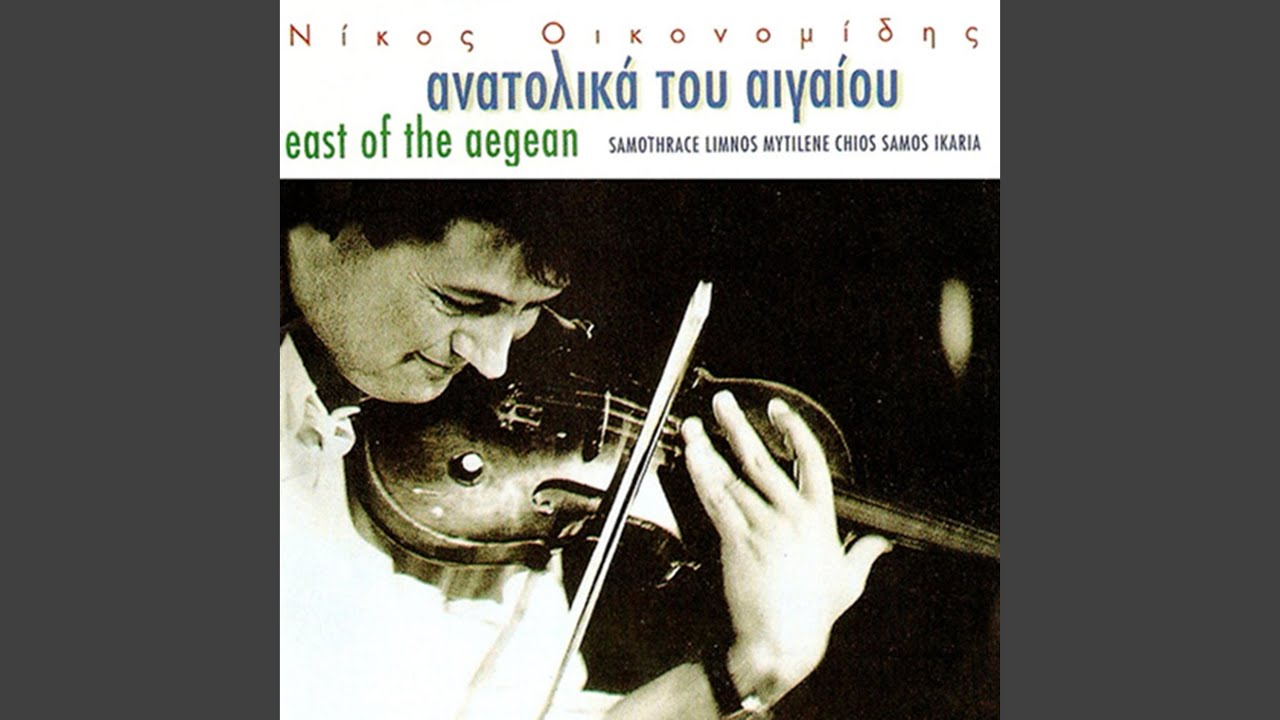
The Chian Aziziés, as played by Oikonomidis (the recording analysed by Michellis):
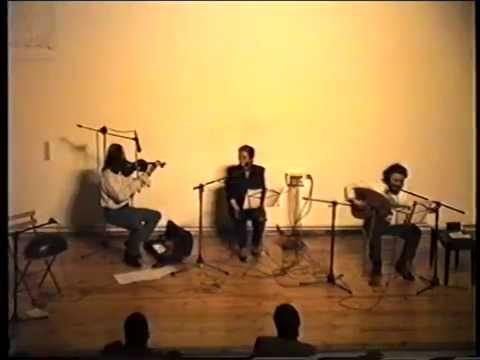
The Aperathitic one, with Zefgolis. It isn’t the same recording as in the paper, but I don’t believe it differs radically:
As for the Ottoman version, let whoever can find a recording that attempts—if such a thing exists—to reconstruct the style of Abdülaziz’s era.
In any case, all right, the Chian piece is not the same as the others. It’s not just how it seemed to Oikonomidis. It’s simply that his categorical insistence helped Michellis break free from the confusion and misconception caused by the shared name and the common mode.
1 Like
Sinopoulos? I think it’s clearly related to the Aperathitiko style, the Cypriot style, etc.
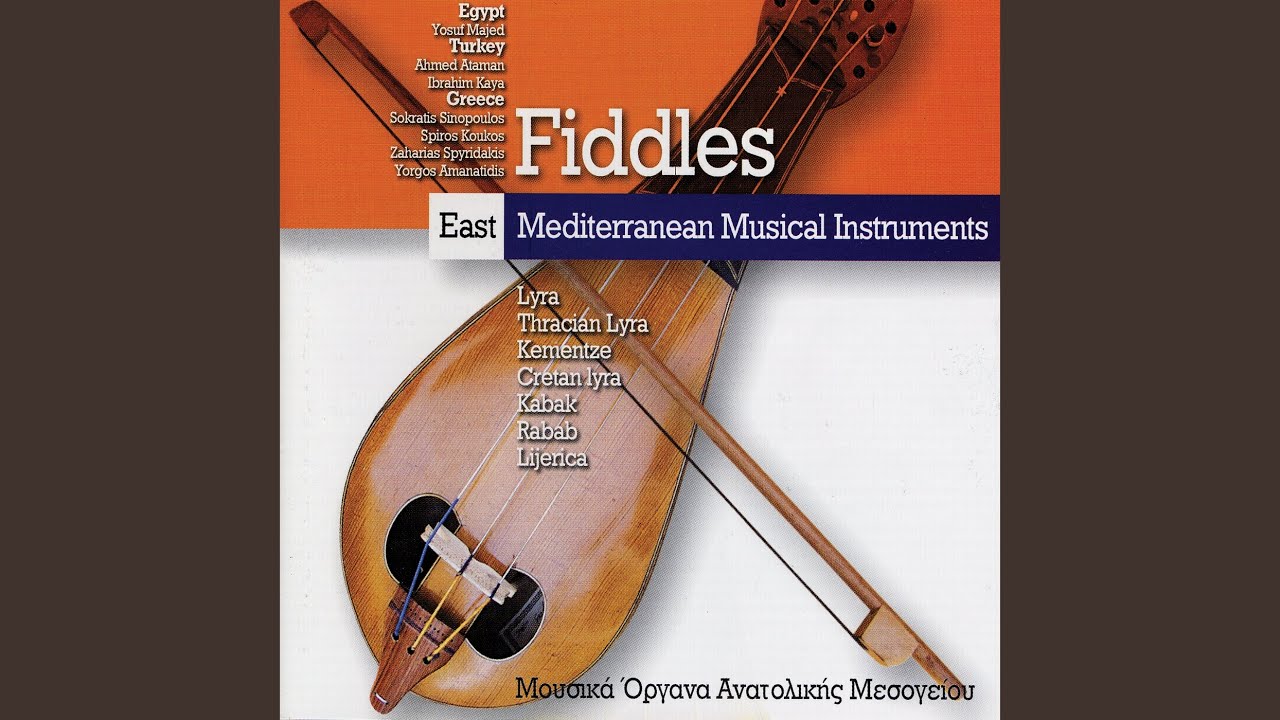
The Chian style departs quite a bit, to the point where I think it’s a potpourri of Hijaz, with distant origins in the aziziye, combined with some unrelated minor mode. But Gkantinis plays the same potpourri in the old recording, too.
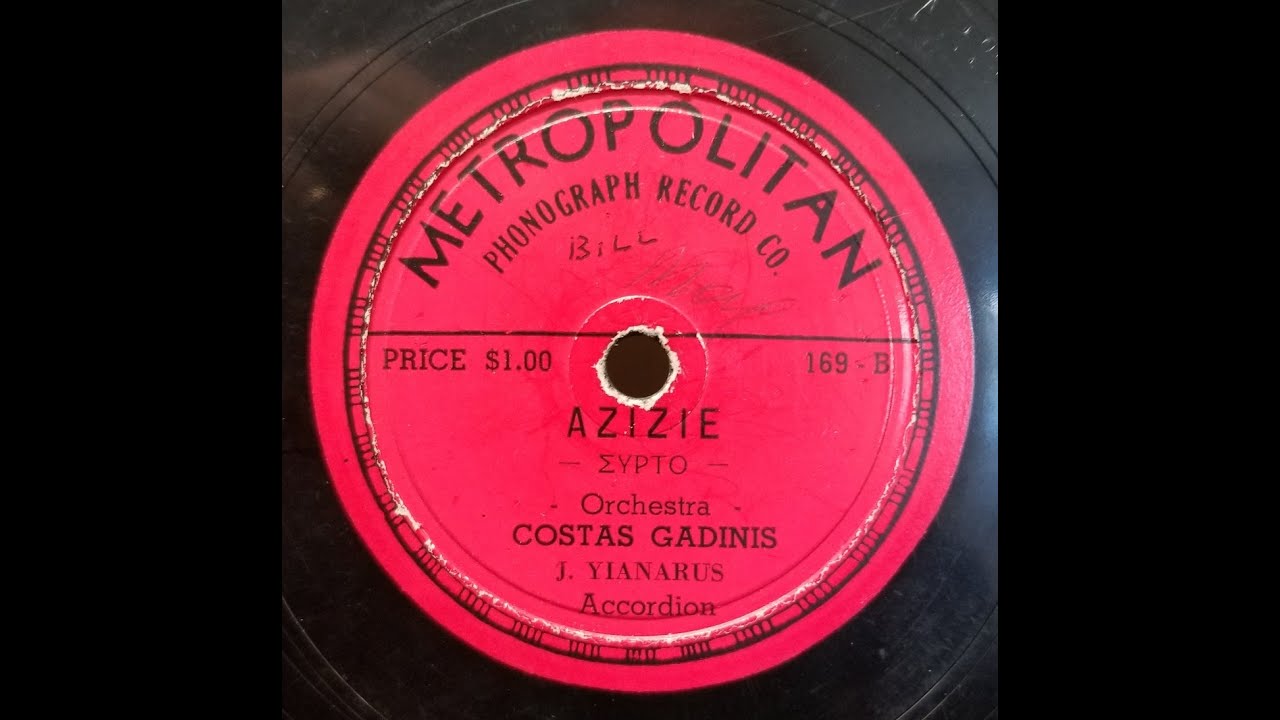
The videos on Spiliakou’s channel do indeed have a recent date, but they have been there for many years. Some of them had been commented on here a long time ago.
Here is the Cypriot Atsizies, recorded by Fevgala–Pefani
μουσικές καταγραφές: Αζιζιές (Κύπρος) - Κώστας Παπαχαραλάμπους (βιολί)
Fevgala–Pefani have also recorded the Sifnian version (which in Sifnos is called Soultanis) (Musical Recordings IV, 2023 editions by PANAS MUSIC).
They probably recorded this one:
Soultanis has also been recorded in the undergraduate dissertations of Christina Kranioti, Department of Music Studies, University of Ioannina (Arta), November 2025 and Christos Psaromilingos, Department of Music Studies, University of Ioannina (Arta), June 2020)
In Sifnos, the tune must have arrived around 1900 from Istanbul, brought by Sifnian instrumentalists who had gone there.
1 Like
The sultan did not write a piece in the style of the lyre or tsambouna of some particular island. Logically, the music of the islands, Thrace and so on gradually made its way into the urban music of Constantinople through migration, just as the music of Constantinople and Smyrna made its way to the islands and the mainland. The question is when the Politiko, Silyvrianó and so on first appeared. They were already documented in scores and on recordings from the first decades of the 20th century, if not earlier, so they are not all that far removed from the time of Abdülaziz.
1 Like