And we even see youngsters discovering rare old rebetiko songs that are outside the mainstream, which is invaluable for preserving and safeguarding them.
2 Likes
Well, we were youngsters too, back when we were (re-)discovering them…
1 Like
As someone who has been living abroad for 27 years now, I have a different theory: From the late 1990s onwards, and even more so a decade later, young Greeks (and not only young people) emigrated en masse in search of a better life in places such as France and England. As the Greek community abroad grew (again), so did rebetiko.
2 Likes
No, it isn’t two-way. Even if we assume that some people might learn about a particular type of music or other form of intangible cultural heritage because of UNESCO (which I still don’t find very likely, but let’s grant it), UNESCO doesn’t learn about it because of its dissemination—after all, many of these traditions have an extremely limited reach (*). The process is that someone takes the initiative to submit a nomination; for example, I might propose that rebetiko be recognised.
______________________________
(*) I had followed UNESCO’s recognition process for the Olymbos feast. The whole thing started because the Karpathian feast (a very distinctive ritual) had already been recognised, but the people of Olymbos (a village on Karpathos) didn’t want to be lumped together with the rest of the Karpathians, because their own ritual is even more distinctive. On that occasion, I also learned about other Greek examples of intangible cultural heritage that had been recognised, and one I remember was a particular method of fishing in the Messolonghi lagoon. Well, obviously UNESCO can’t know on its own how people celebrate in every village on every island and on the mainland throughout the world, nor how they fish. Someone who knows about these things, either as a bearer of the tradition or as a researcher, brings them to UNESCO’s attention.
I’ve followed them too. However, I think that here we’re talking about the National Intangible Cultural Heritage, which does indeed remain within national borders, and where someone takes the necessary steps for an inscription. Rebetiko, on the other hand, has been inscribed on UNESCO’s Intangible Cultural Heritage List. For inscription with UNESCO, the Member State submits an application after it has been entered in the national inventory. There’s a big difference!
The inscription of Rebetiko on UNESCO’s Representative List of the Intangible Cultural Heritage of Humanity was approved by the Intergovernmental Committee of the Convention for the Safeguarding of the Intangible Cultural Heritage (UNESCO, 2003) at its 12th annual session, held in Korea from 4–9 December, following the nomination dossier submitted by the Ministry of Culture.
Here is the full article:
Let’s upload a very fine (in my opinion, at least) rendition of Çakıcı, in his own language, so that it’s available here too…

And a (rough…) rendering of the lyrics in English:
The plane trees of Smyrna shed their leaves
They call me Çakıcı, oh, my slender love
We burn mansions…
There is no cypress tree taller than you
There is no blemish on your leaves
They killed a Zeybek with a dagger
Oh, my slender love
When it comes to Çakıcı, I have no words to spare…
1 Like
I don’t know about this distinction. What do you mean?
It’s always supposed to remain within national borders, which is why misunderstandings arise, such as with Karagiozis, for example, which exists in Greece as a Greek form of folk art, but also in Turkey as a Turkish one (the Turks managed to register theirs first, and we sulked — I don’t know whether we’ve since registered our own as well). I don’t know whether anything was provided for along the way for cases where the natural geographical area of a single tradition extends beyond the borders of a state. That’s not the case with Karagiozis, but it is, for instance, the case with Greek Epirote polyphonic singing, which is found on both sides of the Greek–Albanian border — quite apart from the fact that Albania also has its own almost identical Albanian polyphonic singing.
Nor do I know what happens to this geographical area when it is confined to a small region of a state (though I think: nothing; there are national traditions with a local character, such as the fishing we were talking about, and others without one, such as rebetiko).
In any case, someone makes a proposal to UNESCO; UNESCO does not propose it itself. My previous comment concerned the two-way relationship:
(Karagiozis, I should remind you!)
We pulled long faces, yes, I remember that. And it takes quite a lot of cheek to pull long faces, given, of course, that the figure common to both cultures is called Karagiozis in Greek and Karagöz(= Black-eyed) in Turkish. Perhaps we should have demanded that the Turkish one be called Mavromat  !..
They are clearly different traditions, with ours having indeed originated from theirs but having evolved independently, eventually becoming the ultimate embodiment of Greekness (in my humble opinion), but anyway, let’s not get bogged down in the UNESCO minutiae. I also mentioned Karagiozis, polyphonic singing, an Olympos feast, fishing in Messolonghi, and perhaps some others, but each time as an example of something. At this point, the discussion had reached the following stage:
Isn’t there also a Vlach one?
There’s also the Vlach tradition, right. It differs a little musically and technically, but it’s definitely a related tradition. They’re in Greece; I don’t know whether they’re found elsewhere too (although historically, of course, they were nomadic).
Is Vlach the language of the Vlachs of Epirus, or of the Arvanitovlachs, or is it a separate language as well?
As far as I know, they are songs of the Vlachs of Epirus—songs in Vlach and Greek.
1 Like
Lately I’ve been wondering whether this music is of Old European/Neolithic origin, and therefore older than eastern music, or of Indo-European origin, and therefore later. Eastern music itself, of course (the music of the “Mediterranean–Eurasian zone”, which stretches from the Balkans and parts of southern Italy and Iberia, and North Africa and the Horn of Africa, to northern and southern India via Central and West Asia), should, judging by the extent of its spread, have spread during the Chalcolithic period alongside the “Secondary Products Revolution”, with the Caucasus–Zagros zone as its original cradle.
We learned these things from our grandparents, my dear.
2 Likes
You’re going too far back. We don’t even properly know the music of classical antiquity: we know their views, their theory and their instruments, but have very few surviving records.
There is a view that pentatonic music is inherently older, but this seems to me to assume a one-way evolutionary path, from five to seven tones, and so on. And if pentatony is inherently “archaic”, isn’t polyphony inherently “modern”?
In practice, we saw many Europeans in the last century become fascinated by the pentatonic scale of the blues and adopt it, abandoning their own “more evolved” music; more recently, they have adopted drones instead of chords with the fashion for drone music.
At a festival, I heard a Basque band whose language is Paleo-European. Their music was fairly close to Celtic music, as was the music of their neighbours in northern Spain (Galicia, Asturias). But this could also be the product of later influences from the Atlantic, rather than conservatism.
1 Like


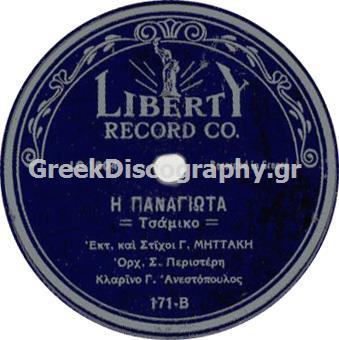
At the moment, because I’m studying Anestis Delias extensively, I listen to “The Junkie’s Pain”
2 Likes