As a very new forum user, I decided to register so I could ask a few questions about the tsampouna. To begin with, having already learnt to play traditional percussion instruments, I wanted to learn the tsampouna. A few months ago, I bought a monotsampouno, as it was cheap and I wanted to get a first, simple feel for the melody. A few months later—in other words, now—I am desperately thinking of buying a tsampouna, with the aim of teaching myself, without a teacher, using the many recordings available on YouTube and the advice and texts posted on the forum. With traditional percussion, I essentially did the same thing: I listened to many rhythms from numerous tunes and songs and tried to imitate them on percussion. I did not go as far as using rhythmic notation and a stave to write down the rhythms, but in the end, that is effectively what I did. Regarding the monotsampouno, I have read that it has 5 notes—G, A, B, C, D and E—and that the tsampouna therefore has the same notes across two octaves? In addition, I have read that the melody on the tsampouna is played by listening to songs and tunes and trying to imitate them, but I wonder why they do not write out the entire score on a stave, given that there are notes. I suspect, however, that this is out of respect for the tradition and the traditional way of learning this instrument. I had also heard that the skin on a tsampouna rots after a few years and needs to be replaced, but I do not know whether this is true or how it should be properly maintained. Finally, I should mention that everyone’s opinion would be a great help to me, as would information about the level of difficulty and the time required to learn the tsampouna. Thank you very much!
P.S. I forgot to mention that I am interested in the Cycladic tsampouna, not any other type.
Six, not five: one for each hole you open, plus one with all of them closed.
Yes, they are Sol-La-Si-Do-Re-Mi, but that doesn’t mean they are objectively at the same pitch as the notes with the same names on an instrument tuned with a tuner. They are usually between half a tone and a tone and a half higher; more rarely, they may be lower, and sometimes they may actually be at the true pitch indicated by their names.
So does the tsambouna have the same notes across two octaves?
No, within the same octave. The tsambouna has two identical monotsambouna.
For a number of reasons:
a) It is a tradition that developed within the context of an oral culture. The people who preserved and developed it over the centuries often barely even knew how to read and write, let alone write notes.
b) To avoid forcing the tune into a mould, as though it had to be one way and not another. Precisely because of point (a) above, tsambouna music — like all oral music, but particularly so in this case — has retained a fluid form. It has pieces where a basic melody lasting 3–4 seconds is repeated for 5–6 minutes: hundreds of repetitions, without exaggeration, and no two are entirely the same as the previous one. But it is always the same phrase: if there were a second one, they wouldn’t wait that long before playing it!
c) Because working out the tune on the instrument by ear, rather than from something written that you read, is fundamental to understanding the tune. Once you understand it, and provided you have already reached a certain level of proficiency on the instrument, point (b) gradually starts to happen by itself: you recreate it each time so that it is always that tune and not another one, but you never play it the same way twice!
d) Nevertheless, if you already know musical notes, it won’t do you any harm to use them as an aide-mémoire. But if you don’t, sitting down to learn an entire notation system when your music is limited to six notes in total isn’t worth the effort.
e) In any case, one thing that the old players didn’t do but the new ones do, and which is nevertheless — in my opinion — entirely positive and helpful, is knowing how to name the notes. Sol, La, Si. You need that all the time.
Basically, it’s true. It won’t rot — if it is going to rot, that will be due to a mistake during the initial processing, and it will happen at the beginning, not after a few years. But it will deteriorate: the closed pores will begin to open and it will start to leak air, imperceptibly at first, but progressively more seriously.
This brings us to a point where what the old makers, who laid the foundations of the craft, did will not help us: why would a shepherd care if the goatskin bag had gone bad? He was slaughtering animals all the time anyway, so making a new one was the easy part. Things are different for us today. The old shepherd didn’t care whether the bag smelled of goat, either, because he spent all day surrounded by the smell of goats anyway, being a shepherd.
There are modern makers who have looked into this more methodically. They seek out and find ways to make the bags attractive, white, odourless and durable. Of course, even a durable one will eventually deteriorate, but there is a difference between one lasting three years and one lasting ten or twelve. In any case, it is still a living thing, and therefore it eventually dies.
Do you want it not to be living, so that you can achieve immortality? That exists too. Personally, I’m not in favour of it, for a number of reasons that aren’t relevant here — though we can discuss them another time — but have a look at this point of view as well:
In reality, there is no such thing as a Cycladic tsambouna, only the tsambouna of each individual island. The differences are not as pronounced as those between the Dodecanese islands or between all the different regions of Greece, but take a look at this:
In Paros and Syros, they traditionally tune much higher than all the other islands. But in Paros they cut the bibikia in a U shape, whereas in Syros they cut them in a Π shape (I mean from underneath / from above).
In Naxos, you will often find tsambounas tuned considerably lower than all the others.
In Andros, there’s no question of it: they don’t even have 5:5 holes, but 5:1, as in Karpathos and some other islands.
While everyone trims the skin and turns it so that the short-cut hair is on the inside, on Tzia in particular they remove all the hair. You might say, so what, what difference does it make? But it does! A hairless goatskin bag is much thinner — when you roll it up, it’s like fabric. So it is softer and more flexible, which makes it much more sensitive to tiny changes in pressure as you play. And in fact, Tziot playing relies heavily on these tiny changes in pressure all the time, contrary to the worldwide convention for bagpipes that the air pressure should remain constant.
…and so on for all the islands. In addition, the playing style varies from island to island. There are certain techniques that are a must on one island, the be-all and end-all — if you don’t do them, you aren’t playing the tsambouna — while on another island they are considered wrong. The same tune may sound completely different from one island to another, taking into account the differences in the instrument itself, differences in aesthetics and differences in accompaniment. The toumbaki is also played differently from island to island, and not all islands have toumbakia; some have a laouto, but not all of them, and so on.
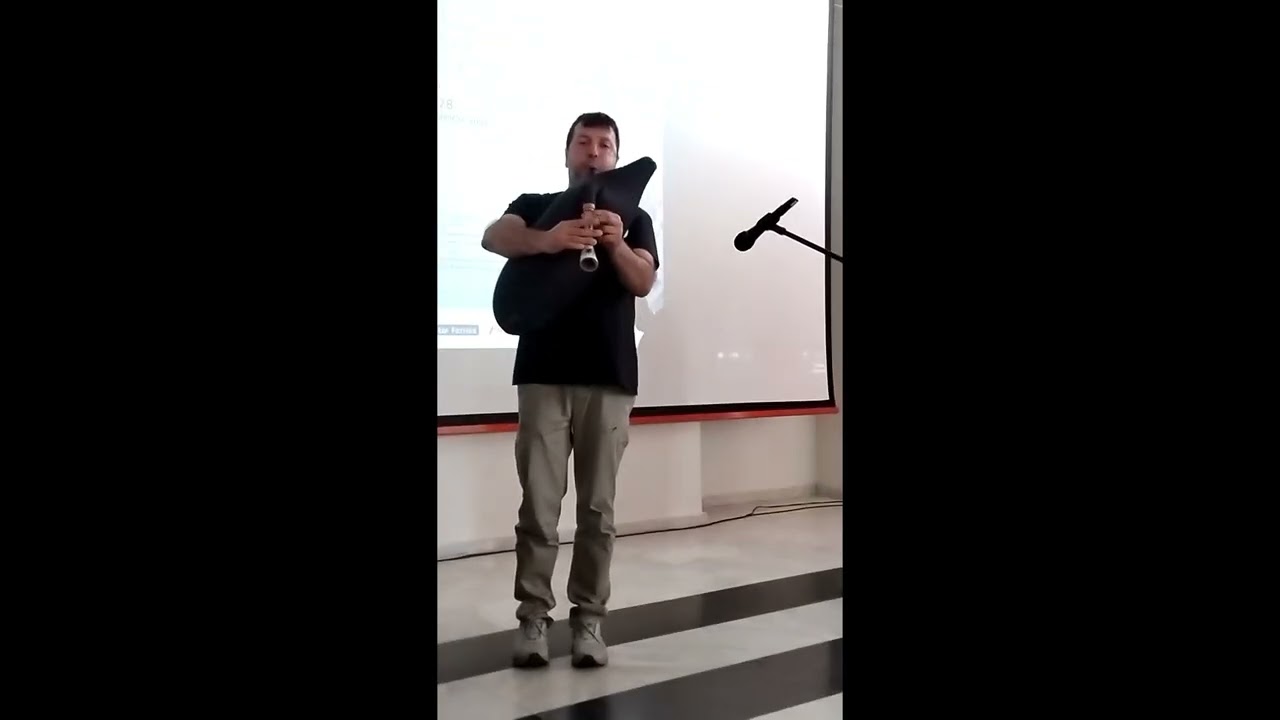
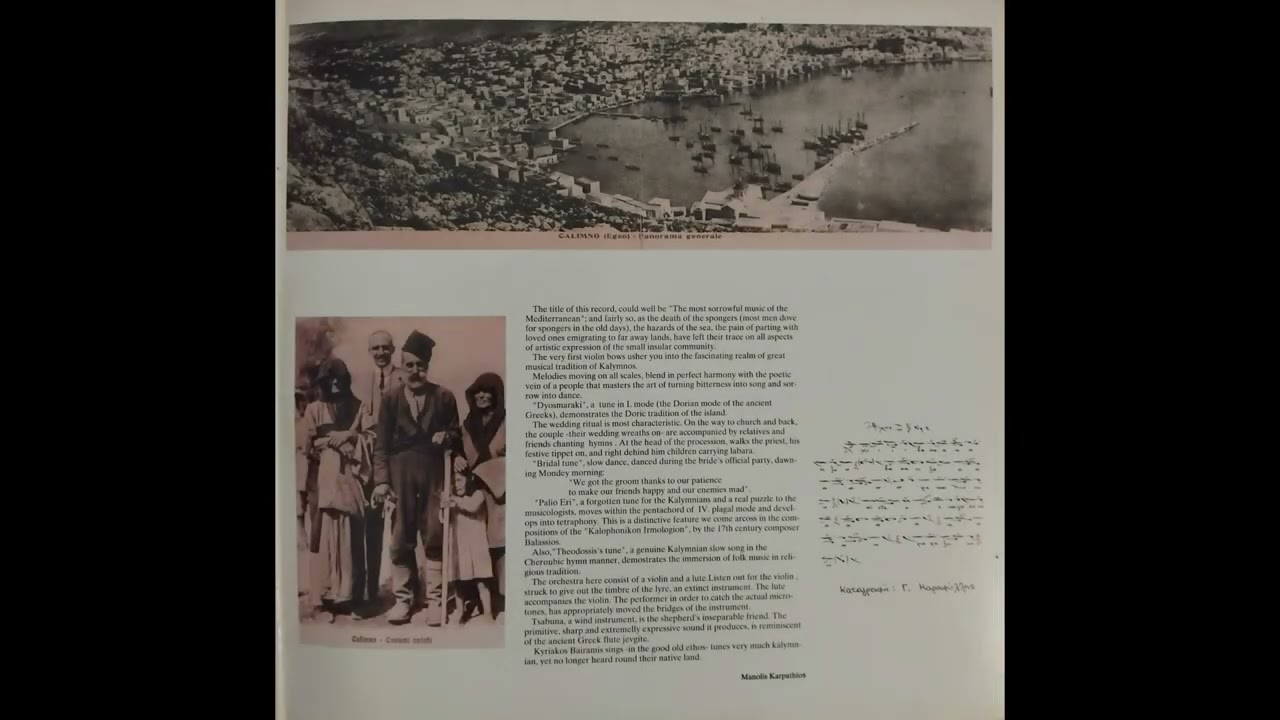
For example, listen to a tune — the same one — from Astypalaia, Kalymnos, Patmos and Anafi. (Of course, only Anafi is in the Cyclades, but the example still applies.) I’d also suggest reading the descriptions on YouTube:
I’ve returned to this discussion. I’m now just one step away from buying a tsambouna from a very well-known website, but before I do, I’d like to ask a few questions, if you’d be kind enough to answer them.
How difficult is it to learn to play the tsambouna without a teacher, and is it possible to learn the tsambouna — or indeed any instrument — by yourself?
What schedule do you recommend following while learning, and what exercises should I do for practice?
Since I’m aiming to learn the tsambouna on my own, would I miss out on opportunities through a teacher to play at festivals, celebrations, and so on?
Is there some kind of bag or case for storing the tsambouna during transport or when I’m not playing it?
Is there a maker? It doesn’t say anything about which site sells it.
There is no answer. It depends on the individual. It can certainly be learned.
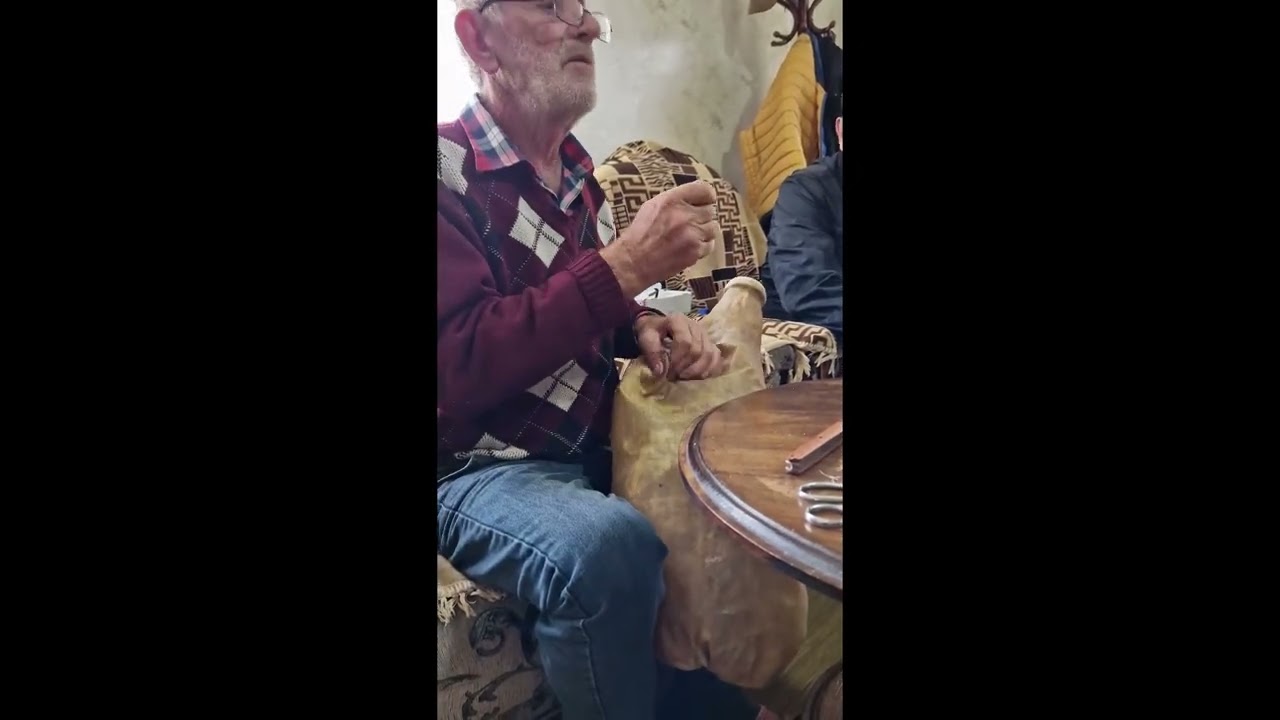
Until a few years ago, all the tsambouna players in Greece would have sworn that there was no other way, and that the tsambouna (especially!) could not be taught. I even have the testimony of a shepherd from Kalymnos, a fine tsambouna player: “Someone once asked me to show them… Show you what? How to make the goatskin bag, how to cut the finger holes? I can show you that, but no further.”
In other words, he did not even understand that, for some people, making the instrument and playing it might be two different things. A holistic approach.
You’ll need a little practice when you first learn to handle the goatskin bag. You need to hold a steady A and not let it drop. From then on, you simply play whatever you used to play on the mantouraki. How to make it sound more tsambouna-like is mainly a matter of analytical listening: I play the same tune as So-and-so, but it doesn’t sound the same—what are they doing?
As you work on this, your ear will become practised. Since the entire range is only six notes, it won’t take you very long—it’s not as though there are infinitely many things the other person could be doing for you to figure out.
Apart from that, anything you find difficult should first be worked out on the mantouraki. The tsambouna is not at all convenient for stopping and starting when we’re trying something we’re not sure about.
I’m astonished to hear that such things happen, but in any case they don’t concern you. Learn first, and then we’ll see.
Traditionally, a nylon bag. All the old tsambouna players used one, even though all the old gaida players condemned them for it. In Crete, the traditional woven vourgia (the woollen backpack) is also very popular. It adds a certain flair, whatever you think of it.
It’s worth bearing in mind that all tsambouna teachers are people who themselves never had a teacher. Or, at most, they had a teacher who was himself self-taught. There is no going further back than that. The tradition has no roots. We’re talking about a solid and incredibly rich cultural edifice, built by people who, for countless generations, thought in a completely different way. Exercises? People would laugh!
You should seek their knowledge, not that of yesterday’s teacher.
Let’s not forget that one or two generations ago, the equivalent yesterday’s teachers almost wiped traditional dance out of the whole of Greece. They knew—or perhaps only thought they knew—how other dances were taught, and said to themselves: steps here, steps there; a method here, so the same method must work there too. Notes here, notes there.
It isn’t like that.
In traditional music, the message comes first. What does your instrument have to tell us? The instrumentalist’s role is to help the music itself say what it has to say. The message is already there; all we do is try not to prevent it from coming out.
When you find the way, your own personal message will emerge along with it.
Listen to lots of music, and live lots of music.
Have you been to a tsambouna gathering? This year’s in Ikaria was unbelievably good. Many kilos of truth. Be on the lookout around September next year. If you’re in Athens, various other things also take place during the year, although I don’t know which ones are good and which are dominated by the half-informed know-alls.
I’m genuinely impressed by your knowledge of this subject, namely the tsampouna. I’ll make sure to examine the documents you shared with me in detail and will get back to you on the matter.
Also, regarding the tsampouna I had found, it was on “paradosiakaorgana.gr”, cost €400 and did not mention the maker, although a single YouTube video featured a demo along with the information that it had synthetic reeds and was tuned to A: https://youtu.be/m9NWkEWcY3c?feature=shared Finally, I should mention that I’ve found another website with a tsampouna made by “Zikidis”, but I can’t afford the €580 it costs there, although there are also makers on Facebook — I’ll have a look at their prices there as well.
And if anything happens to the instrument, who would you turn to if you didn’t know the maker?
Zikidis is the one speaking (the first of the two, the second one) in the first little video I posted. It’s worth watching how he presents his approach to making instruments, which is worlds apart from the traditional one.
P.S. I see “Askos Wind Instrument Workshop”, but the only online presence this workshop seems to have is on the Traditional Instruments website. Anyway, I notice that the second hole has been shifted: could it be to temper the B, because the old makers who made all the holes at equal intervals and ended up with an untempered scale apparently didn’t know…
There is also a Facebook shop called “Askavlos Instrument Workshop” that seems to offer good-quality tsambounas. I’d be interested to hear your opinion too.
“Askavlos” is Makis Marmaridis, the Pontic musician. They did a feature on him on a programme, which should at least give you a preliminary impression:
Marmaridis has a parallel trajectory to Tsantanis, whose dissertation I sent you above. He may mention it himself on the programme—I don’t remember—but Tsantanis definitely says so in his dissertation. They ended up taking different approaches, though. Marmaridis’s approach is closer to Zikidis’s, whom we were talking about earlier.
What do you want from a tsampouna? There are quite a few good makers, but each one is different. There’s a good one I like and a good one I don’t like, however much I’m obliged to respect him. (And there are others who give me no reason at all to respect them.) What matters is that you like it.
Which musicians, which music, which experiences made you want a tsampouna? Whom did you envy and think, “That’s how I’d like to become”?
And after Marmaridis, have a look at the other side of things as well. Since I haven’t found a Greek video as eloquent as this one, I’m sharing a Georgian one instead. But it’s the same instrument, and 100% the same philosophy and method as those of the Greek tsambouna players.
(I’ve met this man, Murat, but I hadn’t had the chance to appreciate him for what he really is until later, when I started finding him both in little videos and in texts that mention him. A wise man.)
2 Likes
ZARAZ
(Κουνάβης Ευώδιος, ποιητής (εκ του προχείρου και εν πλήρει φορμαλισμώ))
12
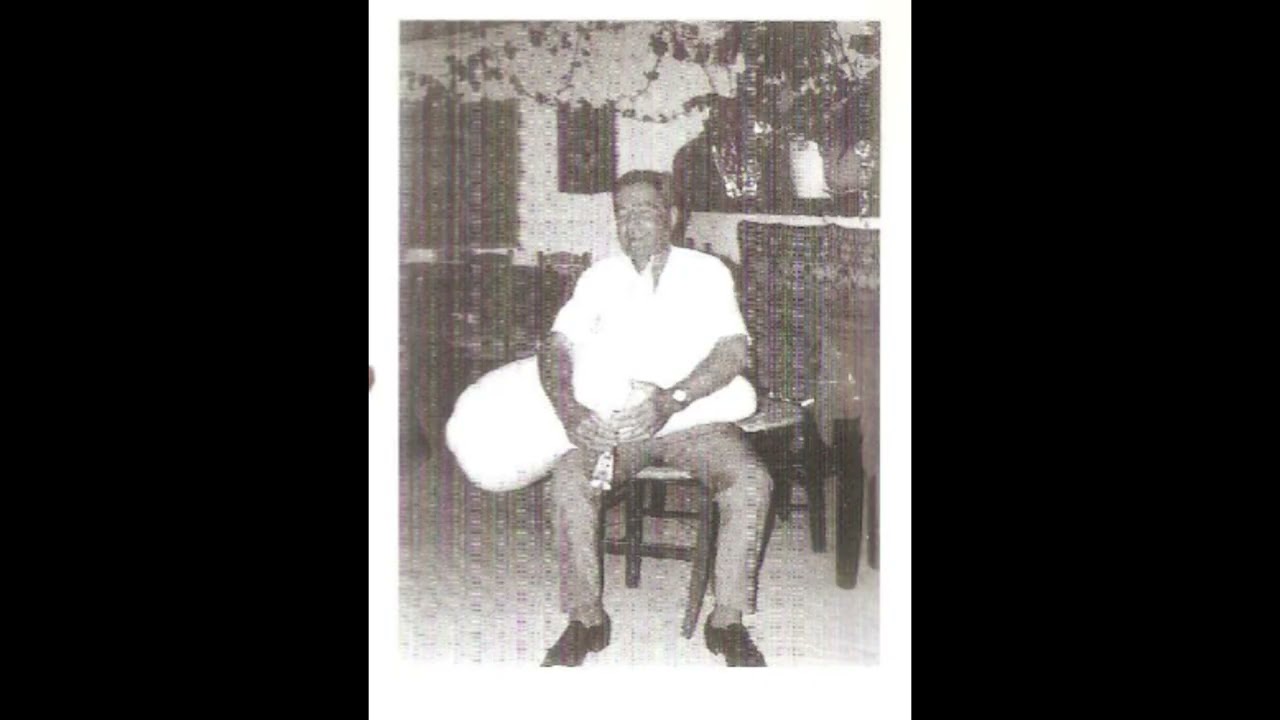
Oi, folks, where have I seen someone with a pillowcase for a bag instead of a hide?
To avoid speaking theoretically, here are 19 different ways of playing the same tune:
(Some of them, of course, are from records where the producer’s input has also played a part. But that only concerns the orchestration and perhaps the tempo. The way each individual tsampouna player plays is the way it’s played on their island; that cannot be stripped away.)
Good evening again. I decided to return to the subject after my first experiences playing the tsampouna over the past few weeks. In general, it’s going well, but I have the following doubts. To begin with, I don’t know how well I’m playing; in other words, I can’t assess my own efforts by myself. Perhaps it would help if I uploaded videos online so I could get other people’s opinions as well. Next, I wanted to mention breathing, because whenever I blow, my cheeks puff out quite a lot—something I haven’t noticed in videos of tsampouna players. Finally, I should mention that I’m looking for sheet music so that I can play the pieces more completely, because when I play by ear, I obviously miss some notes, as I haven’t yet practised recognising them thoroughly. I’ve found a few scores in the university assignments you’ve shared, but it would be equally helpful if there were somewhere with lots of sheet music, mainly from Euboea and the Cyclades. Thank you very much, and thank you as well for the information you’ve shared!
I don’t think there’s a wrong way to blow. It’s not a clarinet, a recorder or a trumpet; it’s simply a bag that you inflate.
As for the rest:
You don’t need sheet music. Just as nobody has ever used it, it won’t be of any use to you either. Patience is what you need. Put the tsampouna away nicely in a drawer, and work on your mantoura for about six months, or however long it takes until you feel ready for the bag. Because from what you write, you don’t seem ready, and that’s perfectly normal. It hasn’t even been two months since you were still at the “I’m thinking of learning the tsampouna” stage, and now you’re looking for a solution to the problem that you miss some notes when playing by ear? Keep playing, keep listening, and in time those few notes will fall into place too.
And make sure you understand what the tsampouna is. The available sources of information are MIND-BOGGLINGLY numerous and easy to access (e.g. thousands of videos on YouTube), compared with 20 years ago, when nobody knew that this instrument even existed. But that won’t save you any work: in the past, we needed miles, time and research to find the information itself, but we had a guarantee that it was accurate. Misinformation was almost impossible. Now all the work lies in evaluating the information, recognising the truth when you see it right in front of you, but also distinguishing it when it appears hidden behind a veil of inaccuracies, separating out and rejecting outright falsehoods, and so on.
A ready-made piece of sheet music won’t solve these things for you.
Good evening! Your questions are very good. Indeed, the tsampouna usually covers an octave with 5–6 notes. The musical tradition is based on oral transmission rather than notation, which is why you rarely find sheet music. As for the skin, it needs regular cleaning and should be kept away from moisture; it may need replacing after a few years. It is possible to learn by yourself, but it takes determination and patience! Good luck getting started!
Good evening again, everyone. I wanted to report a problem I’ve been having recently with my tsampouna. When I blow and play, the skin beneath the mouthpiece constantly gets covered in saliva, which causes it to go black and become waterlogged, meaning I have to leave it to dry for a long time. Is there any solution? Thank you.